
 Image 1 of 6
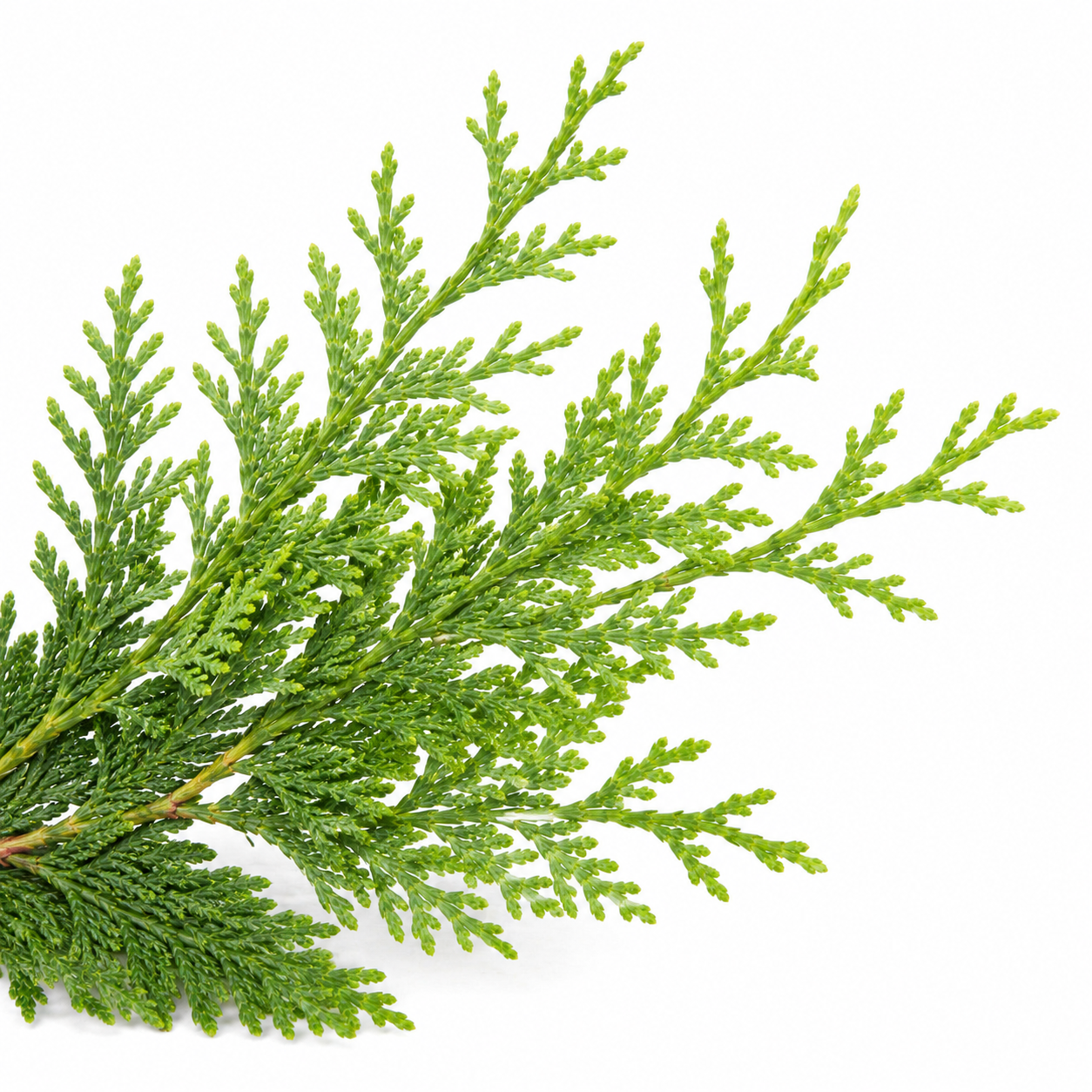 Image 2 of 6
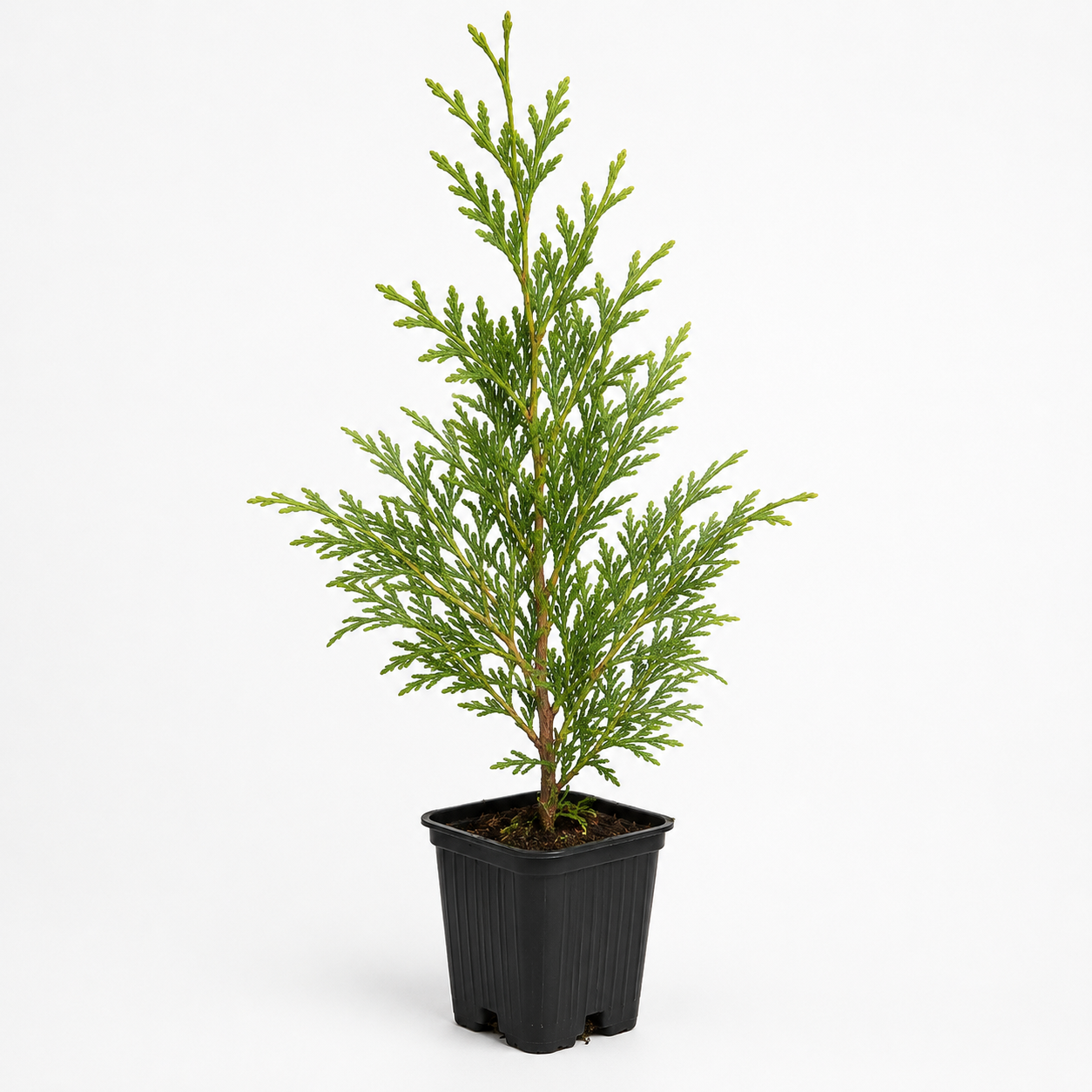 Image 3 of 6
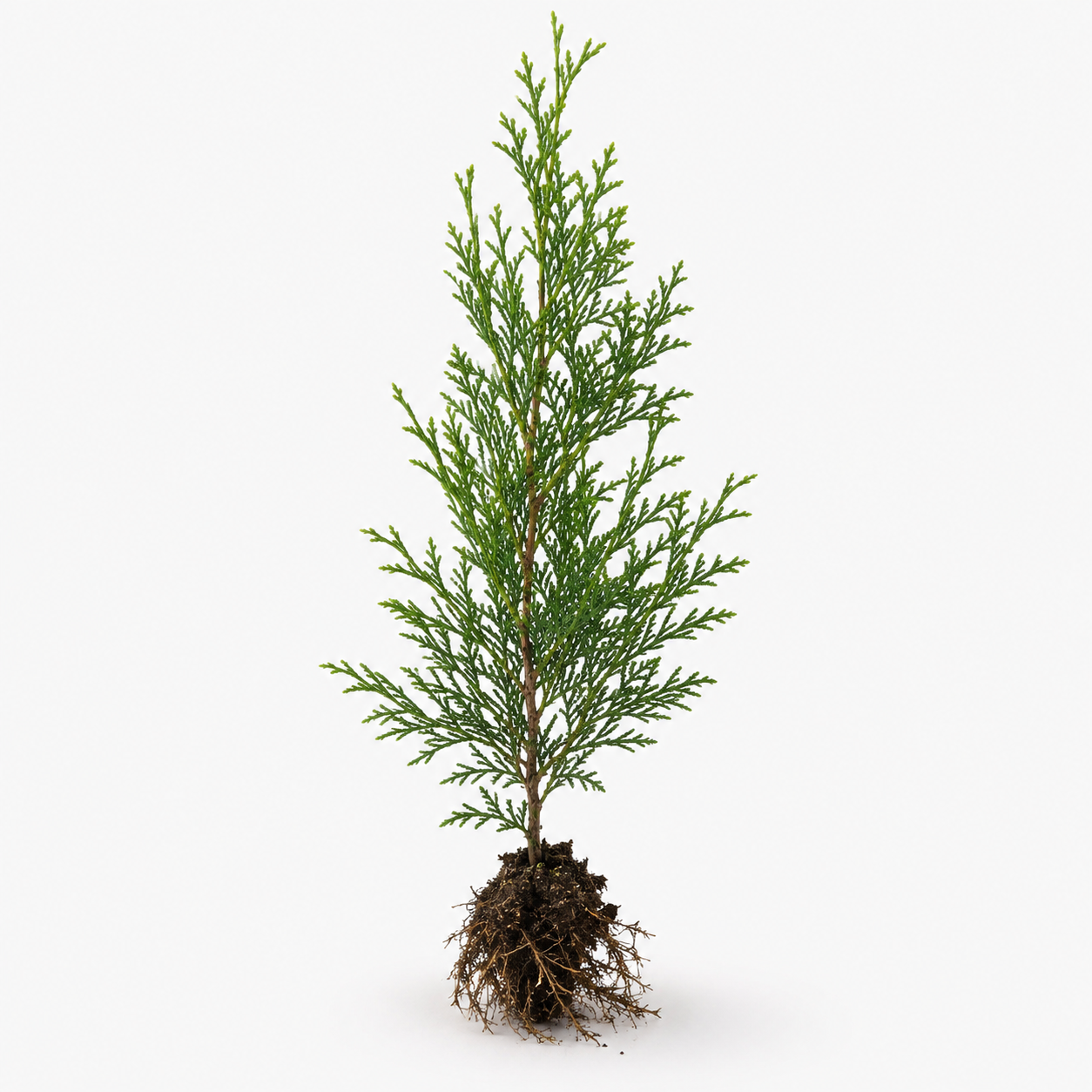 Image 4 of 6
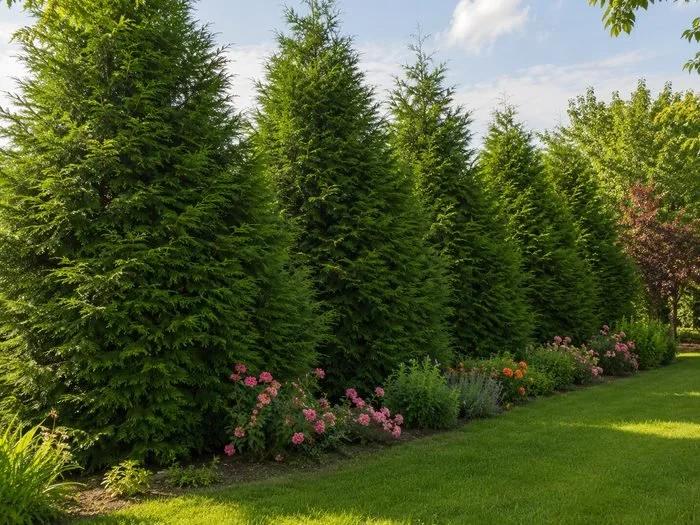 Image 5 of 6
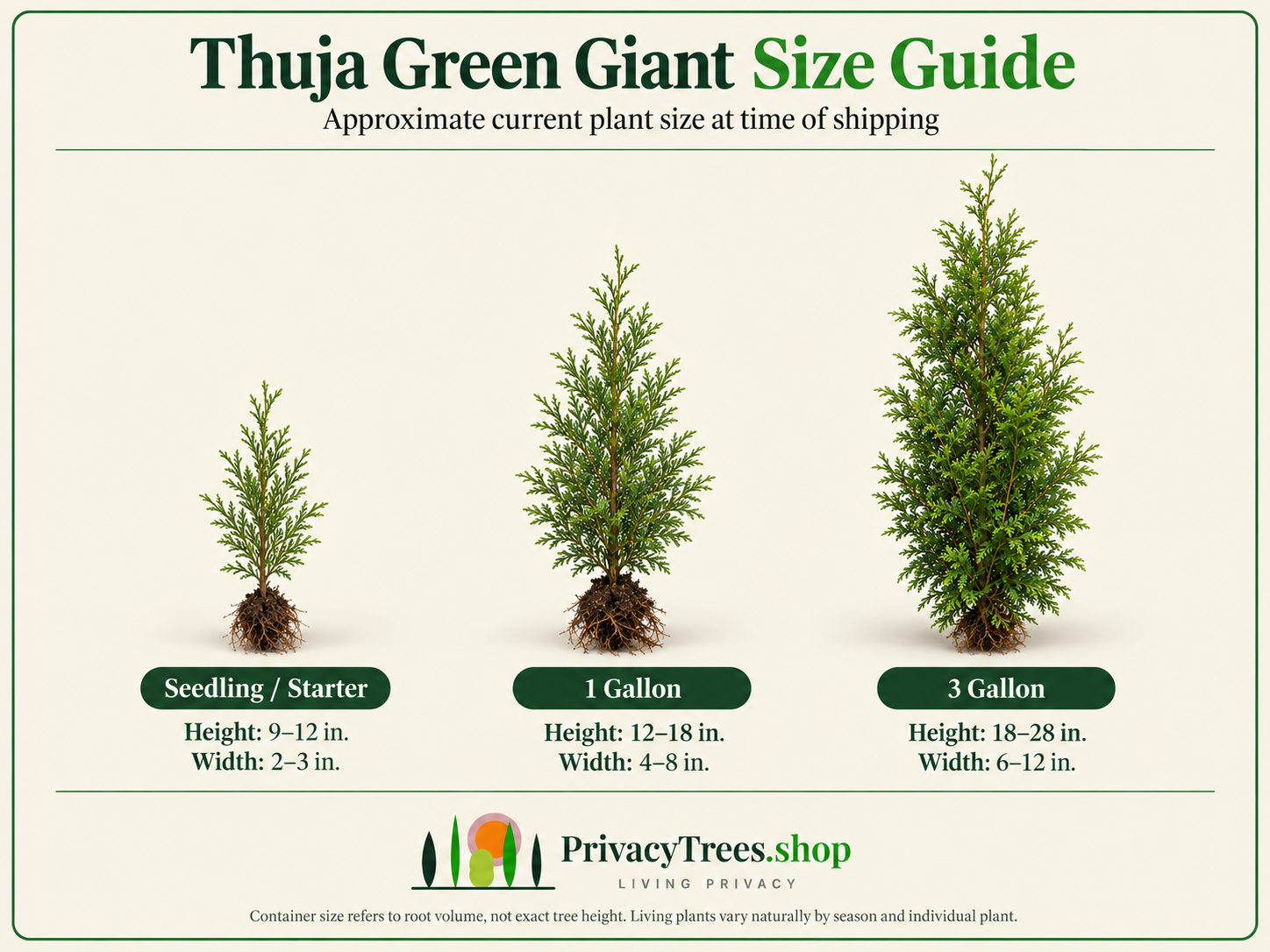 Image 6 of 6
Thuja Green Giant — Pedigree Starter Sapling
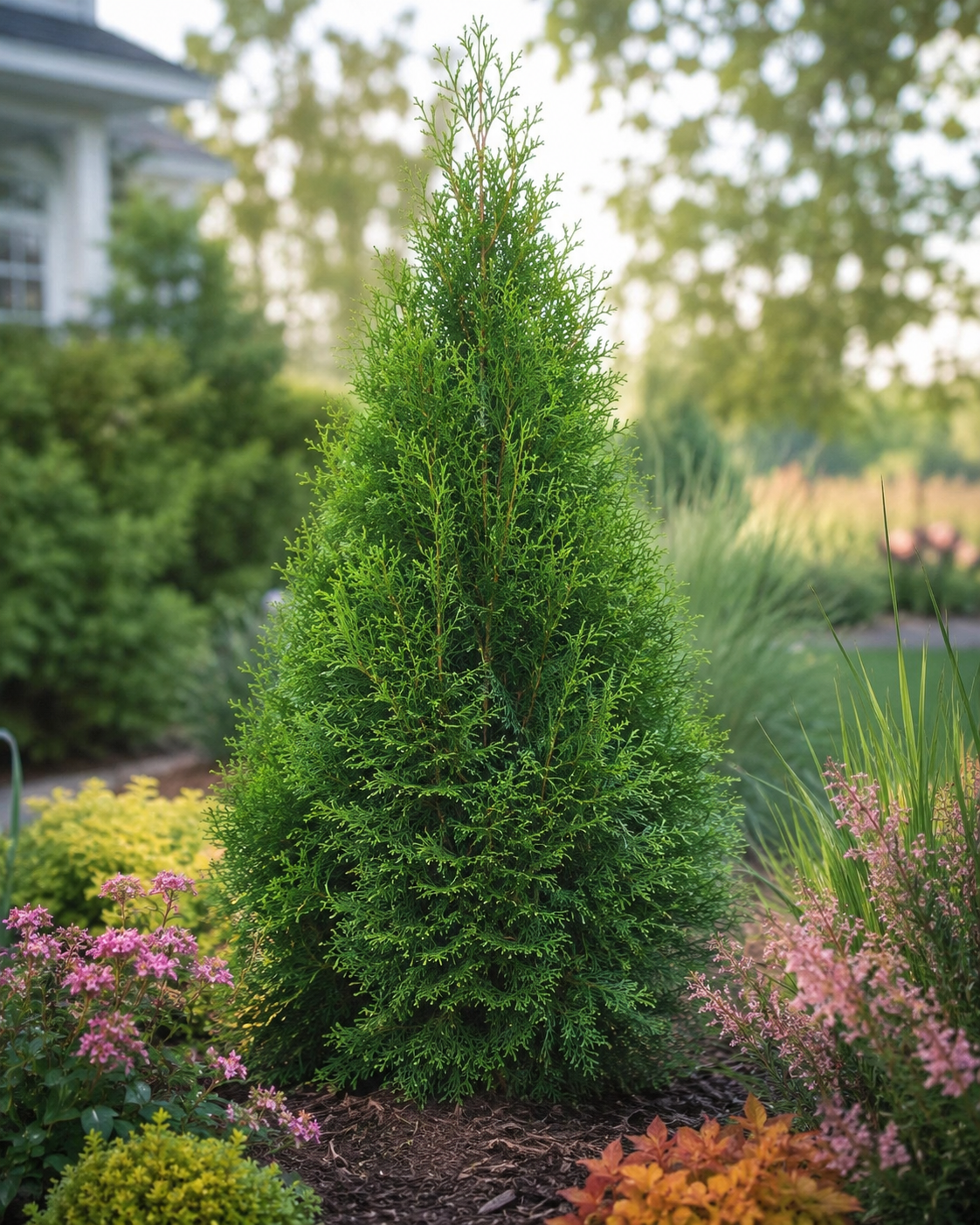
This is the tree that builds the wall. Dense, fast, full, and forgiving — Thuja Green Giant is one of the most trusted privacy trees in America. It grows 3–5 ft a year once established, holds its colour all winter, and needs almost no pruning to stay a solid screen.
At a Glance
Hardiness: USDA zones 5–8
Type: Evergreen conifer — holds colour all winter
Light: Full sun to part shade; 6+ hours is best
Mature height: 40–60 ft in the open
Mature width: 12–18 ft open-grown, about 9 ft in a screen
Growth rate: Fast — 3–5 ft a year once established
Screen spacing: 4–6 ft apart
Soil: Adaptable, sandy loam through heavy clay; prefers slightly acidic
Drainage: Needed. Tolerates clay, not standing water
Deer: Moderately resistant — browsed in hard winters
Best for: Property-line screens, windbreaks, blocking a second-storey view
Maintenance: Low. Little or no pruning needed
What Size Will My Tree Be?
Container size describes the root ball, not the tree. A 3-gallon tree isn't three times taller than a 1-gallon one — it has three times the root volume, which is what actually drives how fast it takes off in your soil.
Seedling / Starter — 9–12 in tall, 2–3 in wide. Ships now. Sold on this page as 2.5-inch rooted cells.
1 Gallon — 12–18 in tall, 4–8 in wide. Ships now.
3 Gallon — 18–28 in tall, 6–12 in wide. Pre-order.
Living plants vary naturally by season and individual plant. Size ranges are approximate at time of shipping.
Which Size Should I Choose?
Seedling / Starter. The most tree for the money, and the right choice for a long run of fence. You're trading time for cost — these need a full season to establish before they start climbing. Best if you're planting a lot, you're comfortable watering through the first summer, and privacy is a plan rather than an emergency.
1 Gallon. The middle option, and the one most people should pick. Enough root to shrug off its first summer, small enough to plant with a shovel and not a crew. See the 1-Gallon Head-Start.
3 Gallon. Our most established size — the biggest head start we grow. Still a young tree that has to root into your soil before it does anything dramatic, but it starts further up the curve and handles a dry spell better than the smaller sizes. See the 3-Gallon Head-Start.
Is This Tree Right for Your Space?
A good choice if you want
A dense, solid evergreen wall rather than a see-through screen
Fast height — one of the quickest ways to 15 ft
Something that tolerates clay, humidity and Southeast summers
A tree that mostly looks after itself once established
Reasonable deer tolerance without spraying
Think twice if
Your strip is under about 8 ft wide. It will outgrow it, and shearing a Green Giant every year defeats the point
The spot holds water after rain. It takes clay, but not a bog
You're below zone 5 or above zone 8
You want to keep a view. At 40–60 ft this is a big tree, not a hedge
You need privacy this season. No tree at this size does that
Planting Recommendations
Sun: six hours or more. In deep shade it thins out and stops being a screen.
Spacing: 4–6 ft on centre for a solid wall. Tighter closes faster but crowds later; wider is healthier and slower.
Depth: set the top of the root ball level with the ground or an inch proud. Planting deep is the most common way these are lost.
Drainage: if water stands in the hole an hour after filling it, plant on a low mound instead.
Mulch: 2–3 in out to the drip line, pulled back from the trunk.
First watering: water in deeply at planting to settle soil around the roots.
View the Complete Planting & Care Guide
First-Year Care
The first year decides the next twenty. A Green Giant that establishes well is nearly maintenance-free afterwards; one that struggles early never quite catches up.
Water: deeply and regularly through the first growing season, more in heat. Check by digging down 4 inches and feeling the soil rather than watering on a schedule.
Mulch: keep the ring topped up. It holds moisture and keeps the string trimmer away.
Fertiliser: none at planting. Roots first.
Heat and drought: some bronzing in a dry spell is stress, not death. Water, don't feed.
Winter: evergreens keep transpiring in winter. Water during a dry, unfrozen spell.
Wildlife: young plants are the vulnerable ones. Protect the first two winters where deer or rabbits are active.
Give Your Tree a Better Start
Mycorrhizal Bio-Shield — root-zone fungi that extend what the roots can reach. Most useful on the smallest sizes, where root volume is the limit on how fast the tree gets going.
Wildlife Protection Bundle — worth it wherever deer browse. A Green Giant is moderately resistant, not deer-proof, and a hungry winter can strip a young one.
Safe-Zone Up-Potting — for starter buyers who aren't ready to plant, or who want to grow them on a season before committing them to the ground.
Companion Planting
A single row of one species is a wall. Mixing widens the season and means one disease can't take the whole screen out at once.
In front, low: inkberry holly or dwarf yaupon to close the gap at ground level while the Thuja fills in.
For a woodland edge: serviceberry or redbud in front of the evergreens — flowers in spring, colour in autumn, bare enough in winter that the screen still reads.
Mixed screen: alternate with a broadleaf evergreen so the row doesn't look mechanical.
See the Understory Bloom Kit and the Fall Fire Kit.
Plan Your Privacy Wall
Privacy Wall Visualizer — upload a photo of the actual spot and see this tree at the size and spacing you're considering.
Privacy Timeline Calculator — how long until it's a wall, by starting size, spacing and conditions.
Wall Cost Calculator — what the whole planting costs, not just the trees.
Before You Order
Measure the run you're planting — length, and how wide the bed can be
Count the hours of direct sun that spot actually gets
Check a mature 12–18 ft spread will fit without crowding a fence or drive
Work out spacing and quantity at 4–6 ft on centre
Confirm you can get water to it through the first summer
Decide on wildlife protection if deer come through
Read the planting guide before the trees arrive, not after
Check the forecast — avoid planting into a heat wave or a hard freeze
About Our Pedigree Trees
Our small-batch pedigree saplings are grown from named mother trees on our sanctuary property, rooted with attention, and selected for resilience, structure, and the ability to survive the first year. These are living trees — availability may vary by batch, season, and plant readiness.
This is the tree that builds the wall. Dense, fast, full, and forgiving — Thuja Green Giant is one of the most trusted privacy trees in America. It grows 3–5 ft a year once established, holds its colour all winter, and needs almost no pruning to stay a solid screen.
At a Glance
Hardiness: USDA zones 5–8
Type: Evergreen conifer — holds colour all winter
Light: Full sun to part shade; 6+ hours is best
Mature height: 40–60 ft in the open
Mature width: 12–18 ft open-grown, about 9 ft in a screen
Growth rate: Fast — 3–5 ft a year once established
Screen spacing: 4–6 ft apart
Soil: Adaptable, sandy loam through heavy clay; prefers slightly acidic
Drainage: Needed. Tolerates clay, not standing water
Deer: Moderately resistant — browsed in hard winters
Best for: Property-line screens, windbreaks, blocking a second-storey view
Maintenance: Low. Little or no pruning needed
What Size Will My Tree Be?
Container size describes the root ball, not the tree. A 3-gallon tree isn't three times taller than a 1-gallon one — it has three times the root volume, which is what actually drives how fast it takes off in your soil.
Seedling / Starter — 9–12 in tall, 2–3 in wide. Ships now. Sold on this page as 2.5-inch rooted cells.
1 Gallon — 12–18 in tall, 4–8 in wide. Ships now.
3 Gallon — 18–28 in tall, 6–12 in wide. Pre-order.
Living plants vary naturally by season and individual plant. Size ranges are approximate at time of shipping.
Which Size Should I Choose?
Seedling / Starter. The most tree for the money, and the right choice for a long run of fence. You're trading time for cost — these need a full season to establish before they start climbing. Best if you're planting a lot, you're comfortable watering through the first summer, and privacy is a plan rather than an emergency.
1 Gallon. The middle option, and the one most people should pick. Enough root to shrug off its first summer, small enough to plant with a shovel and not a crew. See the 1-Gallon Head-Start.
3 Gallon. Our most established size — the biggest head start we grow. Still a young tree that has to root into your soil before it does anything dramatic, but it starts further up the curve and handles a dry spell better than the smaller sizes. See the 3-Gallon Head-Start.
Is This Tree Right for Your Space?
A good choice if you want
A dense, solid evergreen wall rather than a see-through screen
Fast height — one of the quickest ways to 15 ft
Something that tolerates clay, humidity and Southeast summers
A tree that mostly looks after itself once established
Reasonable deer tolerance without spraying
Think twice if
Your strip is under about 8 ft wide. It will outgrow it, and shearing a Green Giant every year defeats the point
The spot holds water after rain. It takes clay, but not a bog
You're below zone 5 or above zone 8
You want to keep a view. At 40–60 ft this is a big tree, not a hedge
You need privacy this season. No tree at this size does that
Planting Recommendations
Sun: six hours or more. In deep shade it thins out and stops being a screen.
Spacing: 4–6 ft on centre for a solid wall. Tighter closes faster but crowds later; wider is healthier and slower.
Depth: set the top of the root ball level with the ground or an inch proud. Planting deep is the most common way these are lost.
Drainage: if water stands in the hole an hour after filling it, plant on a low mound instead.
Mulch: 2–3 in out to the drip line, pulled back from the trunk.
First watering: water in deeply at planting to settle soil around the roots.
View the Complete Planting & Care Guide
First-Year Care
The first year decides the next twenty. A Green Giant that establishes well is nearly maintenance-free afterwards; one that struggles early never quite catches up.
Water: deeply and regularly through the first growing season, more in heat. Check by digging down 4 inches and feeling the soil rather than watering on a schedule.
Mulch: keep the ring topped up. It holds moisture and keeps the string trimmer away.
Fertiliser: none at planting. Roots first.
Heat and drought: some bronzing in a dry spell is stress, not death. Water, don't feed.
Winter: evergreens keep transpiring in winter. Water during a dry, unfrozen spell.
Wildlife: young plants are the vulnerable ones. Protect the first two winters where deer or rabbits are active.
Give Your Tree a Better Start
Mycorrhizal Bio-Shield — root-zone fungi that extend what the roots can reach. Most useful on the smallest sizes, where root volume is the limit on how fast the tree gets going.
Wildlife Protection Bundle — worth it wherever deer browse. A Green Giant is moderately resistant, not deer-proof, and a hungry winter can strip a young one.
Safe-Zone Up-Potting — for starter buyers who aren't ready to plant, or who want to grow them on a season before committing them to the ground.
Companion Planting
A single row of one species is a wall. Mixing widens the season and means one disease can't take the whole screen out at once.
In front, low: inkberry holly or dwarf yaupon to close the gap at ground level while the Thuja fills in.
For a woodland edge: serviceberry or redbud in front of the evergreens — flowers in spring, colour in autumn, bare enough in winter that the screen still reads.
Mixed screen: alternate with a broadleaf evergreen so the row doesn't look mechanical.
See the Understory Bloom Kit and the Fall Fire Kit.
Plan Your Privacy Wall
Privacy Wall Visualizer — upload a photo of the actual spot and see this tree at the size and spacing you're considering.
Privacy Timeline Calculator — how long until it's a wall, by starting size, spacing and conditions.
Wall Cost Calculator — what the whole planting costs, not just the trees.
Before You Order
Measure the run you're planting — length, and how wide the bed can be
Count the hours of direct sun that spot actually gets
Check a mature 12–18 ft spread will fit without crowding a fence or drive
Work out spacing and quantity at 4–6 ft on centre
Confirm you can get water to it through the first summer
Decide on wildlife protection if deer come through
Read the planting guide before the trees arrive, not after
Check the forecast — avoid planting into a heat wave or a hard freeze
About Our Pedigree Trees
Our small-batch pedigree saplings are grown from named mother trees on our sanctuary property, rooted with attention, and selected for resilience, structure, and the ability to survive the first year. These are living trees — availability may vary by batch, season, and plant readiness.