
 Image 1 of 4
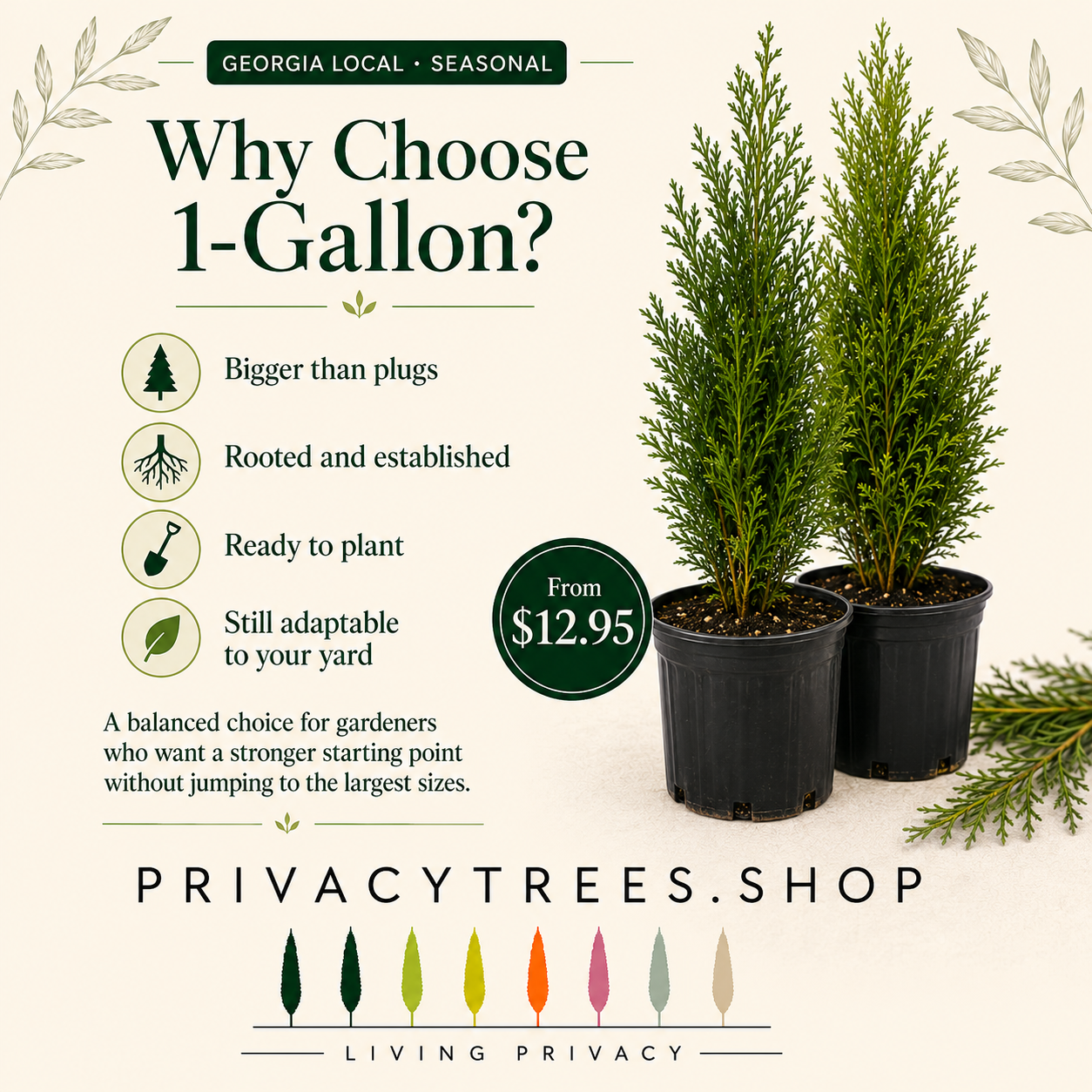 Image 2 of 4
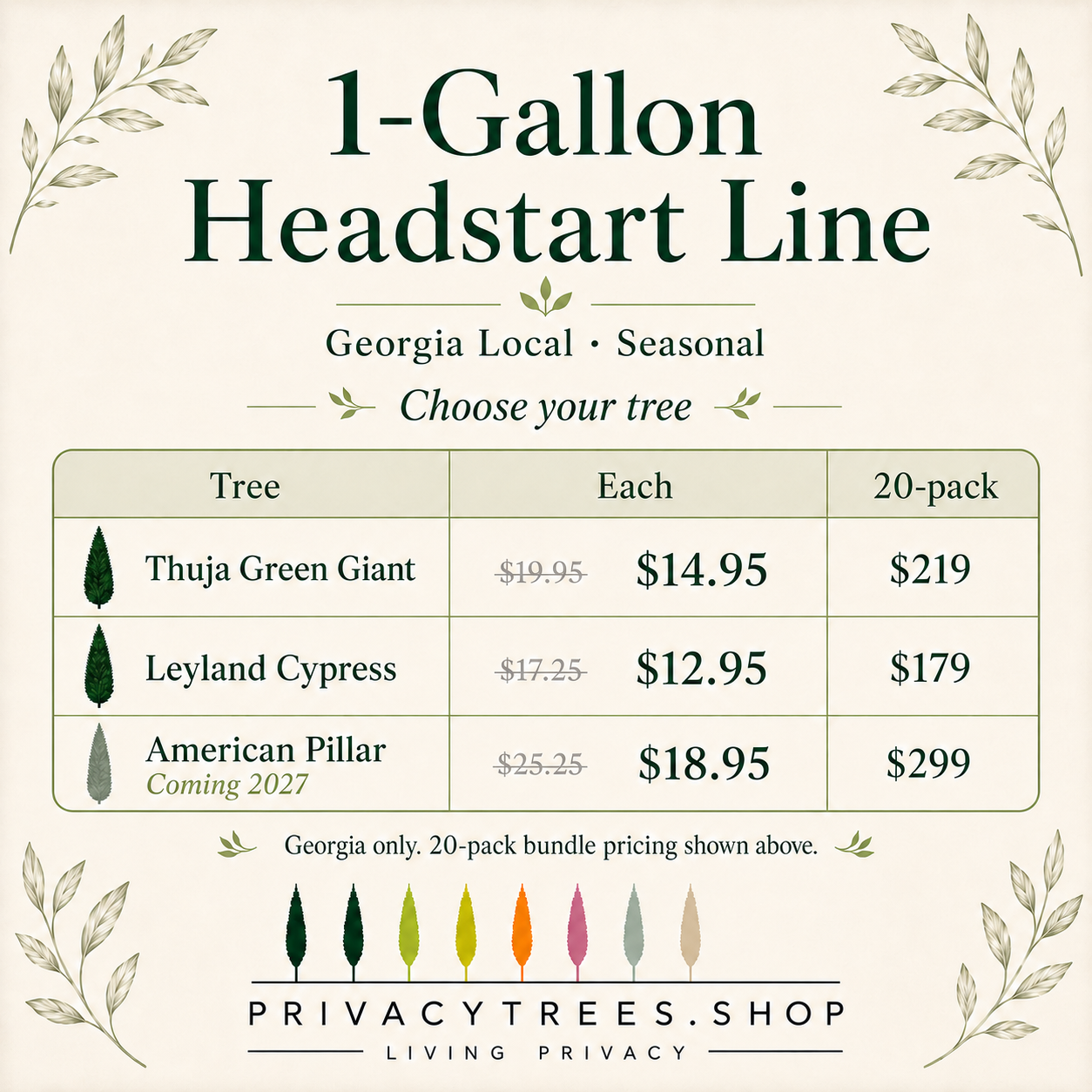 Image 3 of 4
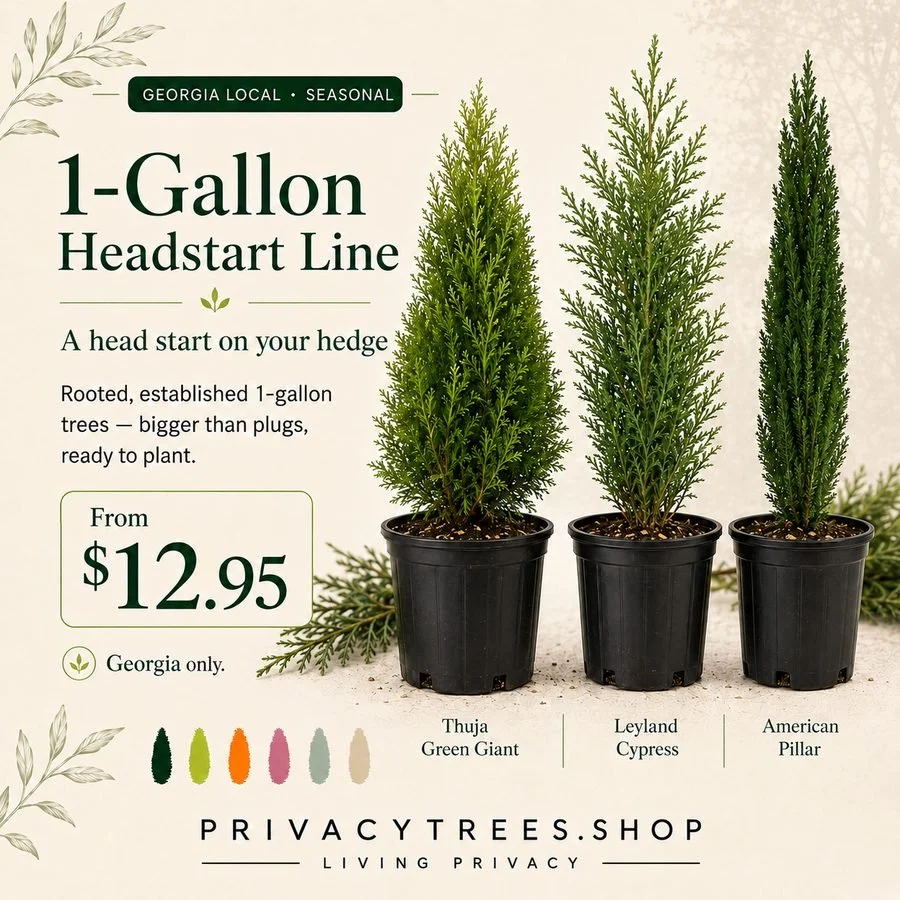 Image 4 of 4
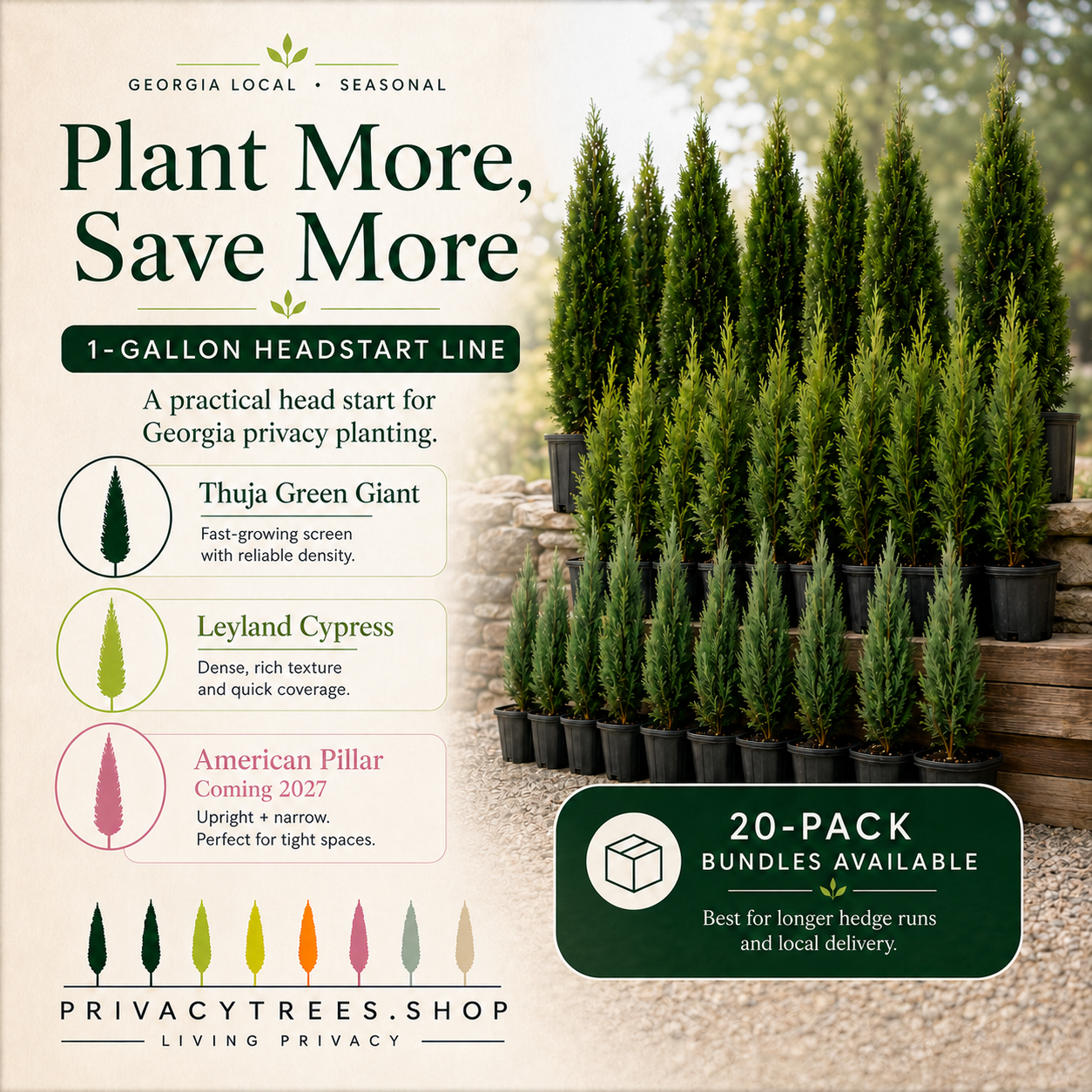
Rooted, established 1-gallon trees — bigger than saplings and ready to plant for a head start on your hedge. This is the middle option, and the one most people should pick: enough root to shrug off its first summer, small enough to plant with a shovel rather than a crew.
Container size describes the root ball, not the tree. A 3-gallon tree isn’t three times taller than a 1-gallon one — it has three times the root volume, which is what actually drives how fast it takes off in your soil.
Height: 12–18 in tall, 4–8 in wide at shipping
Root: a full season’s growth in a 1-gallon container — roughly four times the root volume of a starter sapling
Species: choose Thuja Green Giant or Leyland Cypress at checkout
Quantity: single trees, or 20-packs for a full run
Living plants vary naturally by season and individual plant. Size ranges are approximate at time of shipping.
Both make a fast evergreen wall. They suit different yards.
You want the denser, more solid screen — it reads as a wall rather than a filter
Your soil is heavy or your summers are humid. It handles clay and Southeast heat well
Deer come through. Moderately resistant, though not deer-proof
Your bed is 8 ft or wider. Spacing is 4–6 ft on centre
You have a long boundary and real room — it wants 8–12 ft on centre
You want height fastest, and a softer, feathery texture
Your site drains well and has airflow. Wet feet cause root rot, and still crowded air invites bagworms and canker
You’re in zones 6–10 rather than 5–8
Full profiles: Thuja Green Giant · Leyland Cypress
Measure the run you want to cover, divide by your spacing, and add one for the end of the row.
Thuja Green Giant at 4–6 ft on centre — a 20-pack covers roughly 80–120 ft
Leyland Cypress at 8–12 ft on centre — a 20-pack covers roughly 160–240 ft
Tighter spacing closes the gap sooner but crowds the row later; wider is healthier and slower. If you’re between quantities, buy the spares — a few losses in the first year are normal on any planting of size.
Work out quantity and cost for your run
You’re planting a long run and cost per tree is the deciding factor, you’re comfortable watering through the first summer, and privacy is a plan rather than an emergency. Saplings catch up faster than people expect.
You want a visible tree the day you plant it without taking on a large transplant. It has enough root to handle its first summer with ordinary care, and one person can plant a whole row in a weekend.
You want the biggest head start we grow and you’re planting a shorter run where the per-tree cost matters less. See the 3-Gallon Head-Start.
No size at this scale gives you privacy the season you plant. What the larger sizes buy is a year, maybe two.
Depth: top of the root ball level with the ground or an inch proud. Planting deep is the most common way these are lost.
Drainage: if water stands in the hole an hour after filling it, plant on a low mound instead.
Mulch: 2–3 in out to the drip line, pulled back from the trunk.
Water: deeply and regularly through the first growing season, more in heat. Check by digging down 4 inches and feeling the soil rather than watering on a schedule.
Fertiliser: none at planting. Roots first.
Winter: evergreens keep transpiring in winter. Water during a dry, unfrozen spell.
Wildlife: young plants are the vulnerable ones. Protect the first two winters where deer or rabbits are active.
View the Complete Planting & Care Guide
Wildlife Protection Bundle — worth it wherever deer browse. Neither species is deer-proof, and a hungry winter can strip a young tree.
Mycorrhizal Bio-Shield — root-zone fungi that extend what the roots can reach.
Privacy Wall Visualizer — upload a photo of the actual spot and see either species at the size and spacing you’re considering.
Privacy Timeline Calculator — how long until it’s a wall, by starting size, spacing and conditions.
Wall Cost Calculator — what the whole planting costs, not just the trees.
Measure the run you’re planting — length, and how wide the bed can be
Count the hours of direct sun that spot actually gets
Pick the species that fits the width you have, not the one that grows fastest
Work out spacing and quantity, then round up
Confirm you can get water to it through the first summer
Decide on wildlife protection if deer come through
Check the forecast — avoid planting into a heat wave or a hard freeze
Our small-batch pedigree trees are grown from named mother trees on our sanctuary property, rooted with attention, and selected for resilience, structure, and the ability to survive the first year. These are living trees — availability may vary by batch, season, and plant readiness.