
 Image 1 of 4
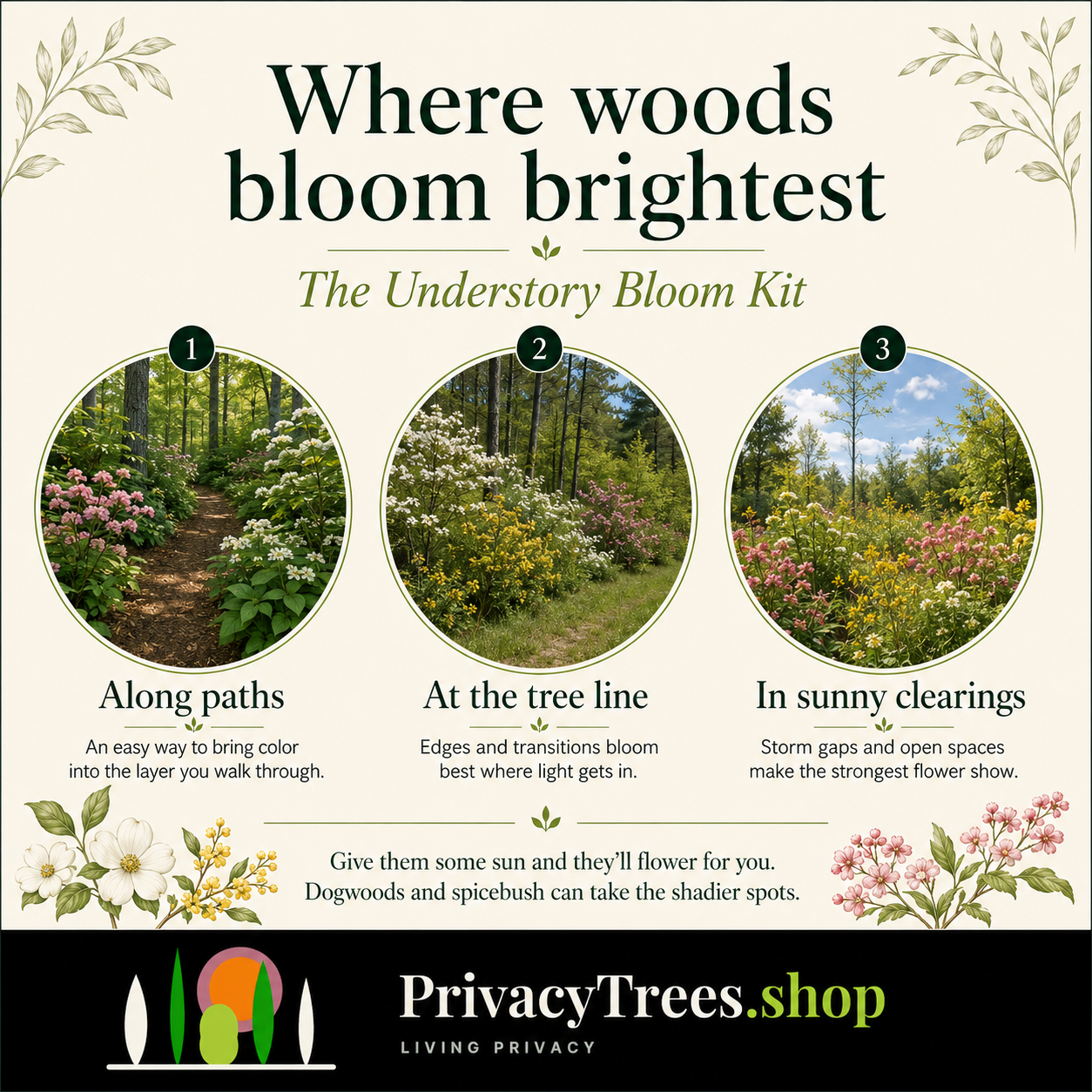 Image 2 of 4
 Image 3 of 4
 Image 4 of 4
Woods don’t have to wait for fall to show off.
The flowers of a forest don’t grow in the canopy — they live in the understory, in the layer you walk through. This kit plants that layer: Cherokee Princess dogwood in pure white and Cherokee Brave in pink, serviceberry whose white clouds open before almost anything else wakes, redbud that turns whole branches lavender-pink, witch hazel that flowers in October, and spicebush lighting the bare woods pale yellow at winter’s end.
Planted together, they hand the color off one to the next — a bloom calendar that starts before spring and ends after summer begins. And the birds will thank you: serviceberry and spicebush feed them all summer.
Where to plant: These are edge-and-clearing trees. Woods bloom brightest where light gets in — along paths, at the tree line, in storm gaps, and on the sunny edges of your woods, not buried in deep shade. Give them some sun and they’ll flower for you; the dogwoods and spicebush will take the shadier spots.
Go touch a tree.
Woods don’t have to wait for fall to show off.
The flowers of a forest don’t grow in the canopy — they live in the understory, in the layer you walk through. This kit plants that layer: Cherokee Princess dogwood in pure white and Cherokee Brave in pink, serviceberry whose white clouds open before almost anything else wakes, redbud that turns whole branches lavender-pink, witch hazel that flowers in October, and spicebush lighting the bare woods pale yellow at winter’s end.
Planted together, they hand the color off one to the next — a bloom calendar that starts before spring and ends after summer begins. And the birds will thank you: serviceberry and spicebush feed them all summer.
Where to plant: These are edge-and-clearing trees. Woods bloom brightest where light gets in — along paths, at the tree line, in storm gaps, and on the sunny edges of your woods, not buried in deep shade. Give them some sun and they’ll flower for you; the dogwoods and spicebush will take the shadier spots.
Go touch a tree.