
 Image 1 of 5
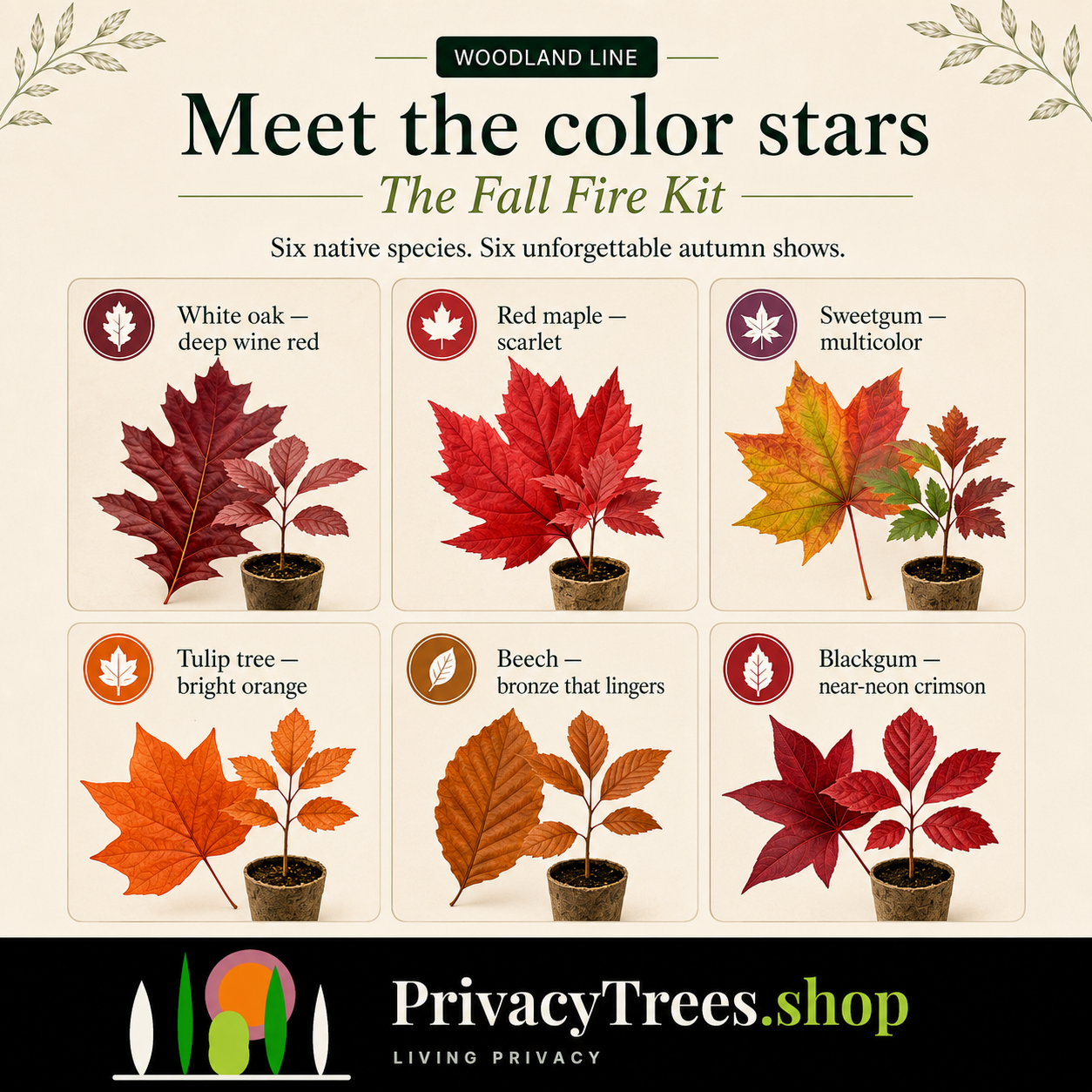 Image 2 of 5
 Image 3 of 5
 Image 4 of 5
 Image 5 of 5
Plant the October you keep photographing at other people’s houses.
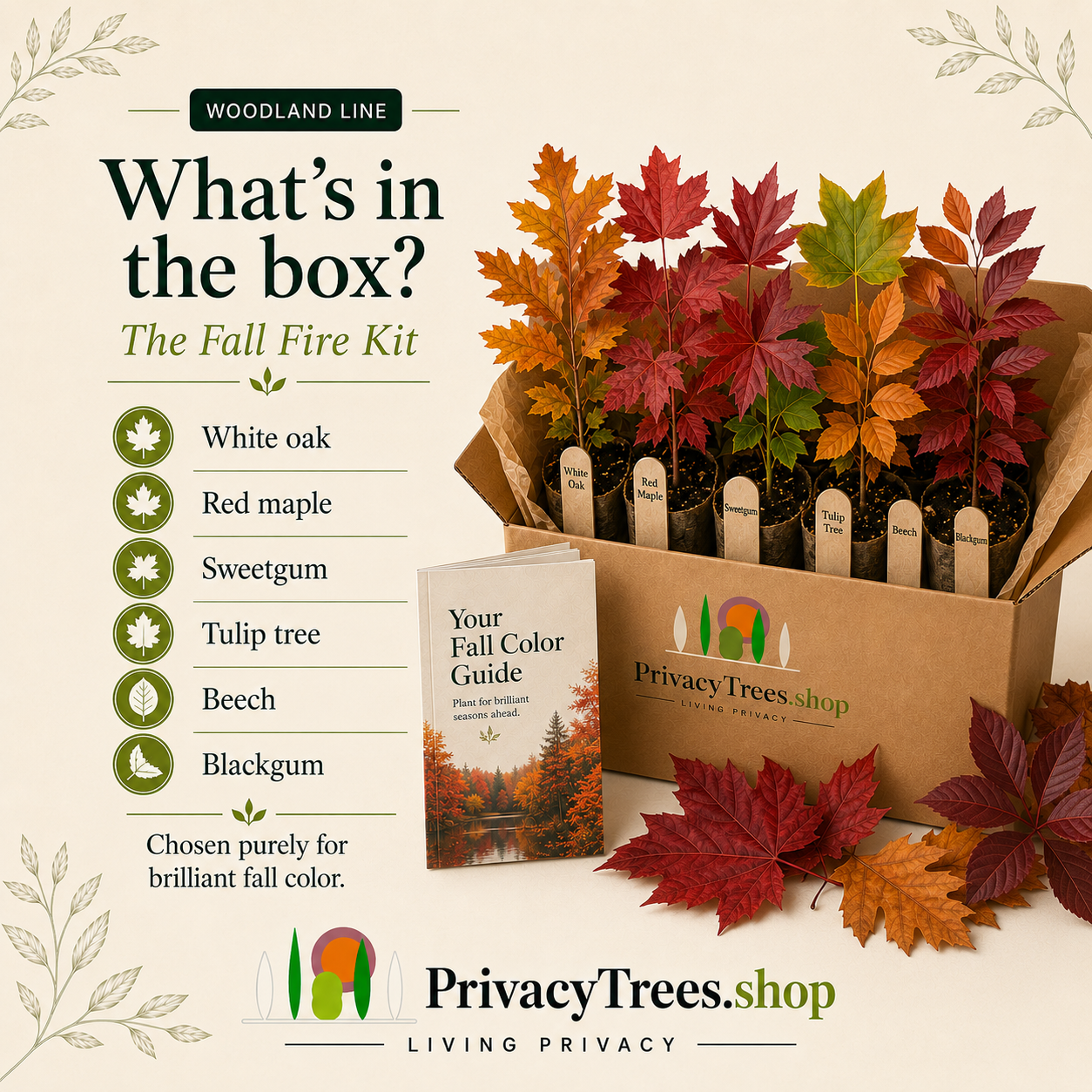
Some trees just show off in autumn. This kit is nothing but those trees — six wild-grown seedlings from our sanctuary woods, chosen purely for brilliant fall colour: white oak’s deep wine red, red maple’s scarlet, tulip tree’s bright orange-yellow, and yes, sweet gum — the tree you curse for its spiky balls and photograph every single October anyway.
Plant them this fall while they sleep. In a few autumns, the show starts. Every year after, it gets bigger.
Six seedlings, hand-dug from our own sanctuary woods and potted on. These are native deciduous hardwoods — not evergreens, and not nursery clones. They came up in Georgia woodland on their own and have already proved they can survive here.
White oak — deep wine red, late and long-lasting
Red maple — scarlet, and the earliest of the group to turn
Tulip tree — clear bright orange-yellow, on a fast, tall tree
Sweet gum — the full range at once: yellow, orange, red and purple on one tree
Six seedlings across four species means you get more than one of some — usually a second oak or maple. That is deliberate rather than a shortfall: a pair of oaks does more for a recovering woodland, and for the birds, than six single specimens ever would.
Wild-collected seedlings vary in size, and the mix shifts with the season’s germination. Every seedling is labelled so you know exactly what you have.
Every tree in this kit loses its leaves. That is the entire point — the colour is the leaves leaving. But it changes how you plant and what to expect, so it’s worth saying plainly.
They will look dead all winter. Bare twigs, no leaves, nothing happening. This is normal and is not a problem. If you need to reassure yourself, scratch a twig gently with a thumbnail — green underneath means alive.
Plant them dormant. Late autumn through early spring, while they’re asleep, is far and away the best time. A dormant seedling puts everything into roots before it has to support leaves.
Leaf-out comes late in year one. A newly planted seedling often waits, and may leaf out weeks after established trees nearby. Don’t give up on it in April.
Fall colour takes a few years. A knee-high seedling will colour up, but the display you’re picturing needs the tree to have some size. Three to five autumns before it starts being worth photographing.
Colour varies year to year. Warm sunny days and cool nights make the best autumn. A wet grey October is a duller one, on any tree.
Fall colour is made by sunlight. These are canopy and edge trees, and the same tree that blazes in the open will turn a muddy yellow in deep shade.
Give them sun. Along a path, at the tree line, in a storm gap, or out in the open — not buried under an existing canopy.
Give them room. Every one of these is a full-size forest tree eventually. Site them where a large tree is welcome in thirty years.
Think about where you’ll be looking from. The kitchen window, the porch, the end of the drive. Autumn colour is worth nothing behind the house if nobody stands there in October.
Sweet gum: lovely colour, spiky seed balls. Site it away from bare feet, mowing lines and driveways, and you’ll only ever enjoy it.
A hardwood seedling’s first year is about roots. Nothing you do above ground matters as much as keeping it watered and keeping the deer off.
Water: deeply through the first growing season, more in heat. Check by digging down a few inches rather than watering on a schedule.
Mulch: a few inches in a ring, pulled back from the stem. Keeps moisture in and the string trimmer out.
Fertiliser: none. A seedling pushed into top growth before it has roots is a weaker tree.
Deer: the real threat. Deer browse young hardwoods hard, and a seedling nipped repeatedly at the growing tip never gets away. Tubes or cages are the difference between a tree and a nub.
Don’t prune. Let it grow whatever it wants for the first couple of years. Shaping comes later.
Add the Wildlife Protection Bundle — on hardwood seedlings this is not optional if you have deer.
The Understory Bloom Kit — spring flowers under the trees that give you autumn. Between the two you have colour from February to November.
The Start-a-Woods Kit — if you want structure and layers rather than a colour collection.
Mycorrhizal Bio-Shield — oaks in particular are heavily mycorrhizal in the wild.
Go touch a tree.