The fastest way to get height back into a gap, and the tallest hardwood in the East.
Tulip tree grows straight up, fast. Its leaves are shaped like a tulip in silhouette. Once it has some age, it opens green-and-orange flowers in late spring that look like actual tulips held high in the canopy. In fall it turns a clear golden yellow.
Every tulip tree we sell came up on its own in our sanctuary woods in Georgia. We lift the volunteers by hand and grow them on in containers. They are the woods’ own seedlings, not nursery clones.
Choose Your Size
Starter plug — about 9–12 in. tall. The best value, and the easiest to establish. Available singly, as a 3-pack or as a 6-pack.
1-gallon — about 12–18 in. tall, with a fuller root system.
3-gallon — about 18–28 in. tall. A head start of a season or two.
Shipping is included in the price. Sizes are approximate at the time of shipping; living plants vary with the season and the individual tree.
What Arrives
One healthy, rooted tulip tree (or three or six, if you chose a pack)
A plant tag, so you always know what you planted
A simple planting guide
Packed to arrive safely
Want to give it an extra start? Add the Mycorrhizal Bio-Shield.
About Tulip Tree
Botanical name: Liriodendron tulipifera (also called tulip poplar or yellow poplar)
Mature size: 70–90 ft tall or more, 30–50 ft wide
Growth: fast
Hardiness: zones 4–9
Light: full sun
Soil: deep, moist, well-drained soil is best
Wildlife: spring nectar for bees and hummingbirds; host tree for the tiger swallowtail butterfly
Type: deciduous native hardwood
Where to Plant It
Where it can go up. This becomes a very tall tree. Keep it well away from the house and power lines.
The center of a storm gap, where its speed closes the canopy quickly.
Moist, rich ground, such as a creek side or the foot of a slope.
Not for dry, compacted soil. Tulip trees want water.
First-Year Care
It will look dead in winter. That’s normal for a deciduous tree. Scratch a twig with a thumbnail. Green underneath means alive.
Plant it dormant if you can: late fall through early spring.
Water deeply and often through the first growing season. Tulip trees drop leaves early in drought.
Mulch a ring a few inches deep, pulled back from the stem.
No fertilizer in year one.
Deer: protect it while it’s small.
Pairs Well With
Go touch a tree.

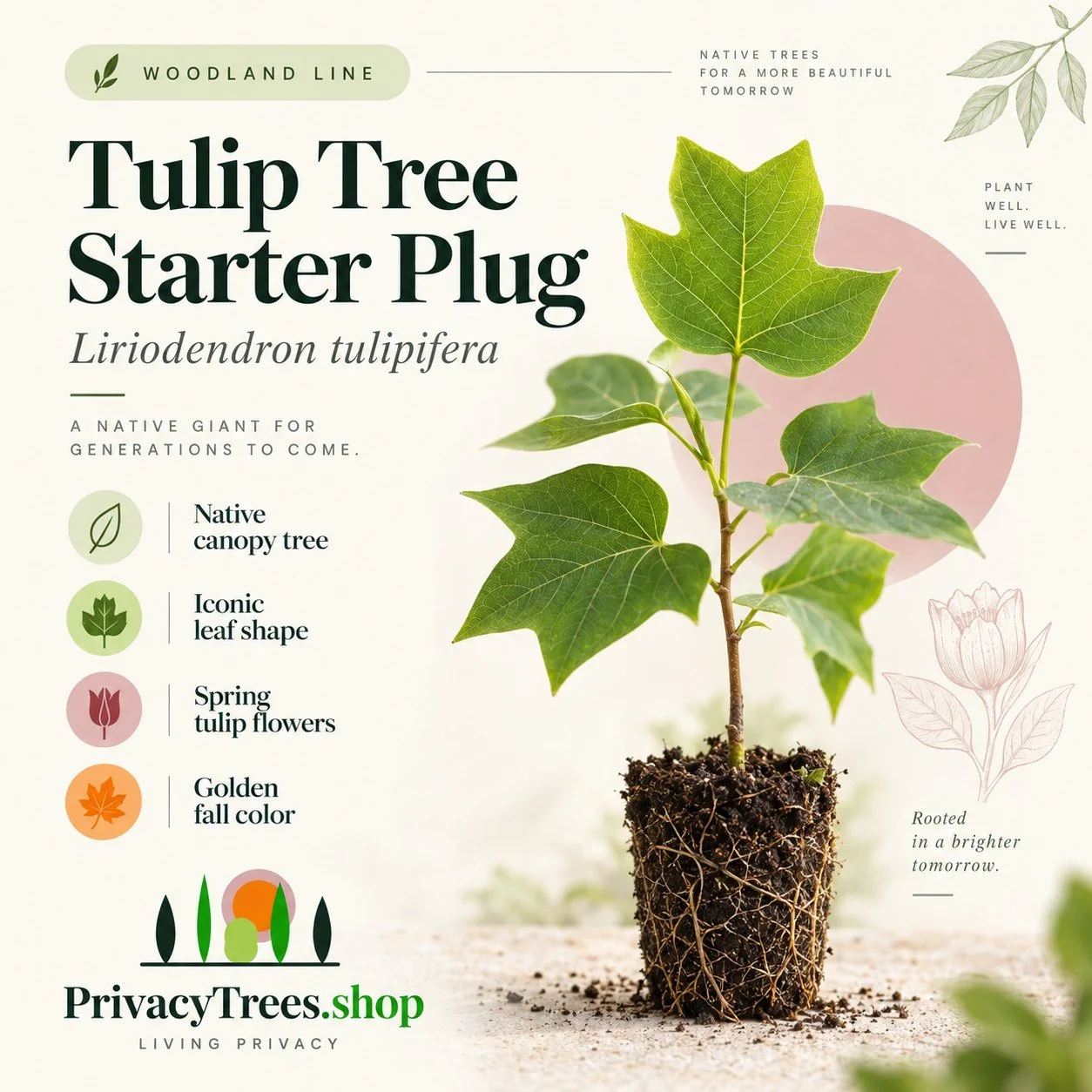 Image 1 of 12
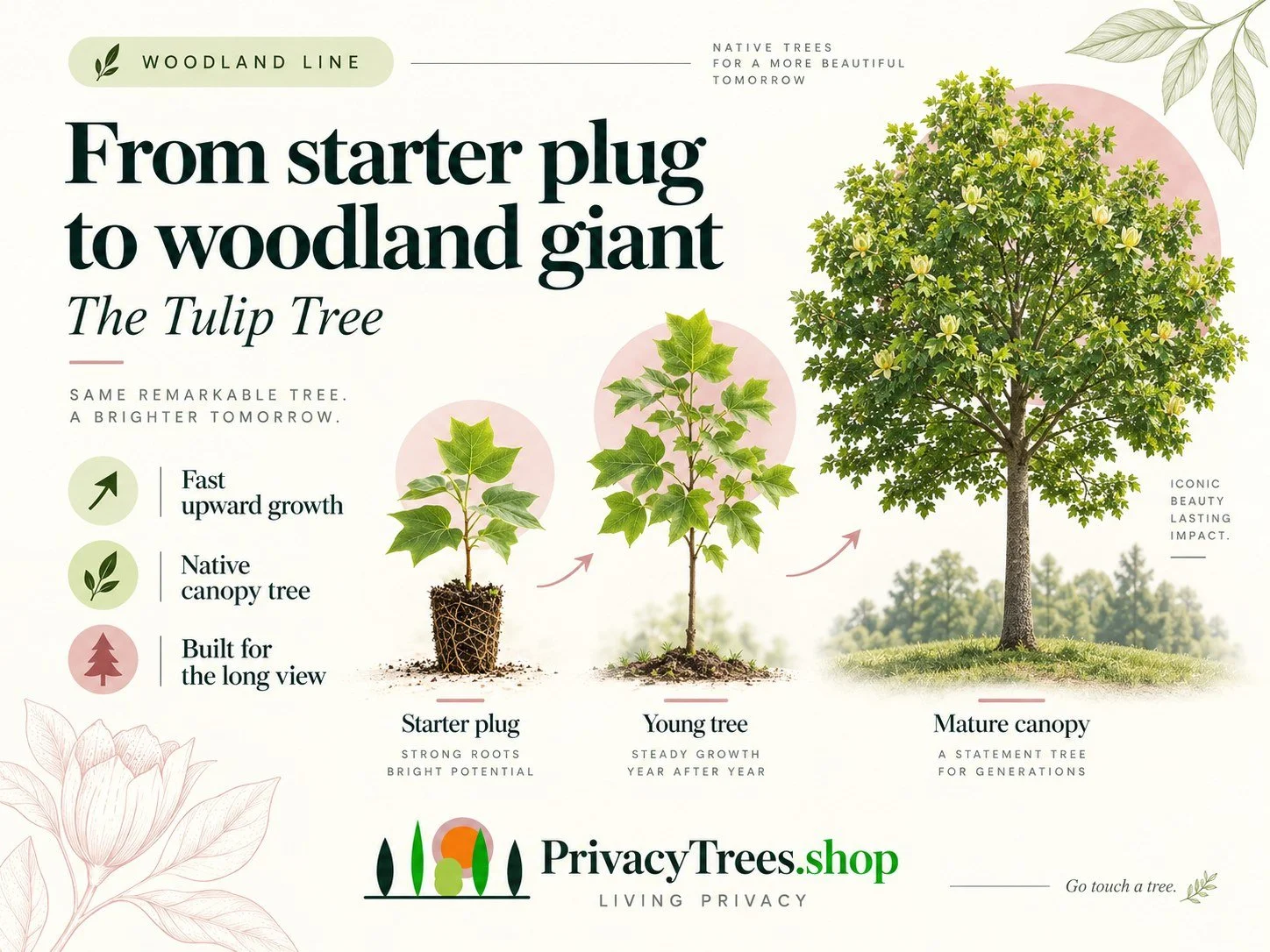 Image 2 of 12
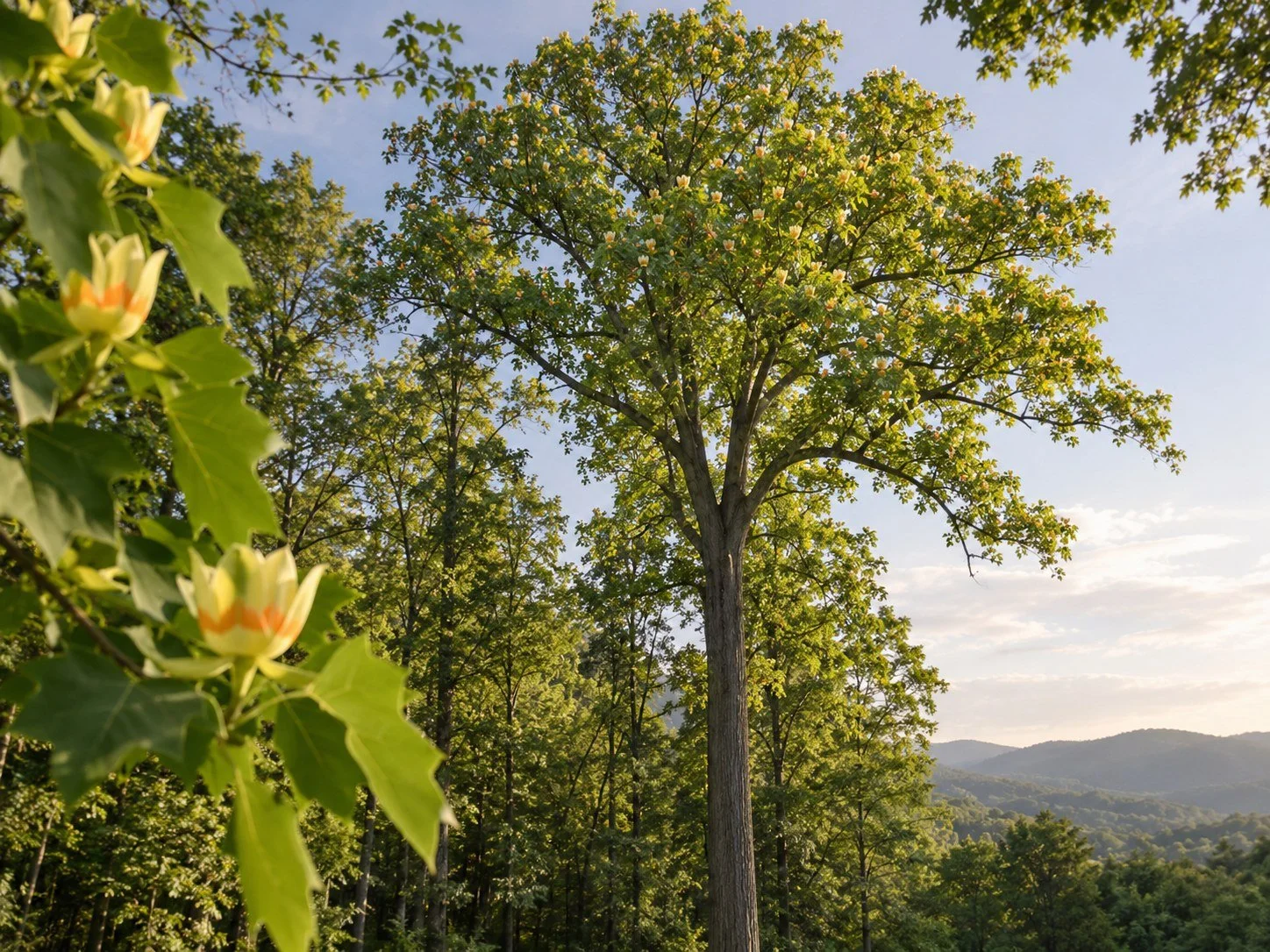 Image 3 of 12
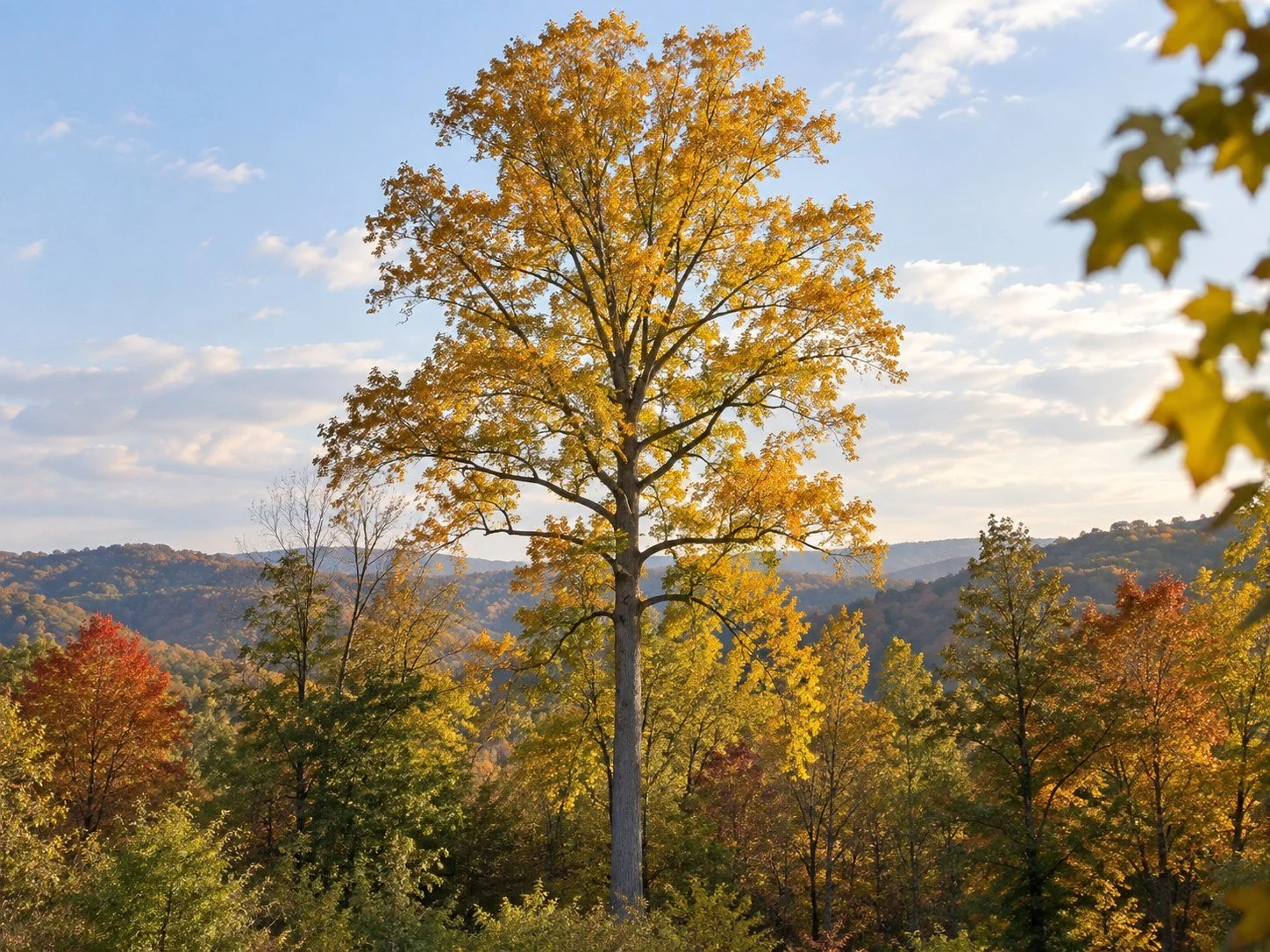 Image 4 of 12
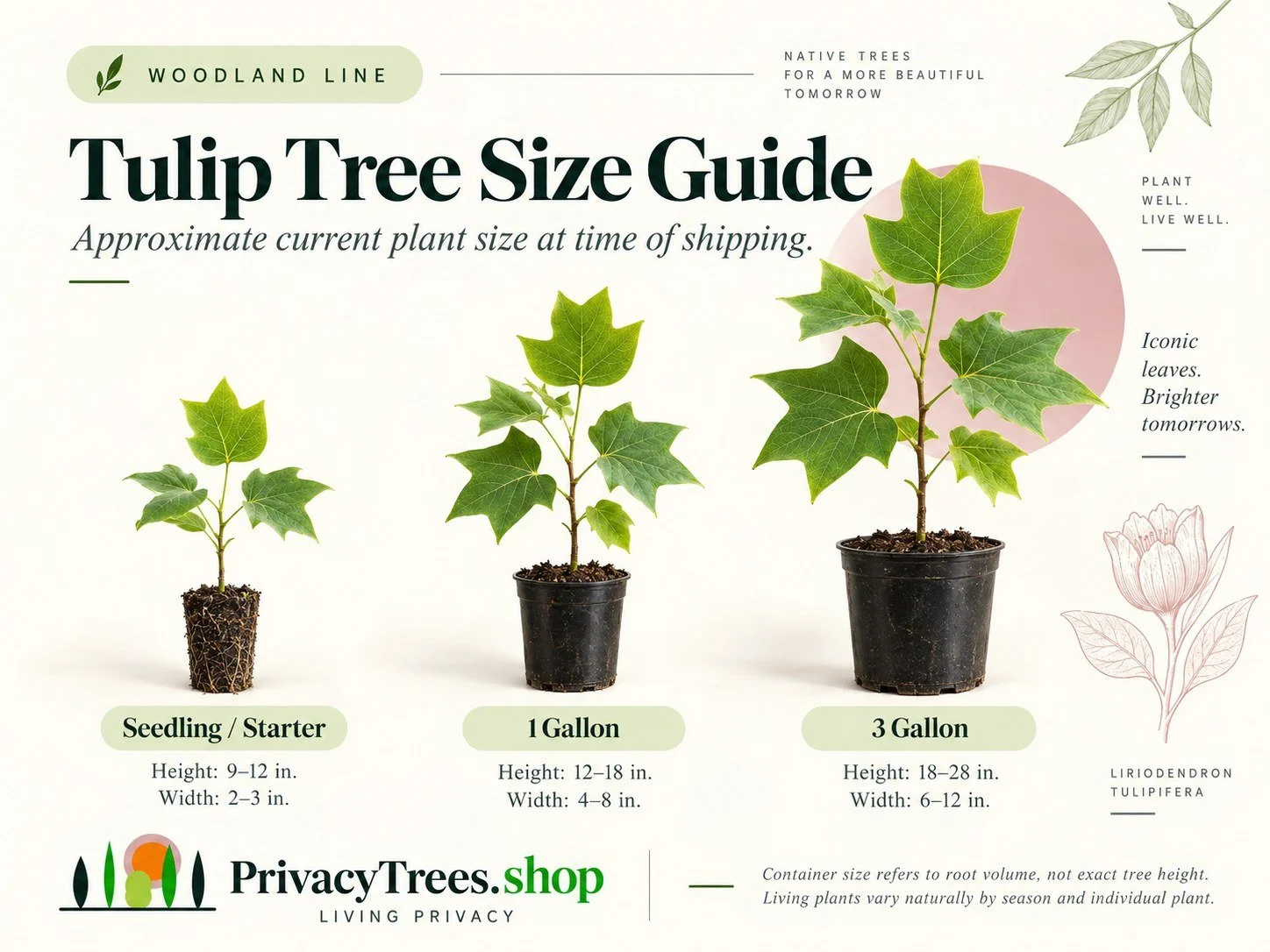 Image 5 of 12
 Image 6 of 12
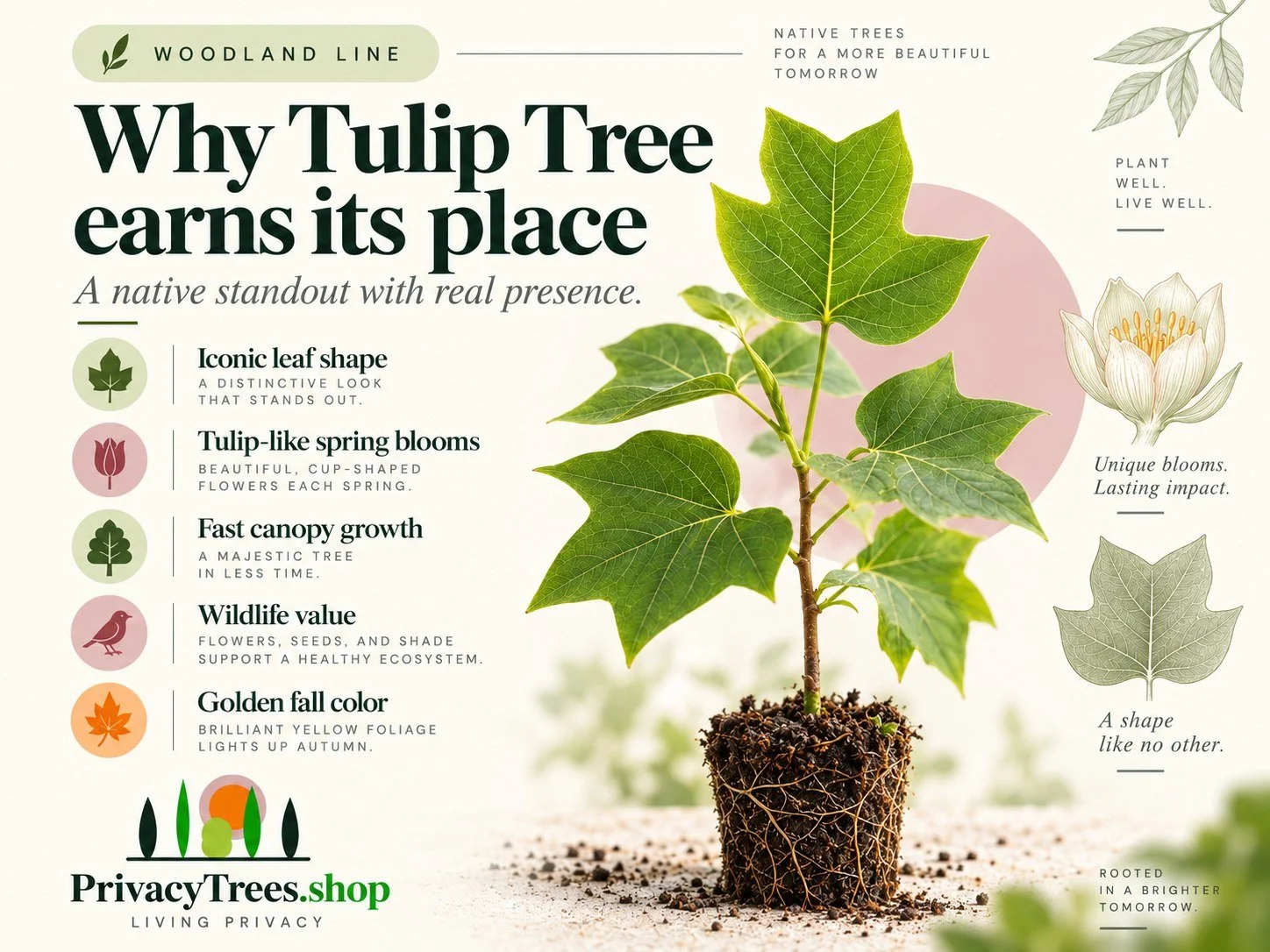 Image 7 of 12
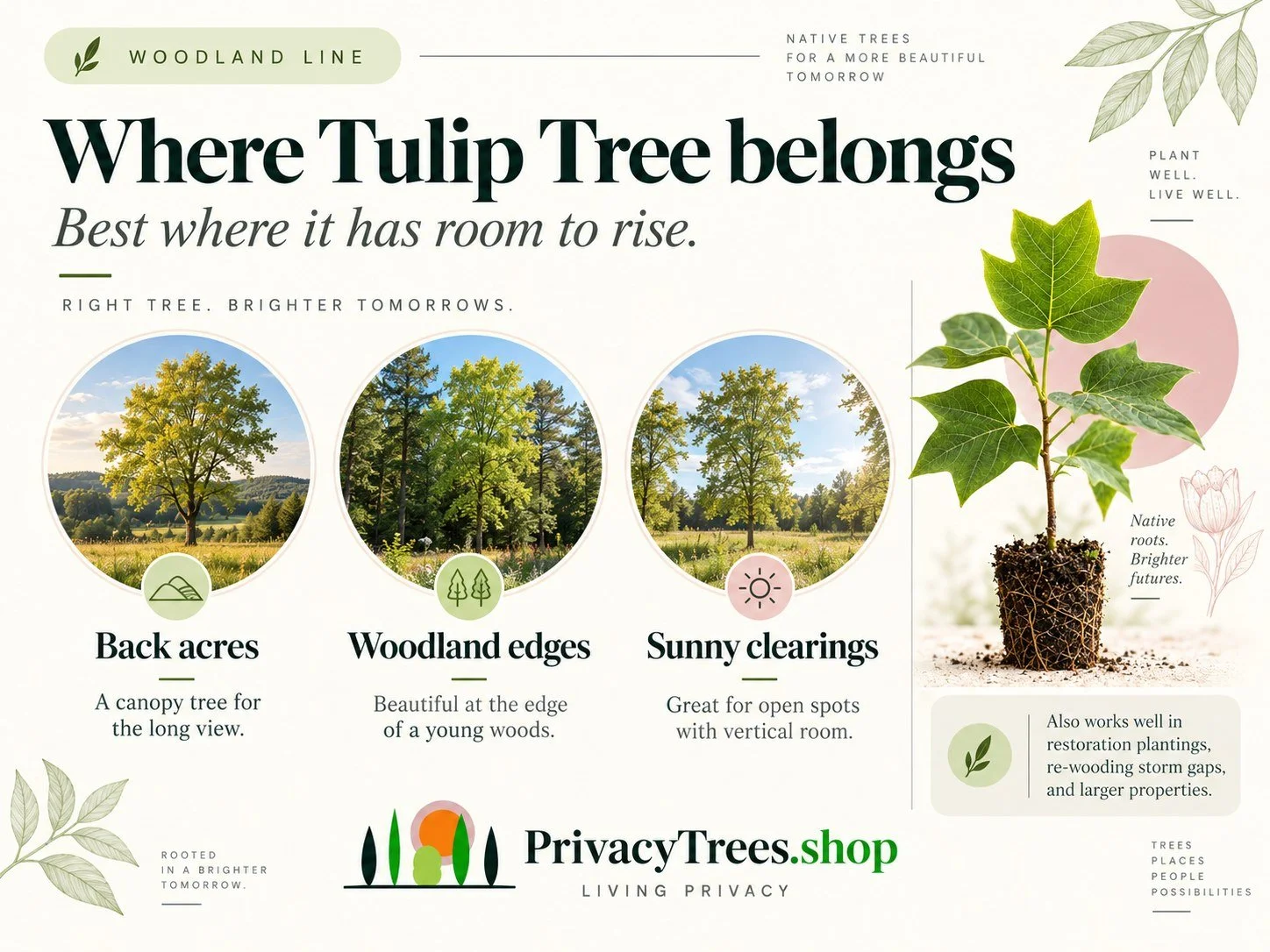 Image 8 of 12
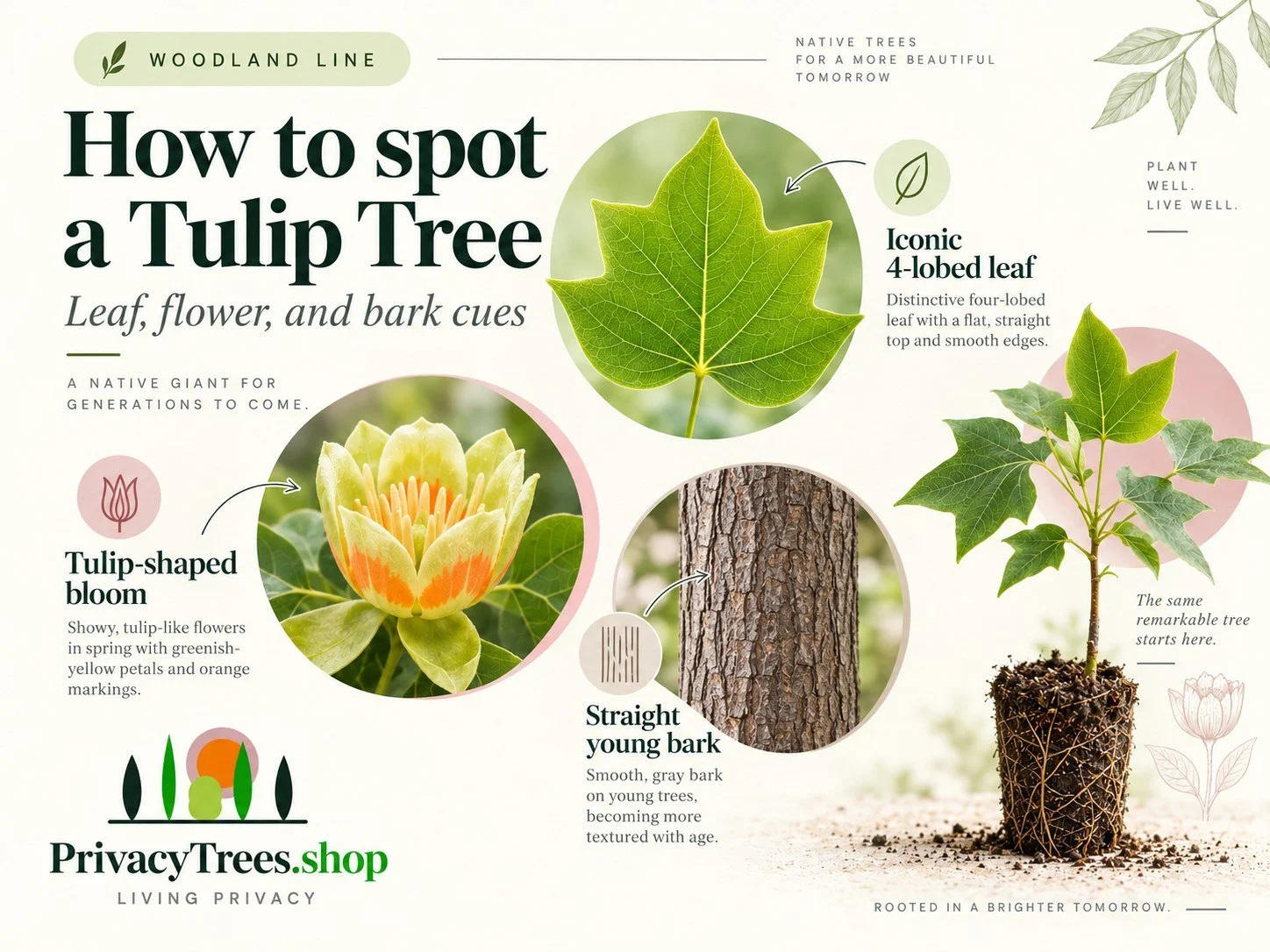 Image 9 of 12
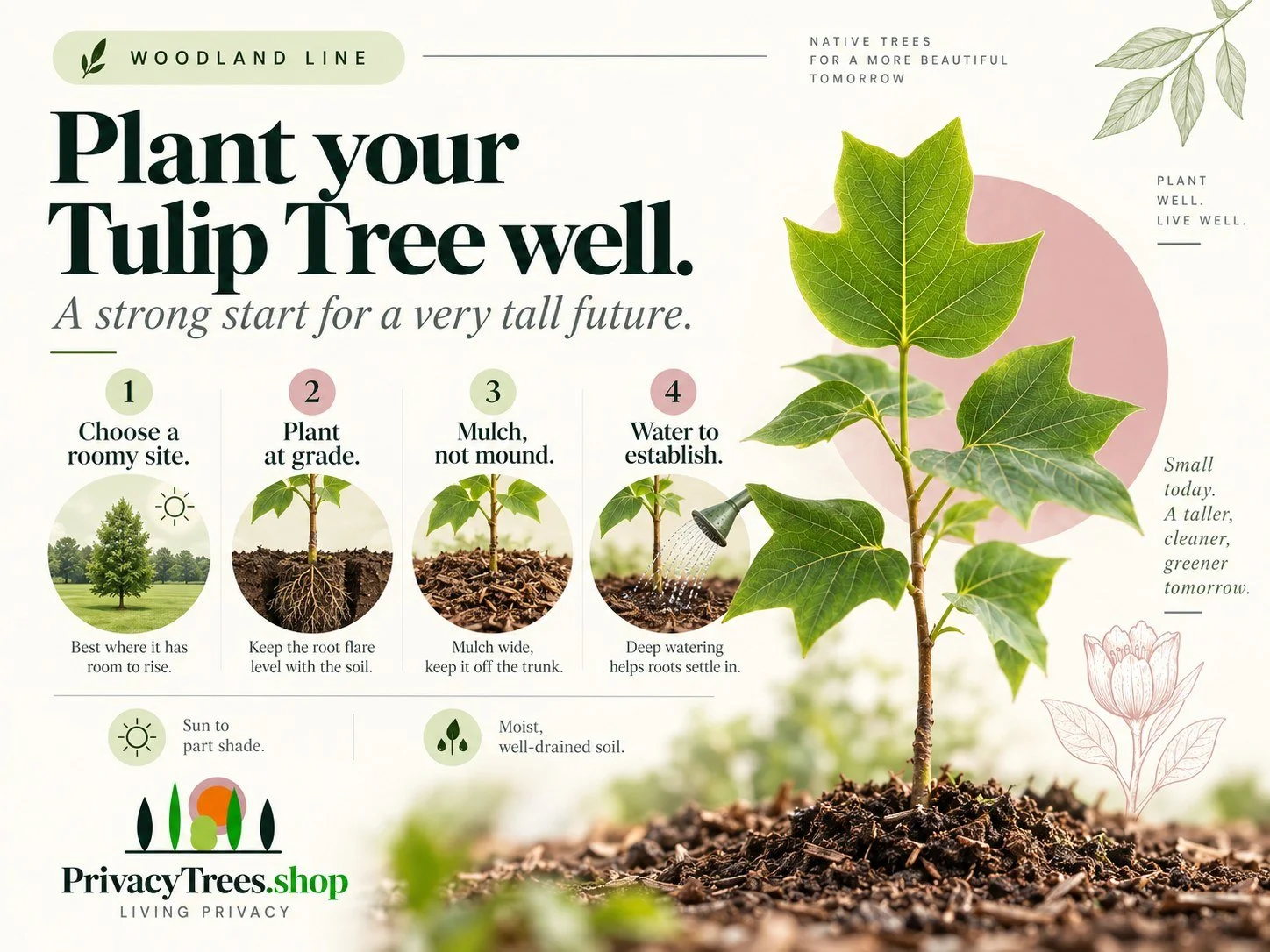 Image 10 of 12
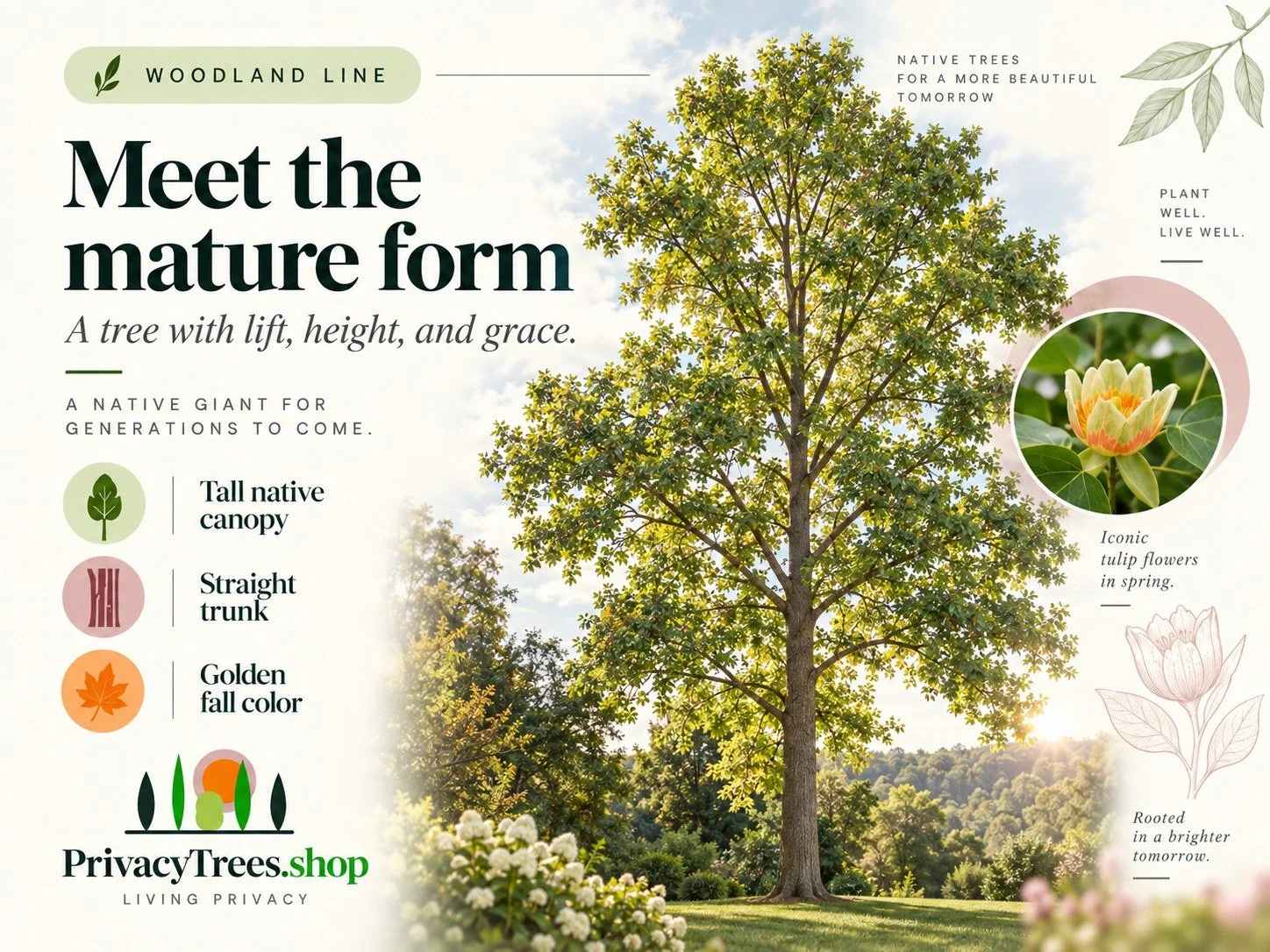 Image 11 of 12
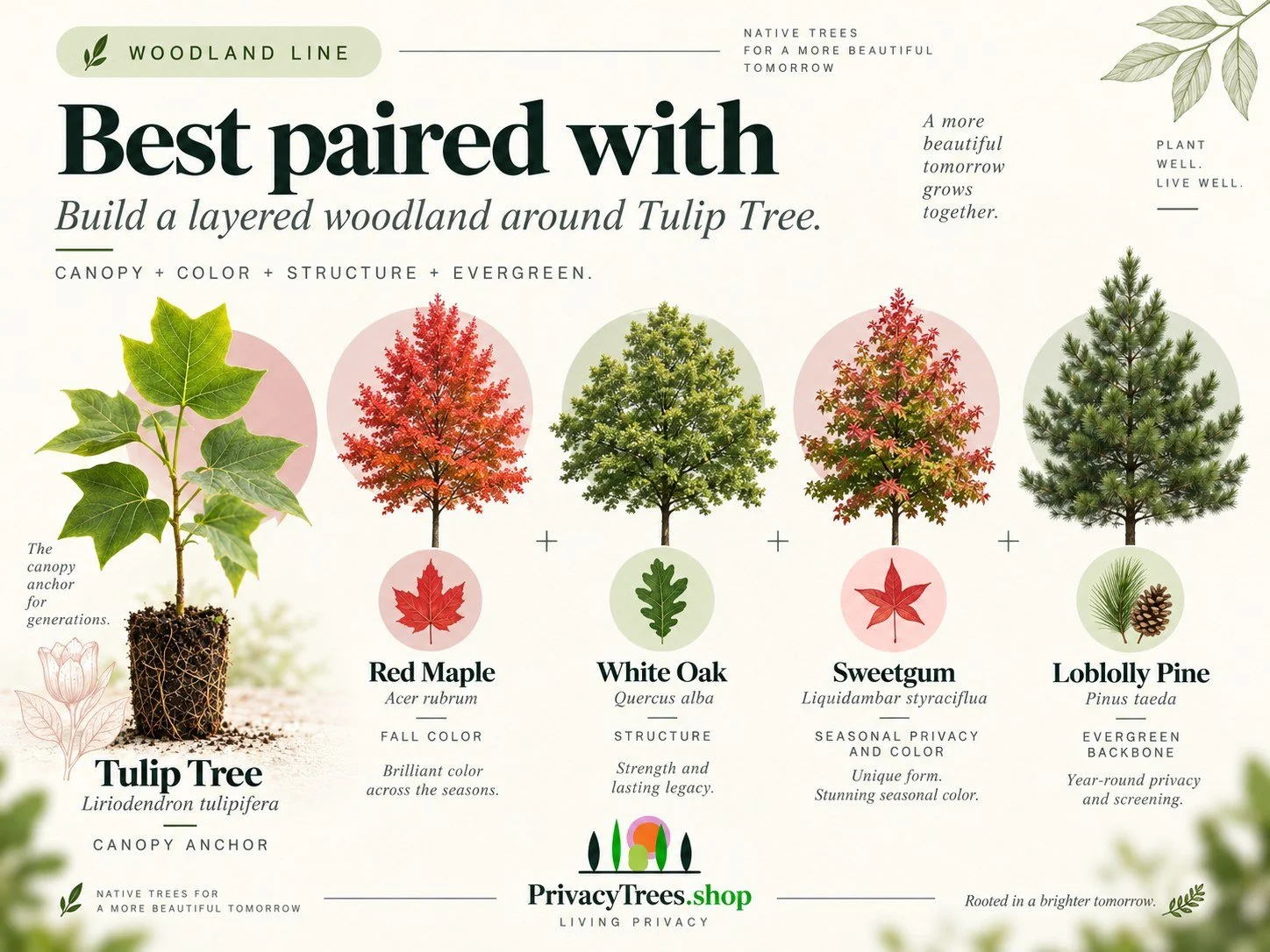 Image 12 of 12