The tree you plant for your grandchildren, and for every bird in the county.
No native tree does more than a white oak. It feeds hundreds of species of moths and butterflies, whose caterpillars feed nesting birds. Its sweet acorns are a favorite of deer, turkeys, squirrels and jays. It can live for centuries. In fall it turns a deep wine red and holds that color late.
Every white oak we sell came up on its own in our sanctuary woods in Georgia. We lift the volunteers by hand and grow them on in containers. They are the woods’ own seedlings, not nursery clones.
Why Plant an Oak Young
White oaks put down a deep taproot early and dislike being moved once they are big. A young tree planted now will almost always catch up with, and then outgrow, a large nursery oak planted the same day. Small is the smart way to plant an oak.
Choose Your Size
Starter plug — about 9–12 in. tall. The best value, and the easiest to establish. Available singly, as a 3-pack or as a 6-pack.
1-gallon — about 12–18 in. tall, with a fuller root system.
3-gallon — about 18–28 in. tall. A head start of a season or two.
Shipping is included in the price. Sizes are approximate at the time of shipping; living plants vary with the season and the individual tree.
What Arrives
One healthy, rooted Eastern white oak (or three or six, if you chose a pack)
A plant tag, so you always know what you planted
A simple planting guide
Packed to arrive safely
Oaks are heavily mycorrhizal in the wild. Add the Mycorrhizal Bio-Shield for a stronger start.
About Eastern White Oak
Botanical name: Quercus alba
Mature size: 50–80 ft tall, with a broad crown just as wide
Growth: slow to moderate, and long-lived
Hardiness: zones 3–9
Light: full sun
Soil: well-drained. Avoid standing water.
Wildlife: one of the most valuable trees in eastern North America
Type: deciduous native hardwood
Where to Plant It
Somewhere it can stay forever. This tree will outlive the house. Give it open sun and at least 30 ft from buildings.
The center of a storm gap, where it can take the light.
In pairs or groups for wildlife. Several oaks together produce more acorns than one alone.
Not for quick privacy. White oak is a legacy tree, not a screen. Pair it with an evergreen if you need cover now.
First-Year Care
It will look dead in winter. Oaks can also hold dry brown leaves into spring. Both are normal.
Plant it dormant if you can: late fall through early spring.
Water deeply through the first growing season.
Mulch a ring a few inches deep, pulled back from the stem.
No fertilizer in year one.
Deer: the biggest threat to a young oak. Protect it. A tree browsed back every year never gets away.
Pairs Well With
Go touch a tree.

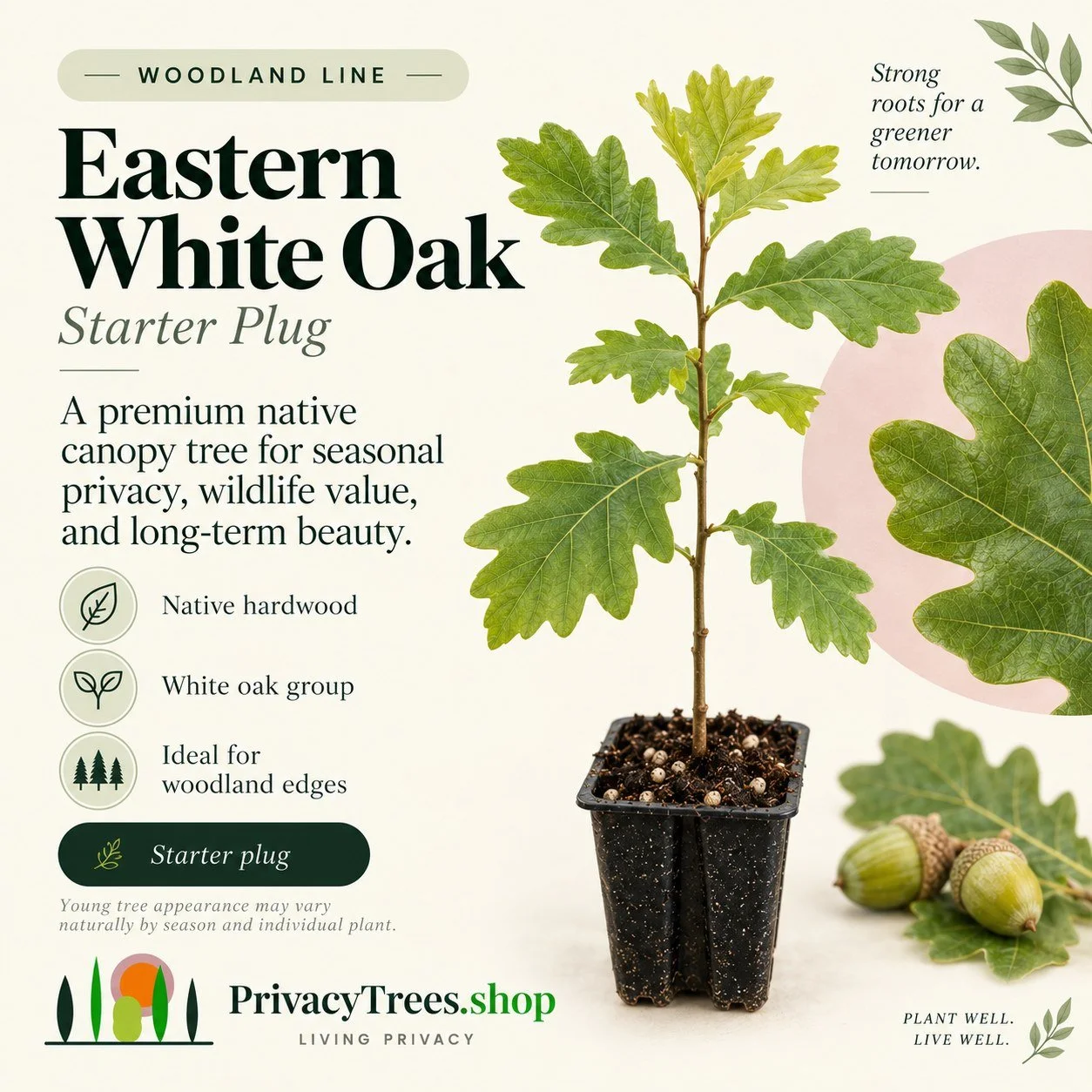 Image 1 of 13
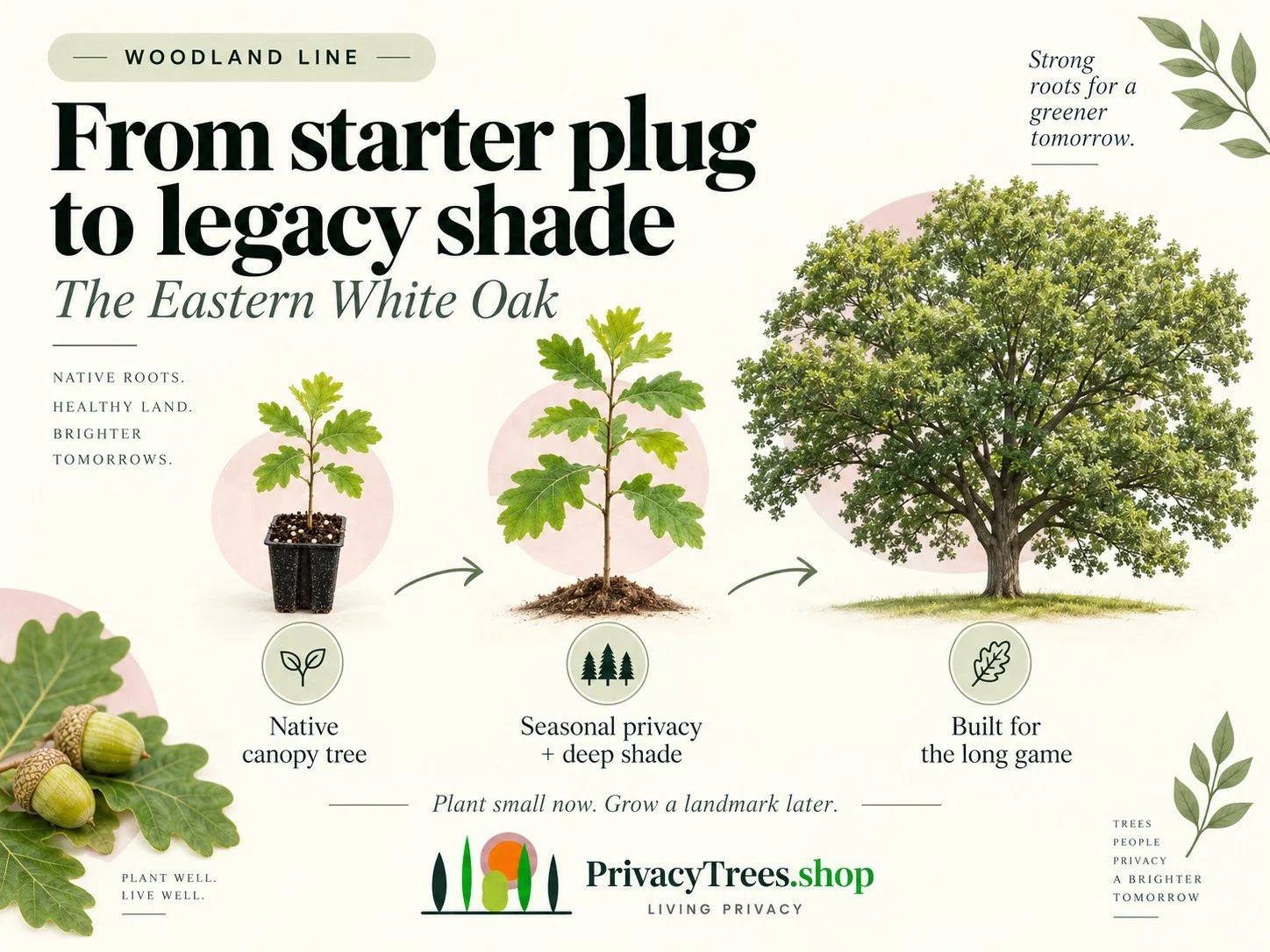 Image 2 of 13
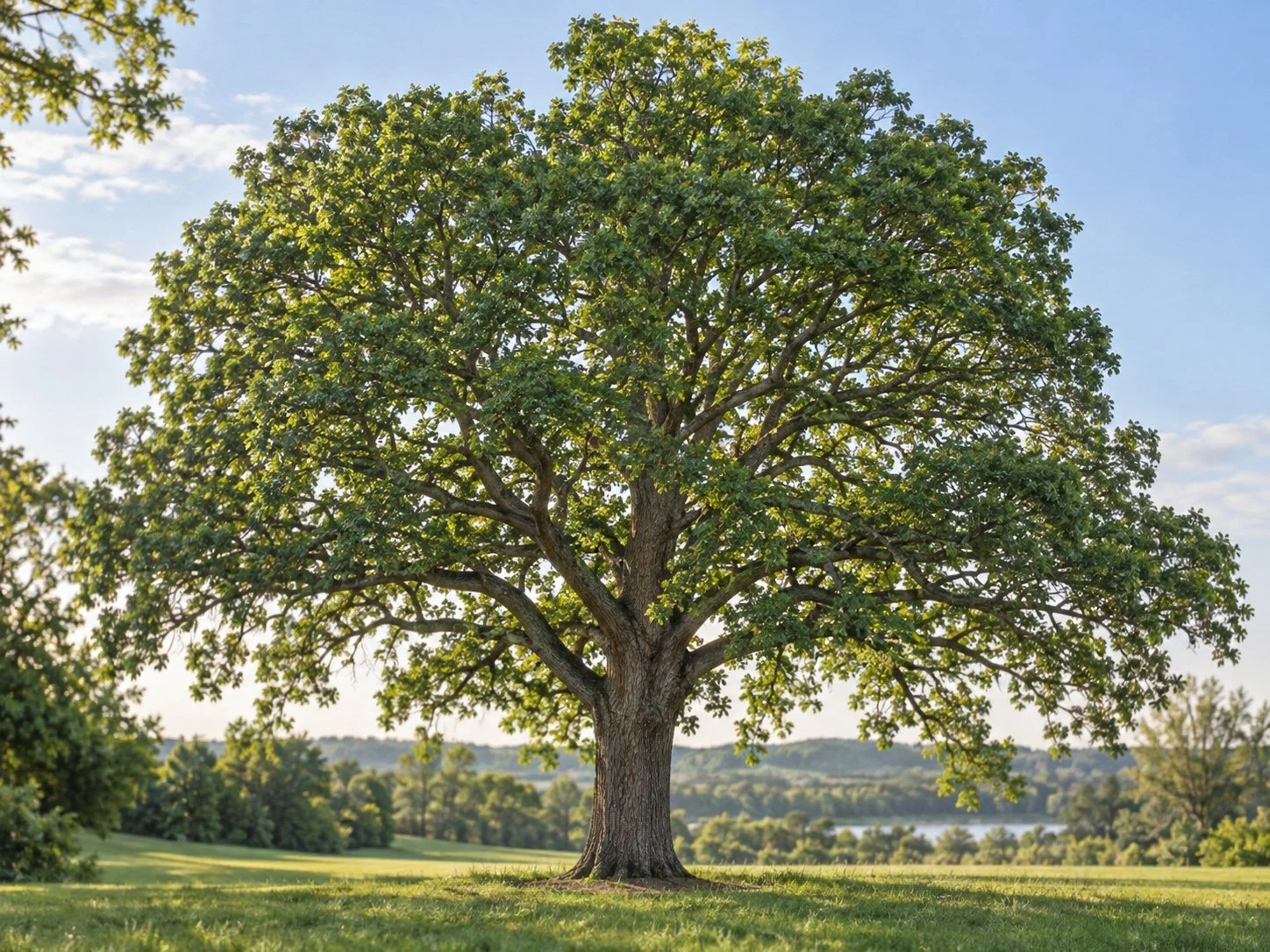 Image 3 of 13
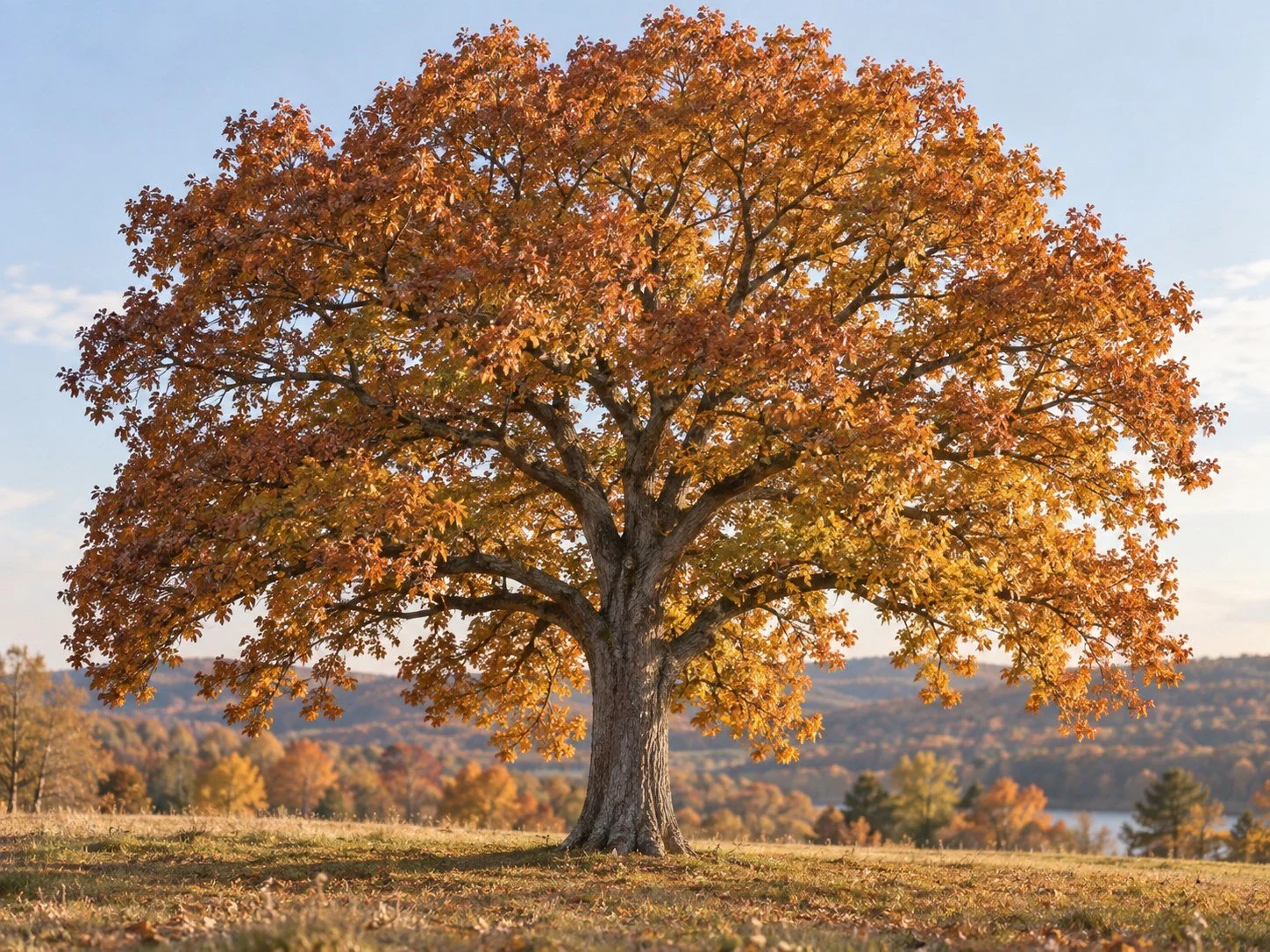 Image 4 of 13
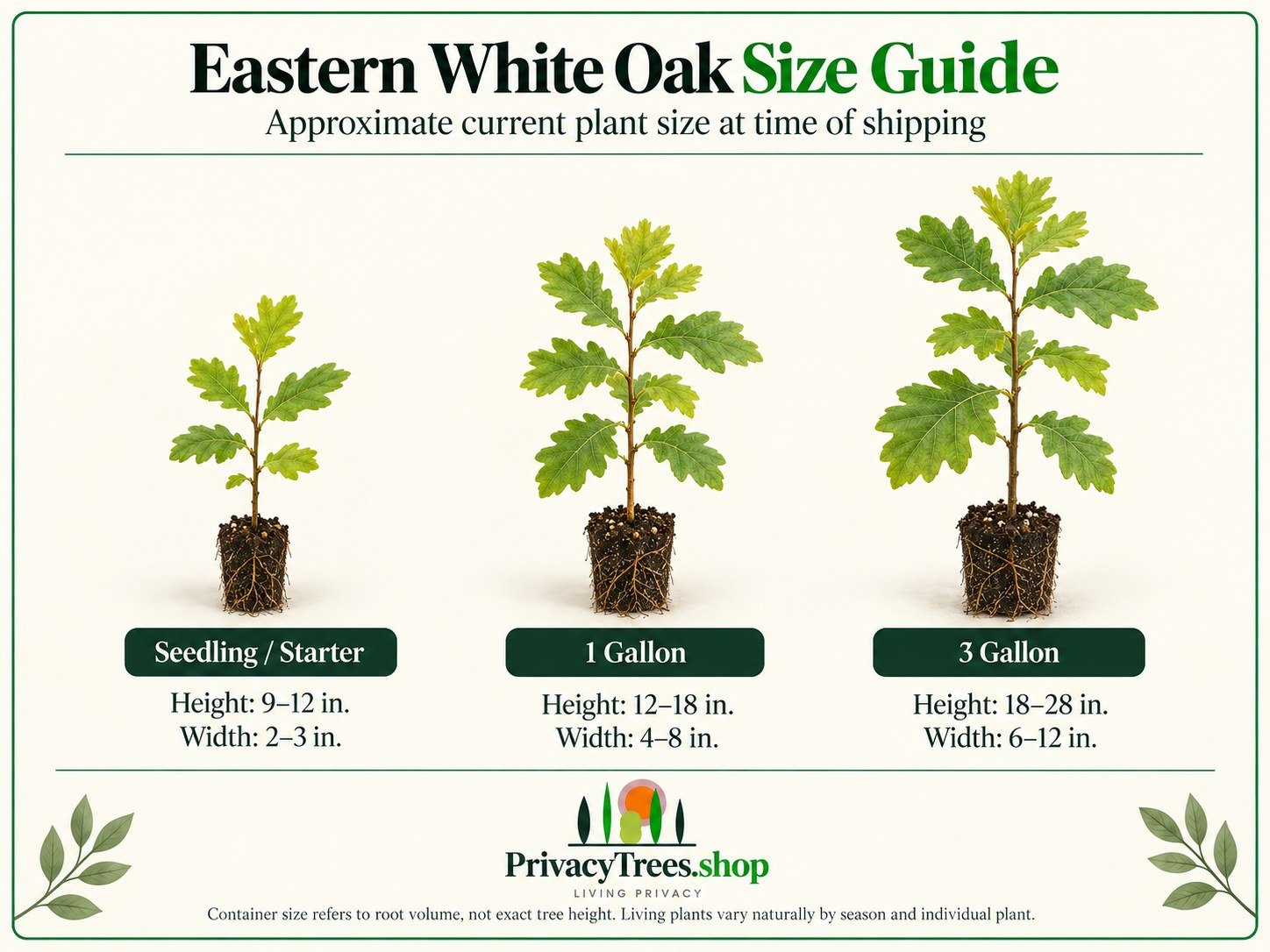 Image 5 of 13
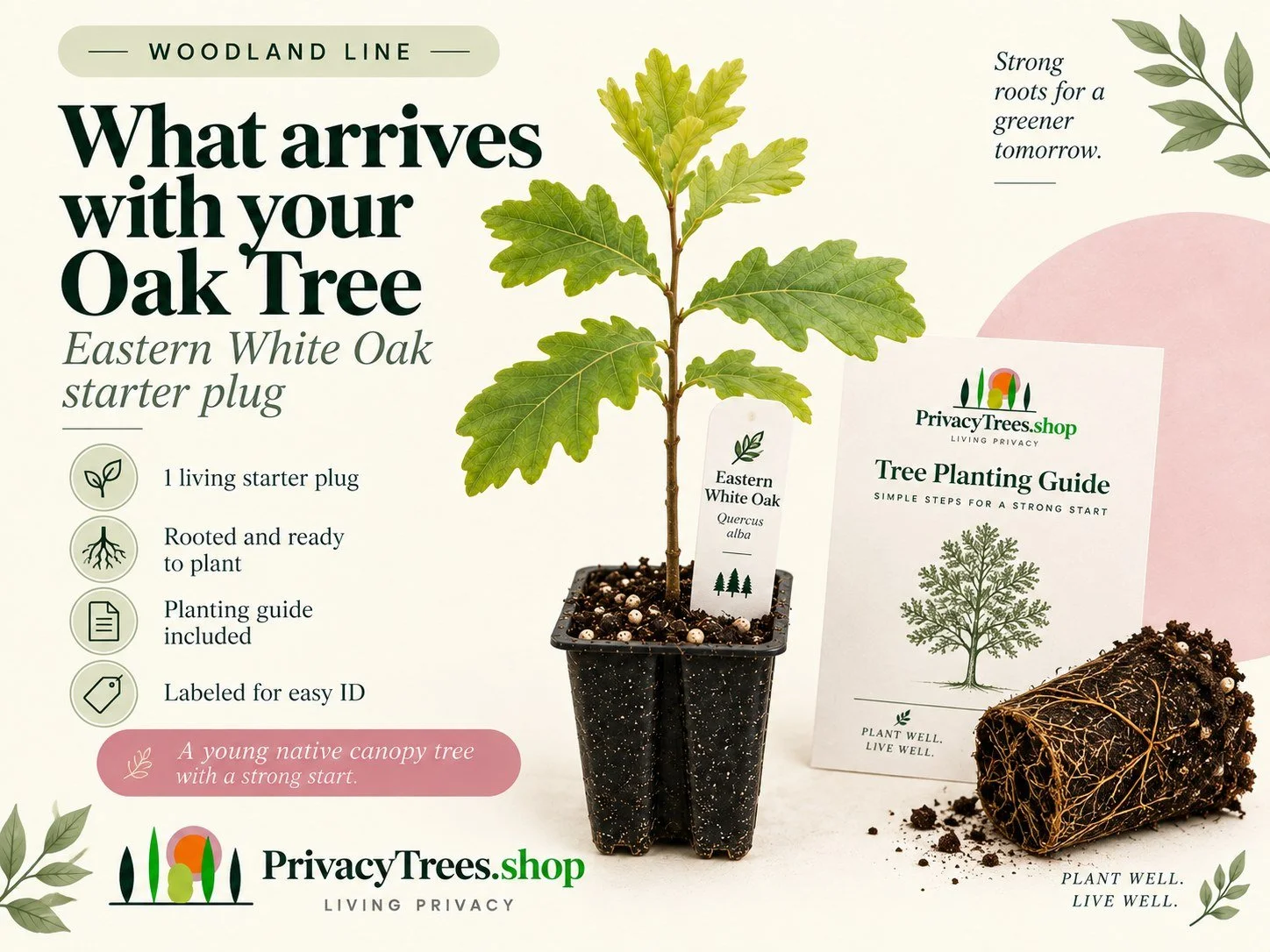 Image 6 of 13
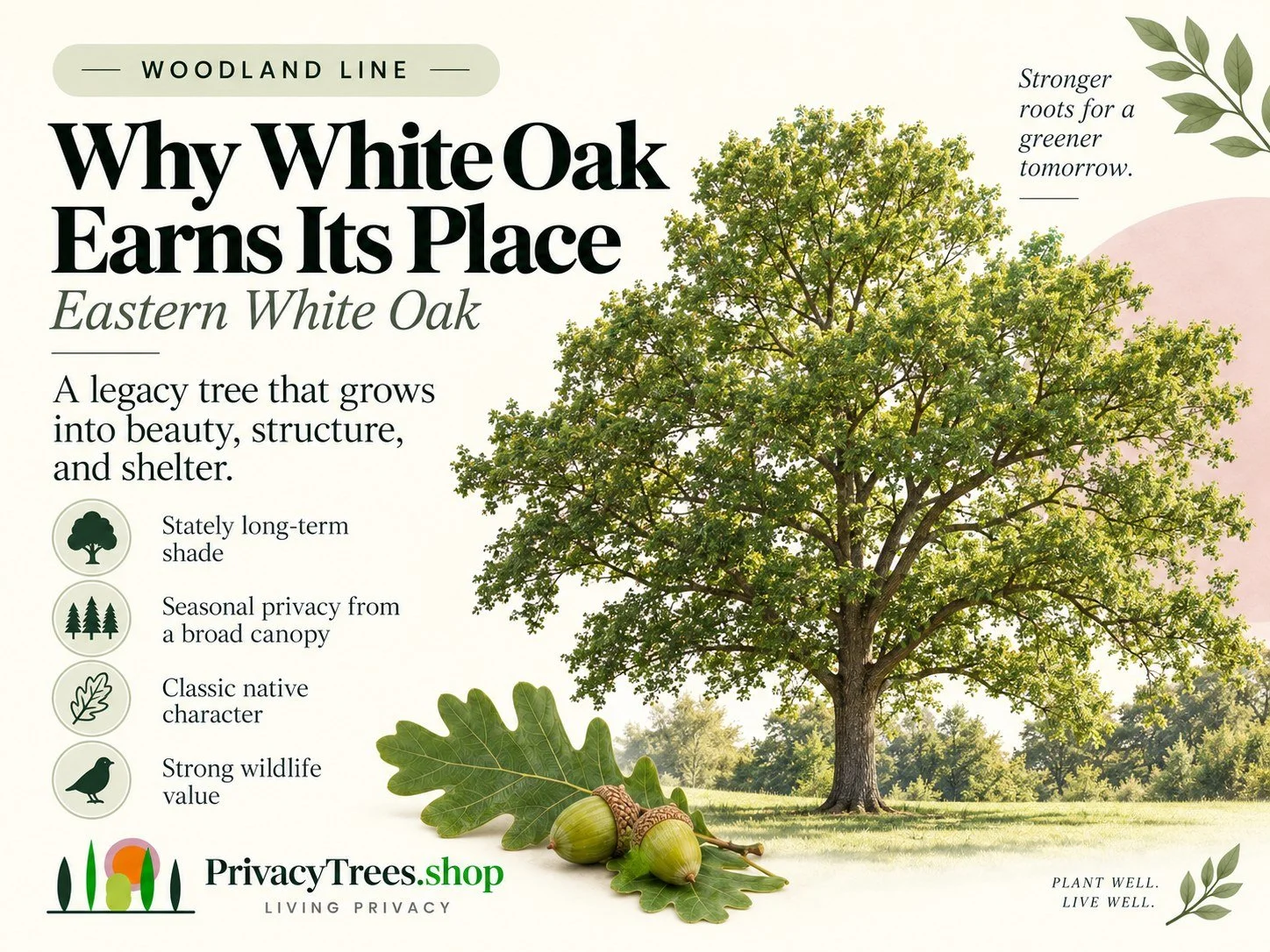 Image 7 of 13
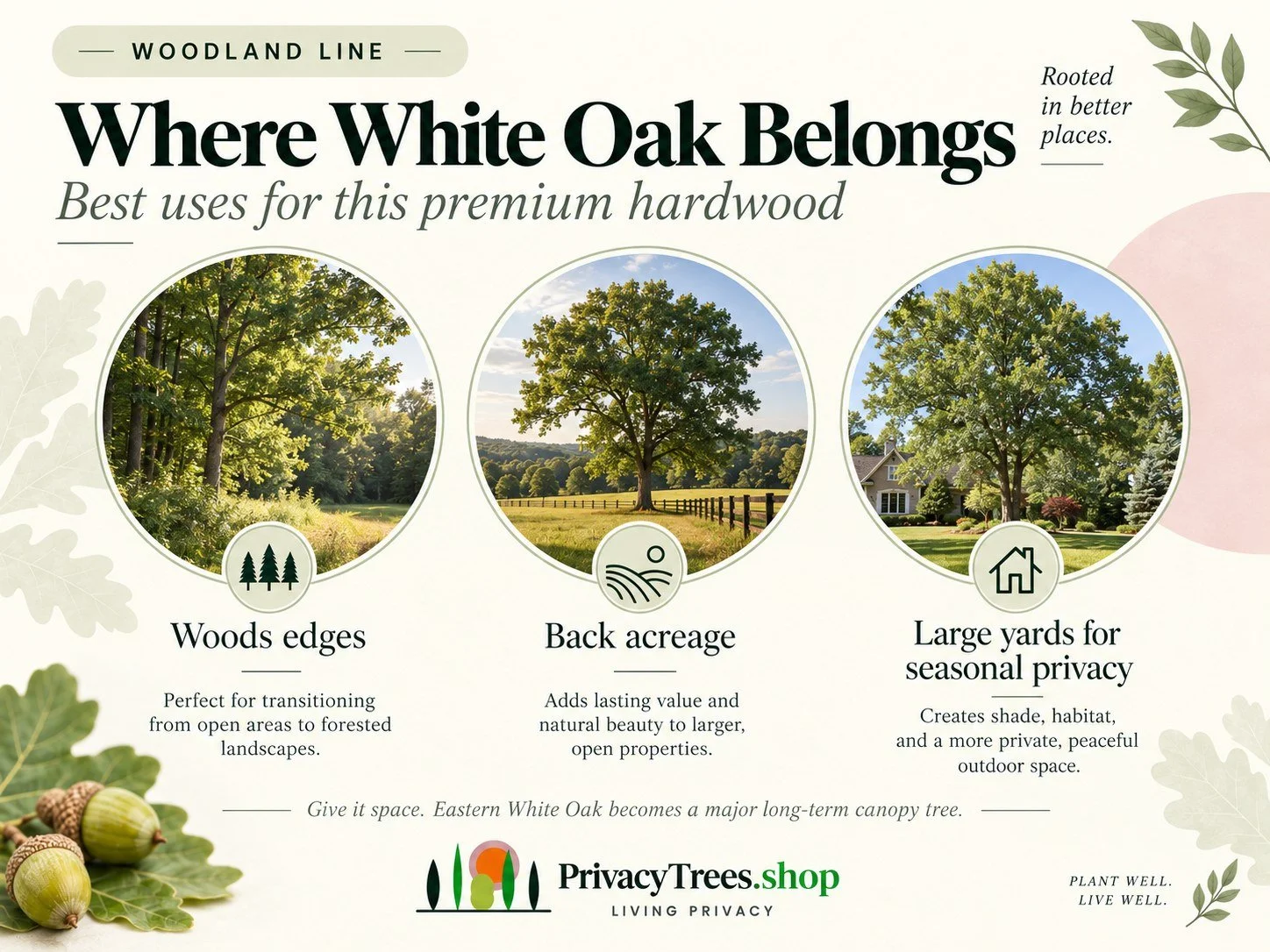 Image 8 of 13
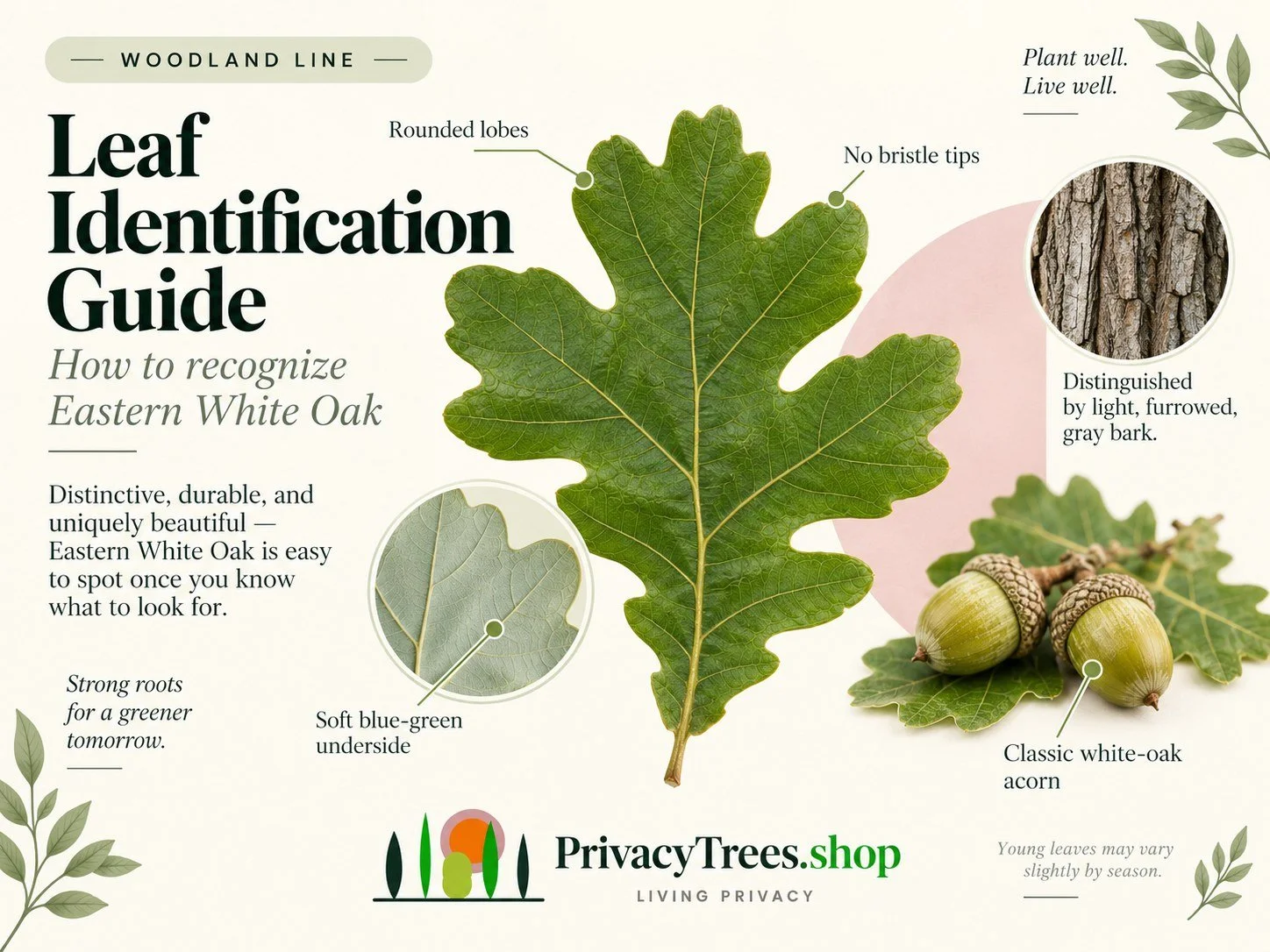 Image 9 of 13
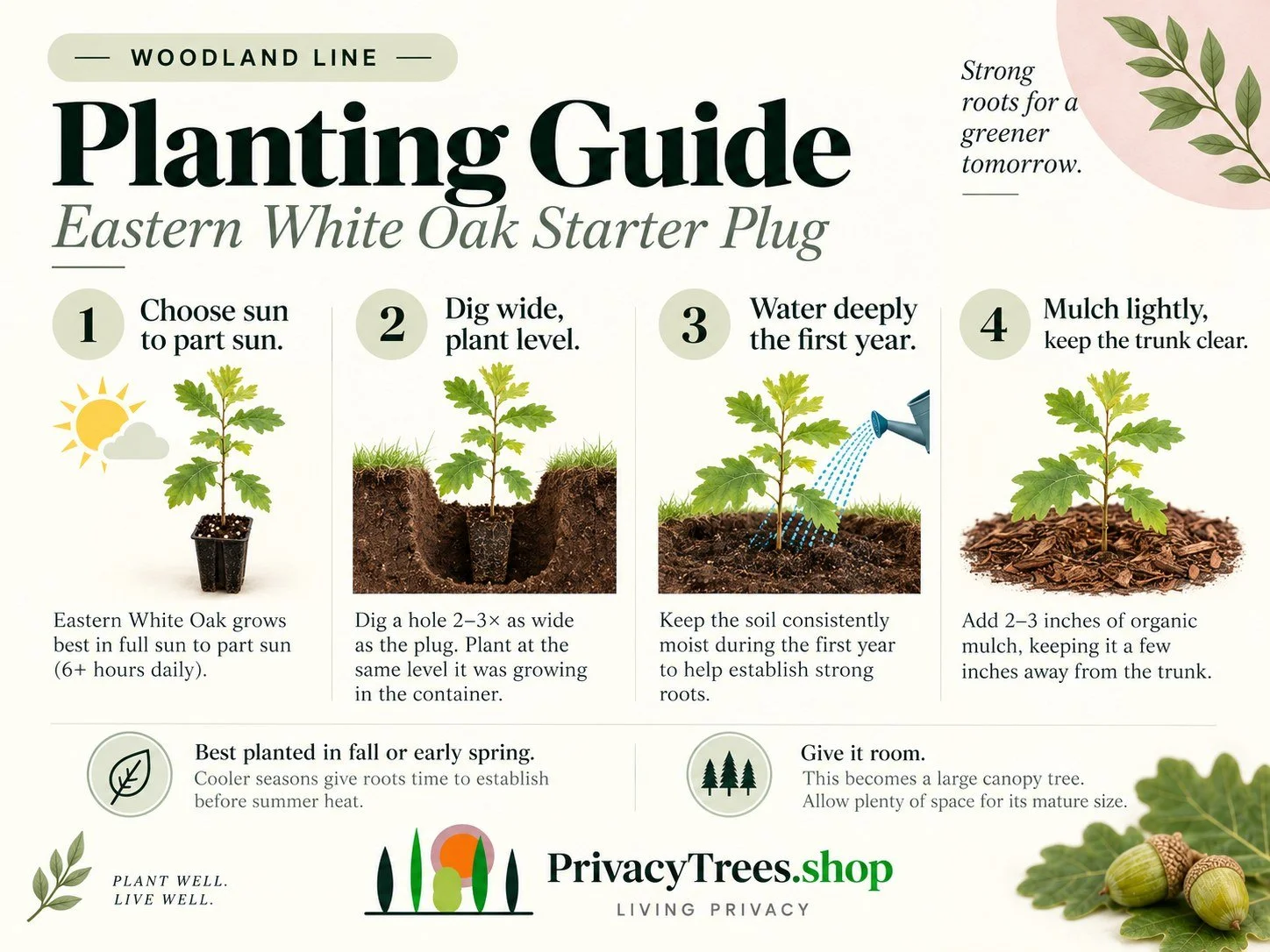 Image 10 of 13
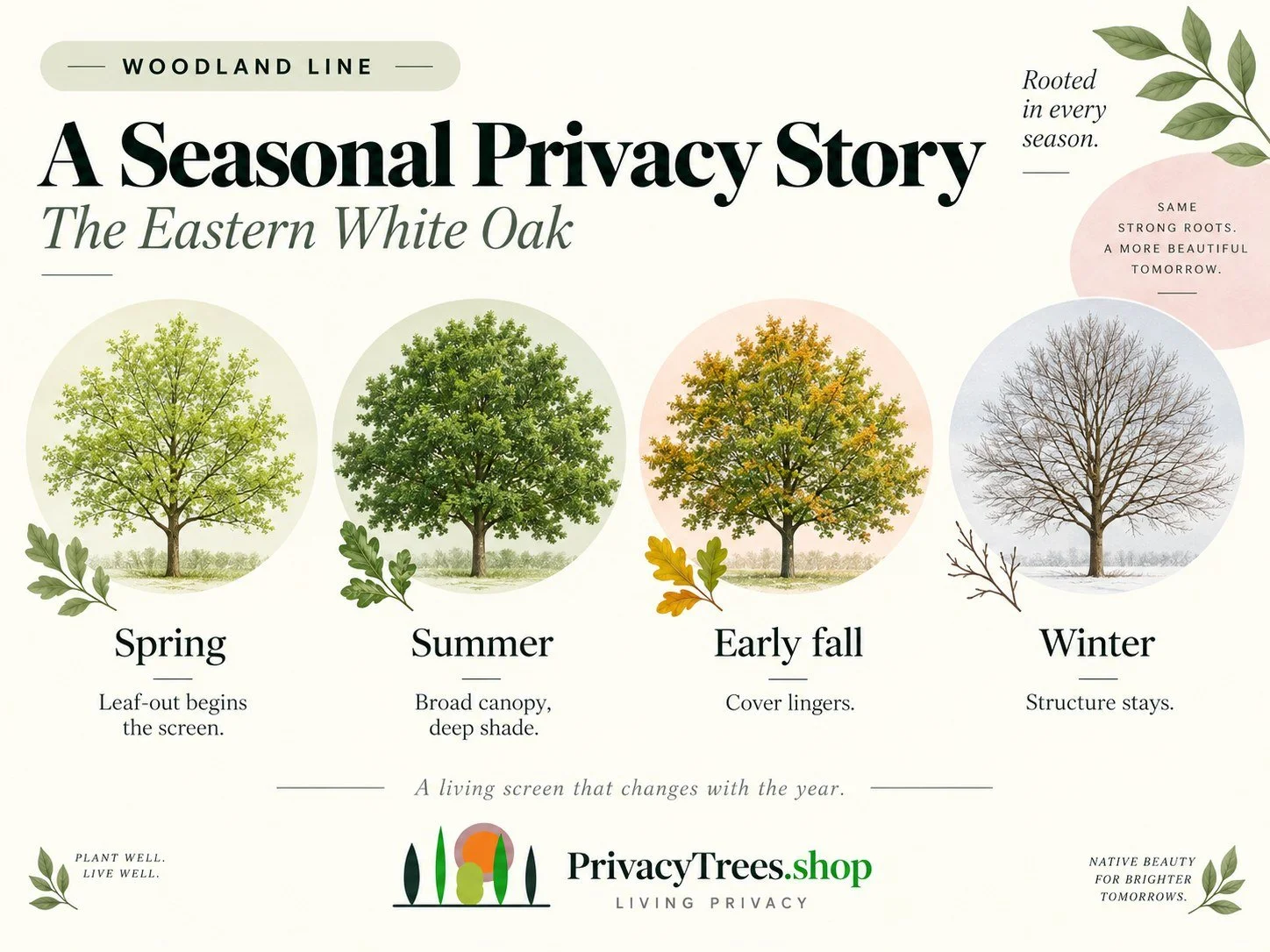 Image 11 of 13
 Image 12 of 13
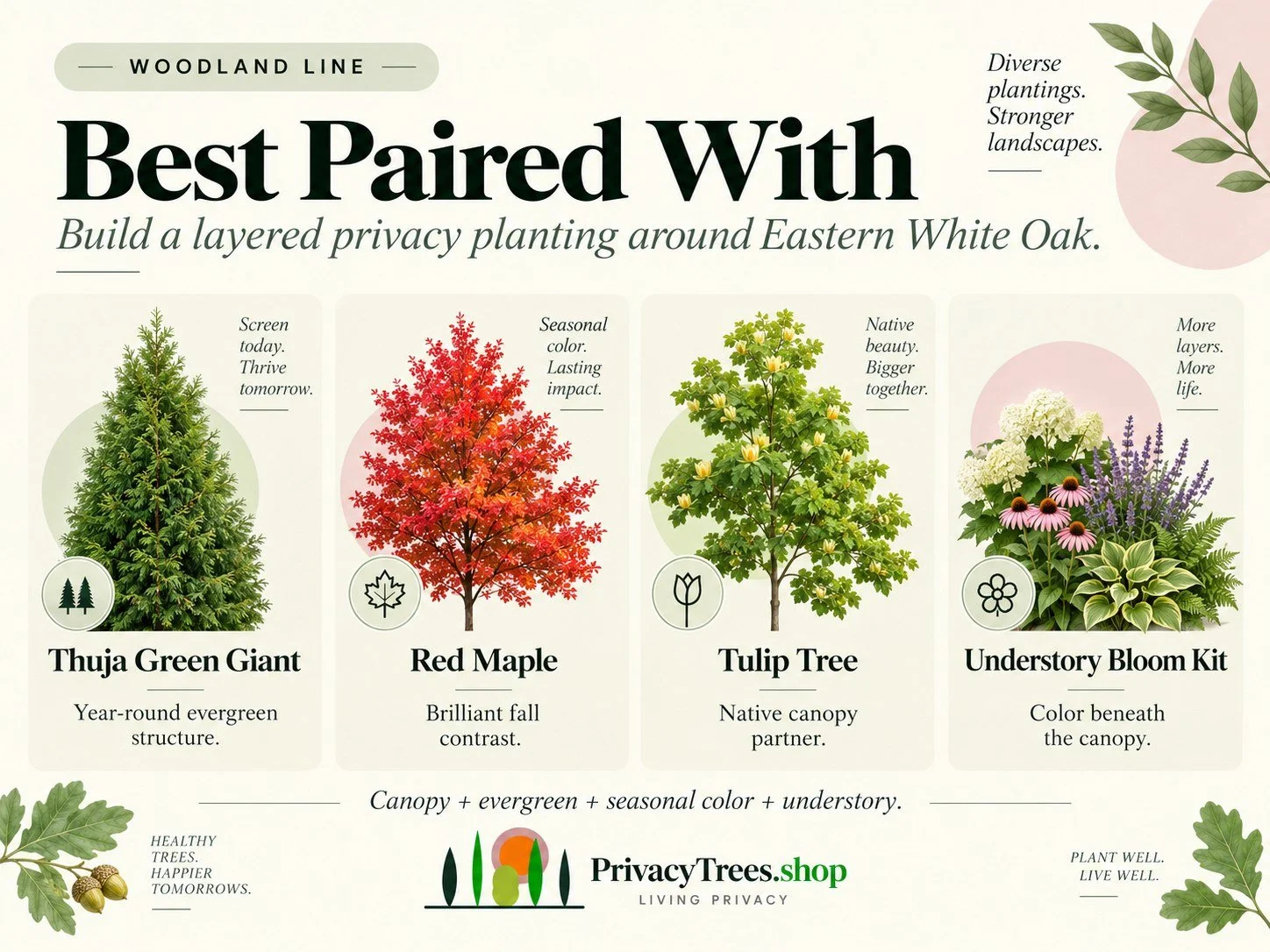 Image 13 of 13