
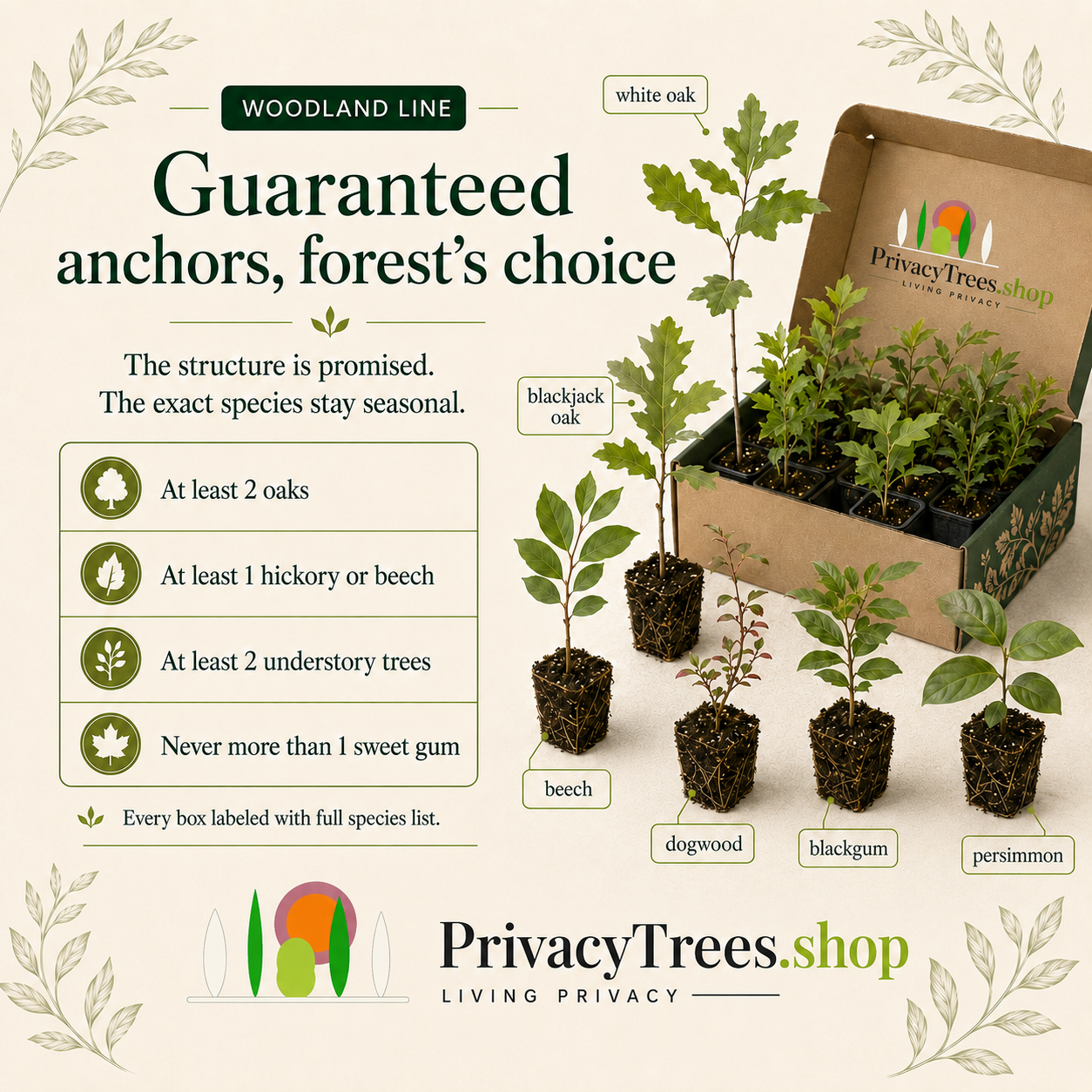
 Image 1 of 5
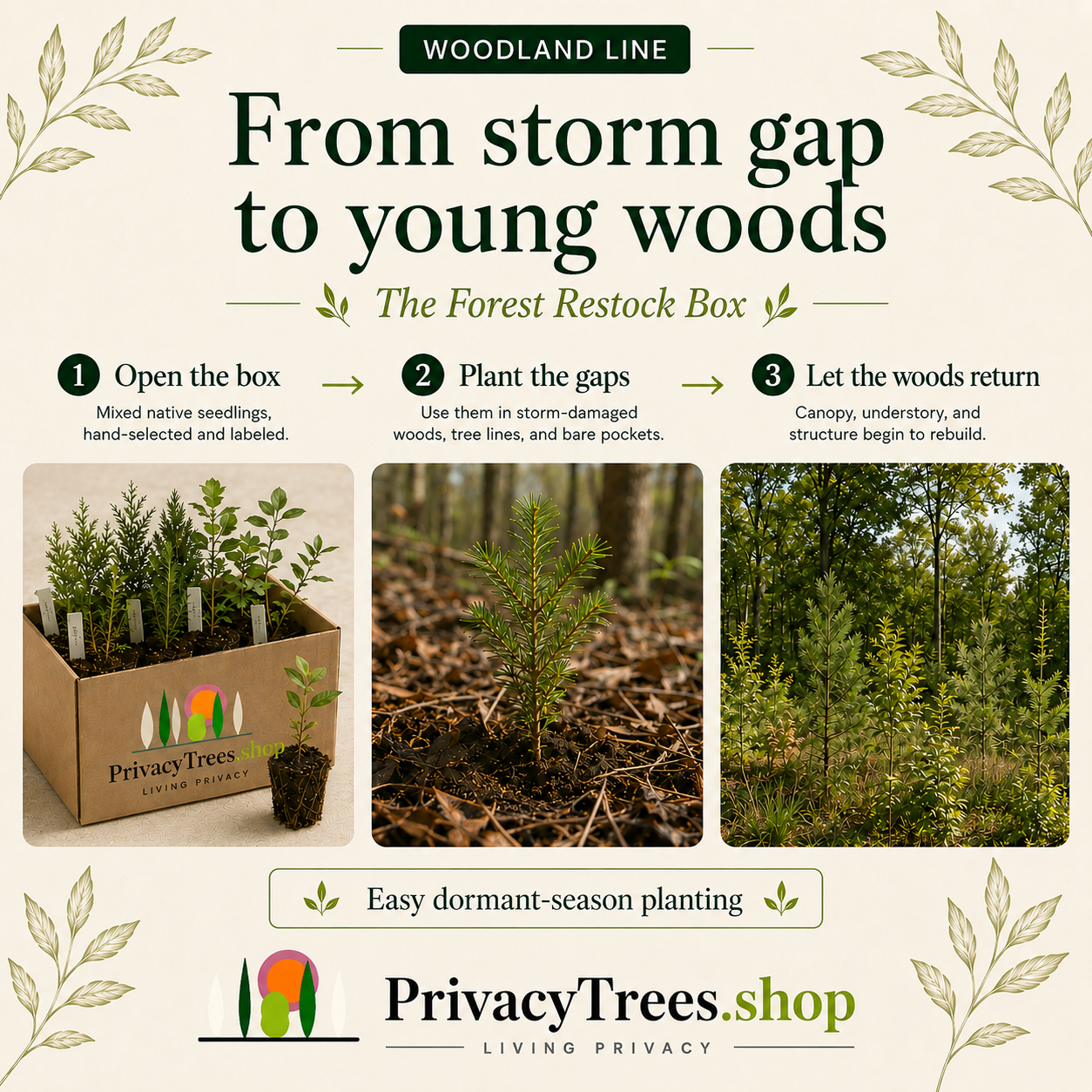 Image 2 of 5
 Image 3 of 5
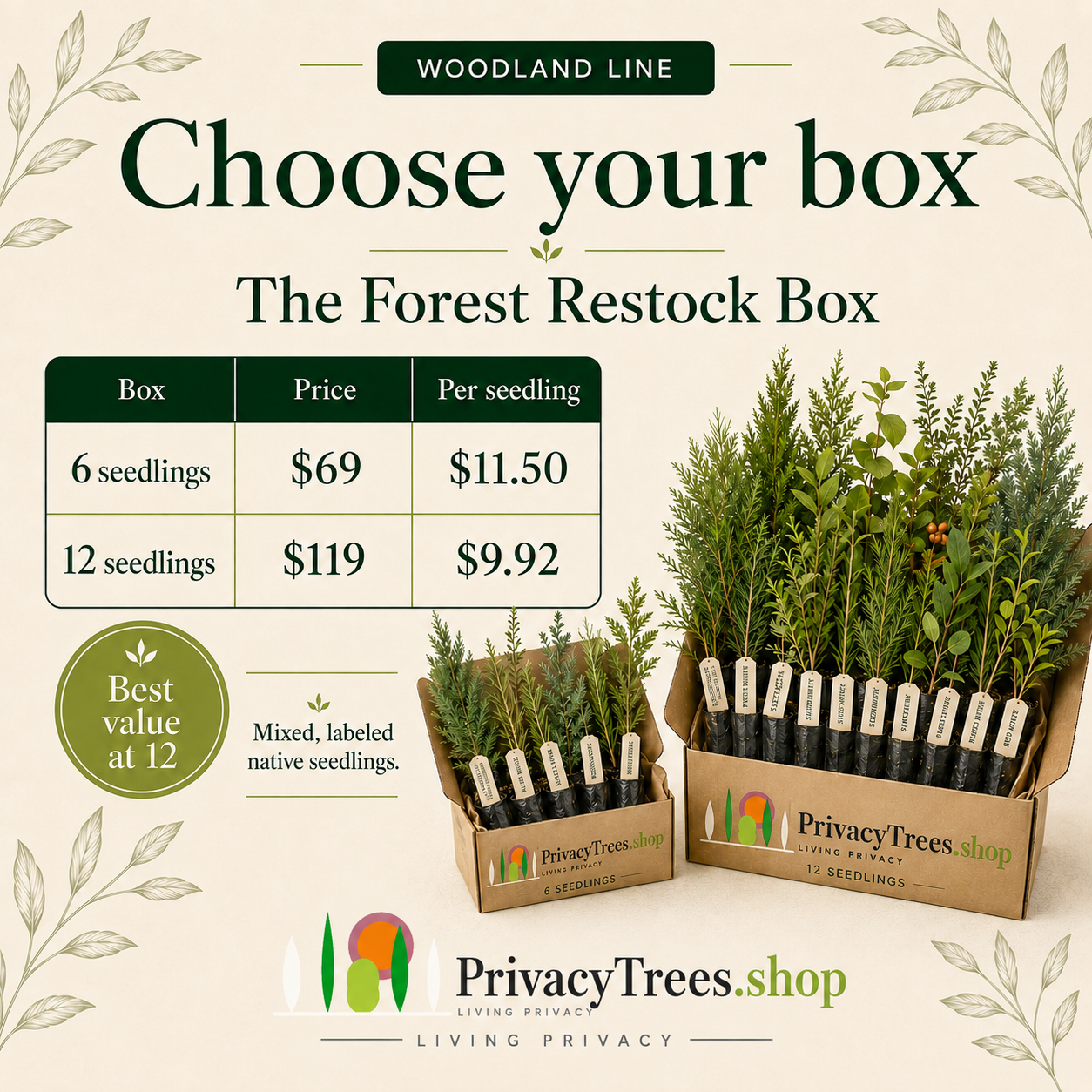 Image 4 of 5
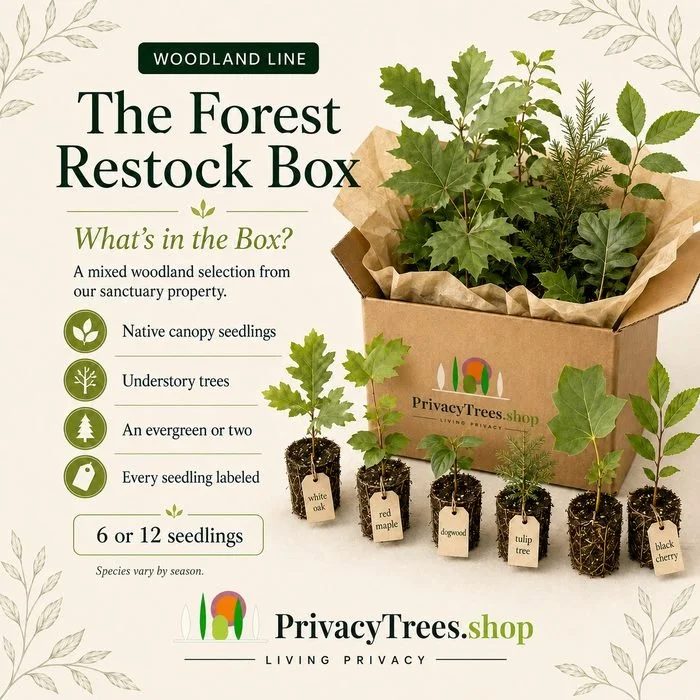 Image 5 of 5
After the storms took part of our woods, we started potting up the survivors.
This box exists because we needed it ourselves. Storms knocked down and killed trees across one of our own woods, and rather than watch the gaps fill with brush and invasives, we began reseeding — with seedlings the forest itself had already started. The white oaks, red maples, sweet gums, tulip trees, and pines in this box were found growing wild on our sanctuary property, dug by hand, and potted to give them a strong first year.
These are not nursery clones. They are the forest’s own next generation — genetics that already proved they can germinate and survive here. If your woods have taken a hit, this is how you help them come back as woods, not as thicket.
Every box is a mixed, labelled selection of species picked for how real Eastern woodlands actually regrow: canopy builders, mid-story spreaders, and an evergreen or two for winter structure.
Oaks — the canopy backbone, and the single most valuable thing you can put back into damaged woods for wildlife
Red maple — fast, adaptable, and reliable at closing a gap
Tulip tree — the fastest way to get height back into a hole in the canopy
Sweet gum — a tough pioneer that holds ground while the slower trees catch up, and pays you back in October
Pine — the evergreen, for structure through the winter
Everything here except the pines is a deciduous hardwood. Wild-collected seedlings vary; the exact mix shifts with what the woods produced that season, and every seedling is labelled.
A storm gap is not a blank field. It has edges, existing roots, and a light pattern that changes through the day — and that should decide where each seedling goes.
Centre of the gap — the canopy trees. Oaks and tulip tree want the most light they’ll ever get, and this is their one chance to take it.
Edges and part shade — the more shade-tolerant species. Planting a sun-lover under the surviving canopy wastes it.
Spread them out. The instinct is to cluster seedlings in the open middle. Scatter instead, including into the ragged edge — that’s where woods actually knit back together.
Deal with the brush first. If brambles and invasives have already claimed the gap, clear planting pockets before you plant. A seedling will not out-race an established bramble.
They will look dead all winter. Bare twigs, no leaves. Normal. Scratch a twig gently with a thumbnail — green underneath means alive.
Plant them dormant. Late autumn through early spring, while they’re asleep, is far and away the best time.
Leaf-out is late in year one. A newly planted seedling often waits weeks longer than established trees nearby.
This is a decade project, not a season one. Restocking woods is slow by nature. What you’re buying is the difference between woods in twenty years and thicket in twenty years.
Planting into existing woods is harder on a seedling than planting into open ground — there is more root competition and less light. Give them a hand for the first year.
Water: through the first growing season, especially in a dry spell. Established trees around the gap are drinking the same water.
Mark them. Flag every seedling. You will not find them again in leaf litter, and you will step on them.
Deer: browse pressure is heaviest exactly where woods are recovering. Protect them, or the gap stays a gap.
Clear competition in a small circle around each seedling for the first two years.
Fertiliser: none. Roots first.
Add the Wildlife Protection Bundle — on hardwood seedlings going into deer country, this is what decides whether it works.
The Start-a-Woods Kit — for open ground rather than gaps in existing woods; comes with a layout guide.
The Understory Bloom Kit — the flowering layer for the sunny edge of a storm gap.
Mycorrhizal Bio-Shield — oaks and pines are heavily mycorrhizal in the wild.
Go touch a tree.