
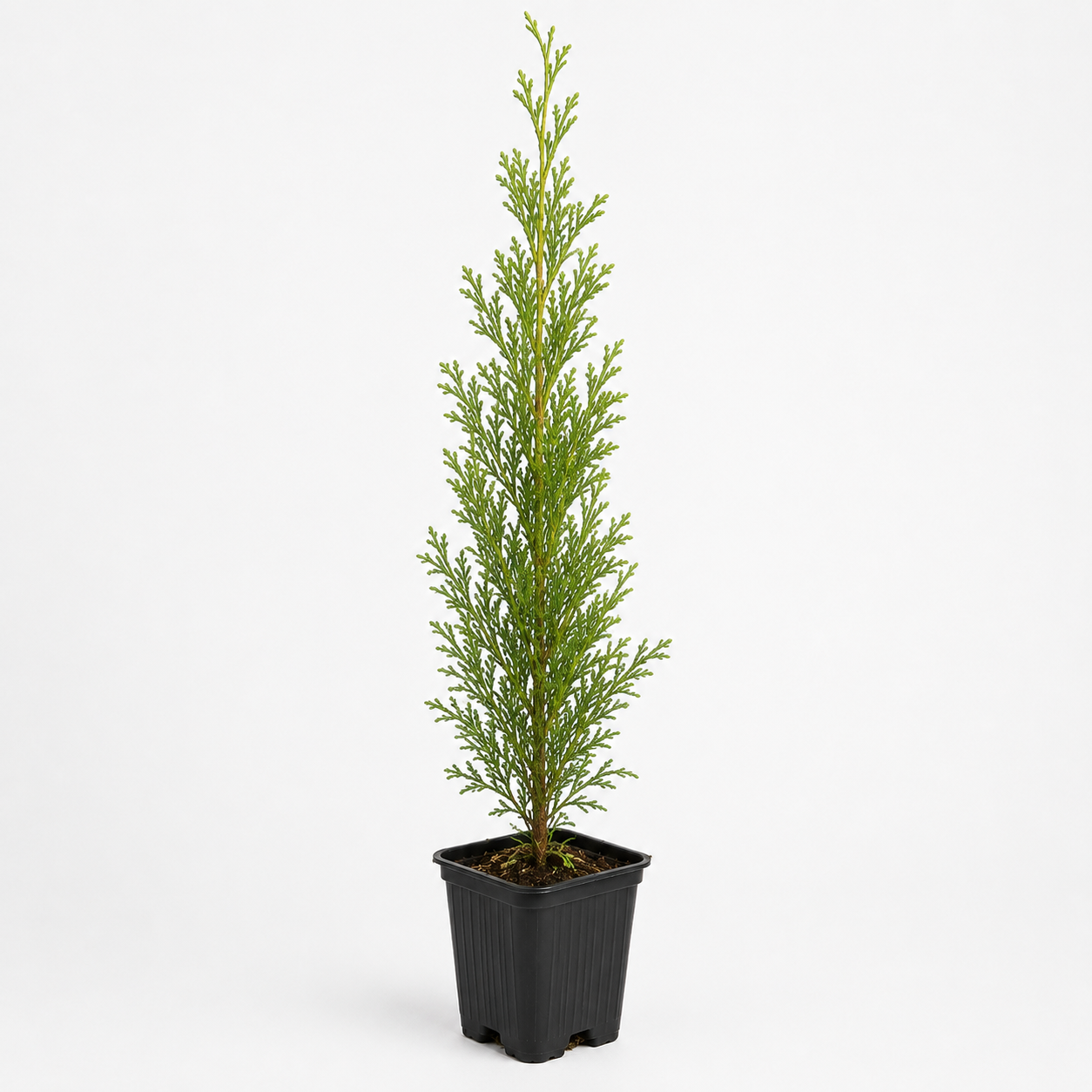
 Image 1 of 3
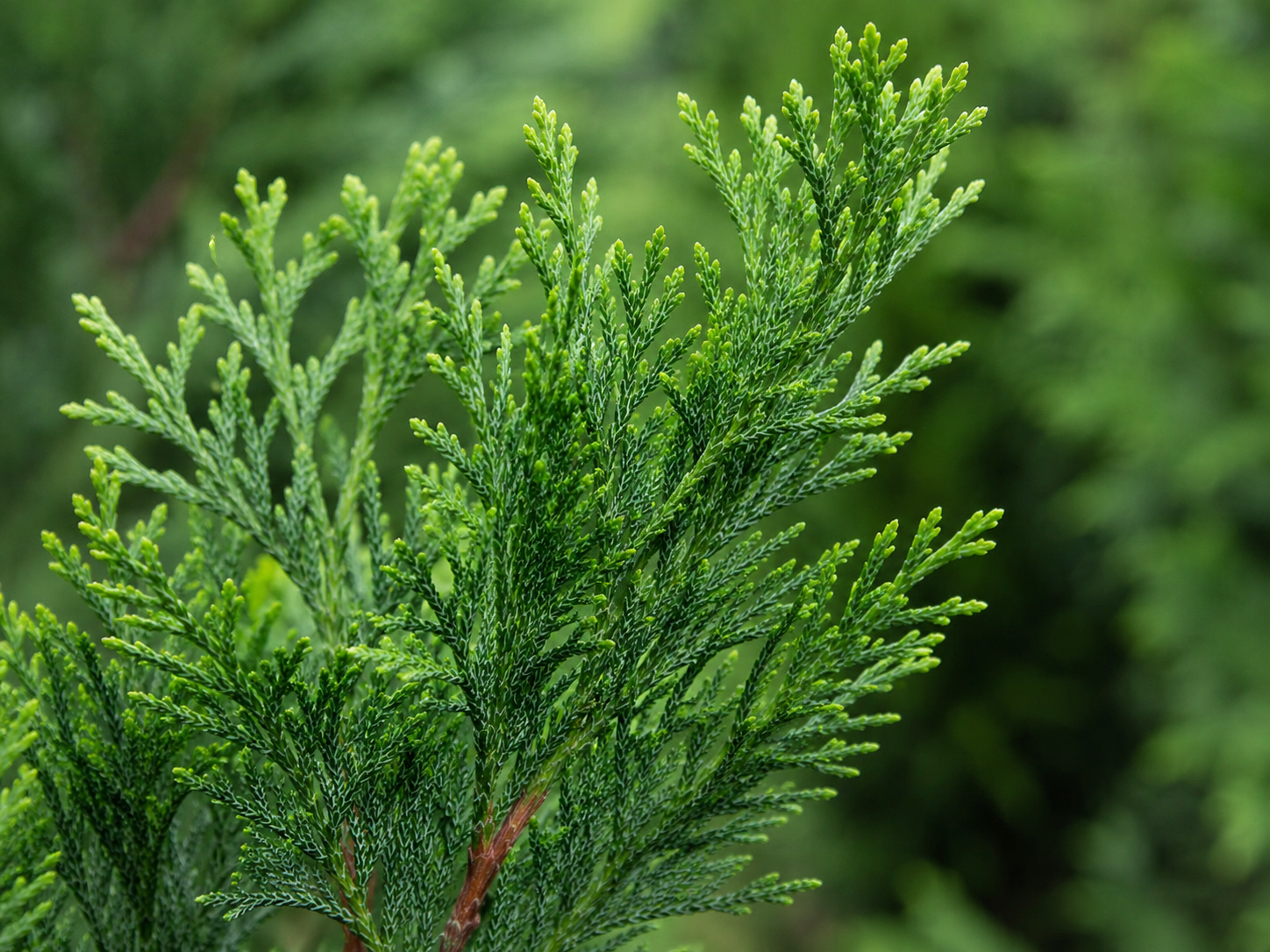 Image 2 of 3
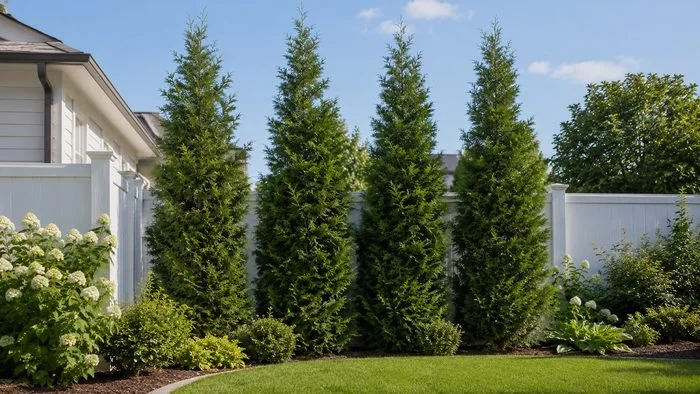 Image 3 of 3
American Pillar — Pedigree Starter Sapling (Coming 2027)
The tree for the space you don’t have. American Pillar goes up, not out — a narrow, dense column of arborvitae that delivers serious height in a strip of ground where a Green Giant would never fit. It is the answer for side yards, tight property lines and driveway edges.
Coming Fall 2027. American Pillar is a patented variety, and we can’t legally propagate or sell it until that patent expires. Our mother stock is already in the ground so that the first pedigree batch is ready the season we’re allowed to release it.
At a Glance
Hardiness: USDA zones 4–8
Type: Evergreen arborvitae — narrow, strongly upright
Light: Full sun to part shade
Mature height: About 25 ft
Mature width: About 3 ft — genuinely narrow, not “narrow for a conifer”
Growth rate: Fast in height, slow in width — roughly 2.5–3 ft of height a year
Screen spacing: 2.5 ft apart. This is the number that matters — see below
Soil: Adaptable; prefers well-drained
Drainage: Needed. Arborvitae dislike standing water
Deer: Vulnerable. Deer browse arborvitae readily — protect young plants
Best for: Narrow side yards, tight lot lines, driveway edges, small properties
Availability: Fall 2027, when the plant patent expires
Why 2.5 Feet Apart — Read This First
Almost every listing for this tree tells you to plant it 3 feet apart. We planted ours that way and learned the hard way.
American Pillar’s habit is vertical. It gains height fast and width very slowly — which is exactly why it works in narrow spaces, and also exactly why 3 ft spacing leaves you with a tall row that still has daylight through it years later. Ours went in at 5 ft tall, 3 ft apart. Two years on they were pushing 9 ft, and while some were touching at the base, plenty were not. We ended up planting filler saplings between them to close the gap sooner.
2.5 ft on centre — our recommendation. Closes into a solid screen in roughly 3–4 years without the plants fighting each other.
2 ft on centre — closes faster, but they compete. Expect noticeably reduced final height.
3 ft on centre — what the tags say. Fine if you’re patient; slow if you want privacy this decade.
Closer than 2.5 ft is a real trade: you buy speed at the cost of mature height. We think 2.5 is the sweet spot.
See the difference at each spacing in the Visualizer
Is This Tree Right for Your Space?
A good choice if you want
Height in a strip of ground only a few feet wide
To screen a second-storey window without shading the whole yard
A formal, architectural line rather than a soft billowing hedge
Something that will not outgrow a small lot the way a Green Giant will
Think twice if
Deer come through regularly and you won’t protect the plants. Arborvitae is one of their favourites
You need the screen filled in within two years — even at 2.5 ft it takes three or four
You have the room for a wider tree. A Green Giant gets denser, taller and cheaper per foot of wall
The spot holds water after rain
Planting Recommendations
Spacing: 2.5 ft on centre. Measure the run and divide — don’t eyeball it.
Sun: full sun gives the densest column. Part shade is tolerated; deep shade thins it.
Depth: top of the root ball level with the ground or an inch proud. Planting deep is the most common way these are lost.
Drainage: if water stands in the hole an hour after filling it, plant on a low mound instead.
Mulch: 2–3 in, pulled back from the trunk.
Protection: plan deer protection at planting, not after the first browse.
View the Complete Planting & Care Guide
First-Year Care
A young arborvitae is all about getting roots down before its first hard summer.
Water: deeply and regularly through the first growing season. Dig down 4 inches and feel the soil rather than watering on a schedule.
Fertiliser: none at planting. Roots first.
Winter: evergreens keep transpiring in winter. Water during a dry, unfrozen spell.
Deer: the first two winters are the dangerous ones, when other browse is scarce.
Snow and ice: narrow upright conifers can splay under heavy wet snow. Brush it off rather than letting it sit.
Companion Planting
A column has a gap at the bottom for its first few years. Something low in front of the row covers that while the trees fill in.
In front, low: inkberry holly or dwarf yaupon to close the ground-level gap.
For softness: a flowering shrub layer keeps a narrow formal row from reading as a fence.
Mixed screen: alternating species means one disease can’t take the whole line at once.
See the Understory Bloom Kit and the Fall Fire Kit.
Plan Your Privacy Wall
Privacy Wall Visualizer — upload a photo of the actual spot and see this tree at the size and spacing you’re considering.
Privacy Timeline Calculator — how long until it’s a wall, by starting size, spacing and conditions.
Wall Cost Calculator — what the whole planting costs, not just the trees.
Why 2027?
American Pillar is protected by a US plant patent. Under that patent nobody may propagate the variety for sale without a licence, and we don’t hold one. The patent expires in the autumn of 2027, at which point the variety enters the public domain and anyone may grow and sell it.
Rather than wait until then to start, we’re growing mother stock now so that the first pedigree batch is a real, established plant on release rather than a plug that has just been stuck. Join the waitlist and you’ll hear when it opens.
In the Meantime
If your strip is under about 8 ft wide and you can’t wait, there isn’t a like-for-like substitute in our range — both of our current species get much wider than American Pillar and will need shearing to stay in a narrow bed.
Thuja Green Giant — if the bed is genuinely 8 ft or wider, this is the denser, faster, better-value wall.
Check your measurements in the Visualizer before deciding — people routinely have more room than they think.
About Our Pedigree Trees
Our small-batch pedigree saplings are grown from named mother trees on our sanctuary property, rooted with attention, and selected for resilience, structure, and the ability to survive the first year. These are living trees — availability may vary by batch, season, and plant readiness.