Every fall color at once, on one tree.
Sweetgum is the tree people curse for its spiky seed balls and photograph every October anyway. Its star-shaped leaves turn yellow, orange, red and deep purple, often all on the same tree at the same time. It grows quickly, handles wet ground, and fills a gap fast while slower trees catch up.
Every sweetgum we sell came up on its own in our sanctuary woods in Georgia. We lift the volunteers by hand and grow them on in containers. They are the woods’ own seedlings, not nursery clones.
Choose Your Size
Starter plug — about 9–12 in. tall. The best value, and the easiest to establish. Available singly, as a 3-pack or as a 6-pack.
1-gallon — about 12–18 in. tall, with a fuller root system.
3-gallon — about 18–28 in. tall. A head start of a season or two.
Shipping is included in the price. Sizes are approximate at the time of shipping; living plants vary with the season and the individual tree.
What Arrives
One healthy, rooted sweetgum (or three or six, if you chose a pack)
A plant tag, so you always know what you planted
A simple planting guide
Packed to arrive safely
Want to give it an extra start? Add the Mycorrhizal Bio-Shield.
About Sweetgum
Botanical name: Liquidambar styraciflua
Mature size: 60–75 ft tall, 40–50 ft wide
Growth: moderate to fast
Hardiness: zones 5–9
Light: full sun for the best color
Soil: adaptable, including wet and clay soils
Wildlife: seeds for finches and other songbirds through winter
Type: deciduous native hardwood
Where to Plant It
Where you’ll see it in October: from the porch, the kitchen window or the end of the drive.
Away from walkways, patios and mowing lines. The seed balls are hard underfoot and rough on mowers. At a woodland edge or in a back corner, you’ll only ever enjoy it.
Low, damp spots where other trees struggle.
Storm gaps and new woods, as a fast pioneer that holds the ground.
First-Year Care
It will look dead in winter. That’s normal for a deciduous tree. Scratch a twig with a thumbnail. Green underneath means alive.
Plant it dormant if you can: late fall through early spring.
Water deeply through the first growing season.
Mulch a ring a few inches deep, pulled back from the stem.
No fertilizer in year one.
Deer: protect it while it’s small.
Pairs Well With
Go touch a tree.

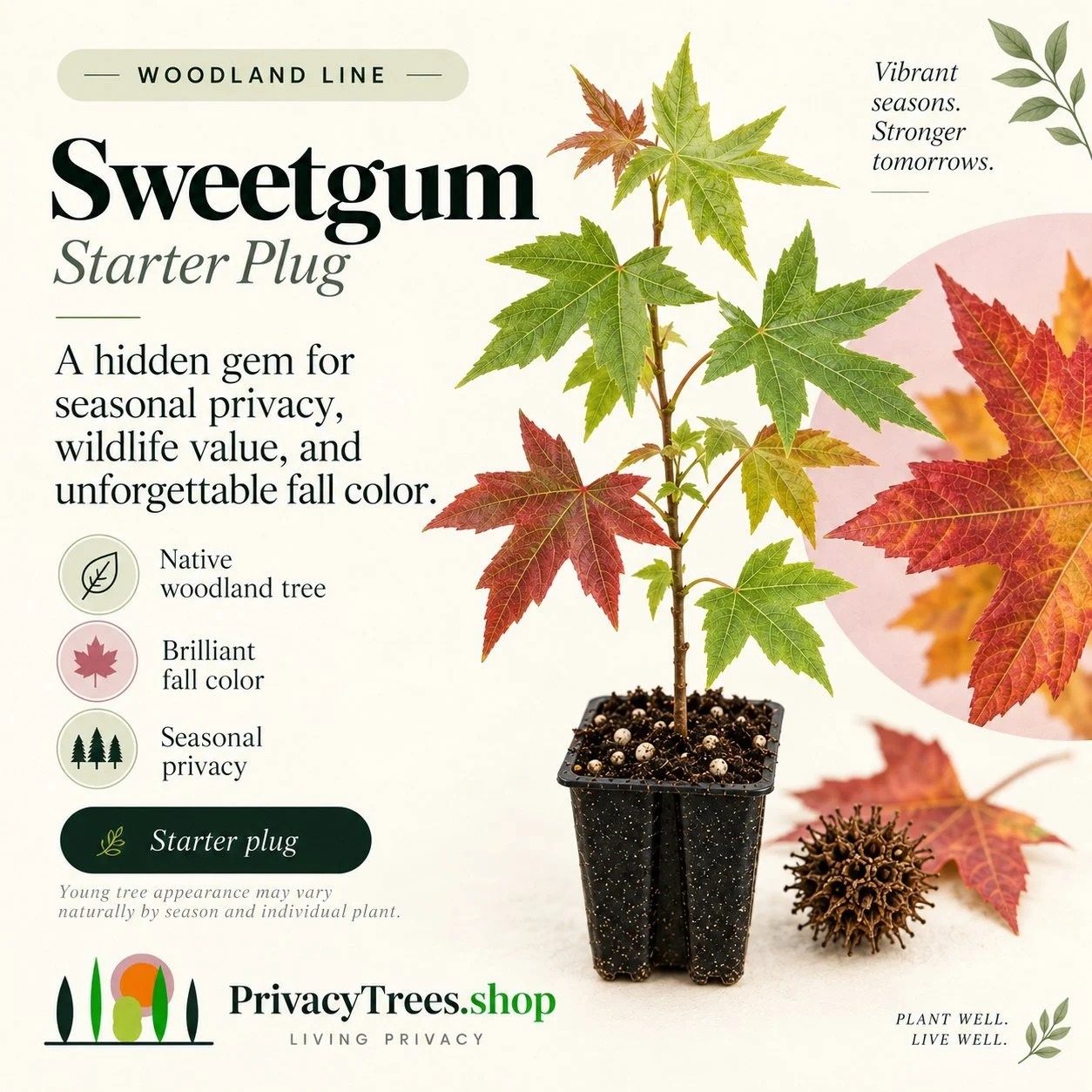 Image 1 of 12
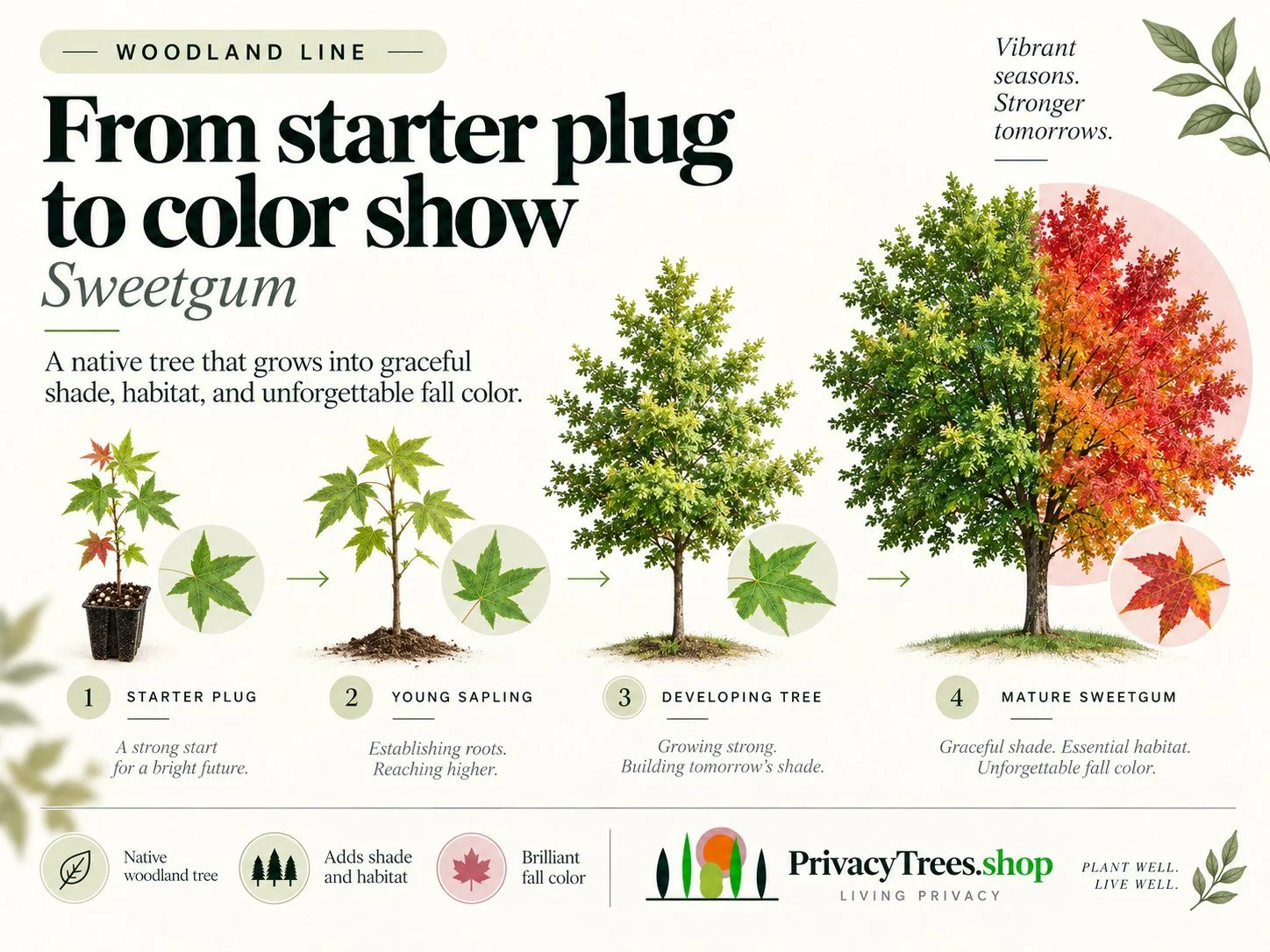 Image 2 of 12
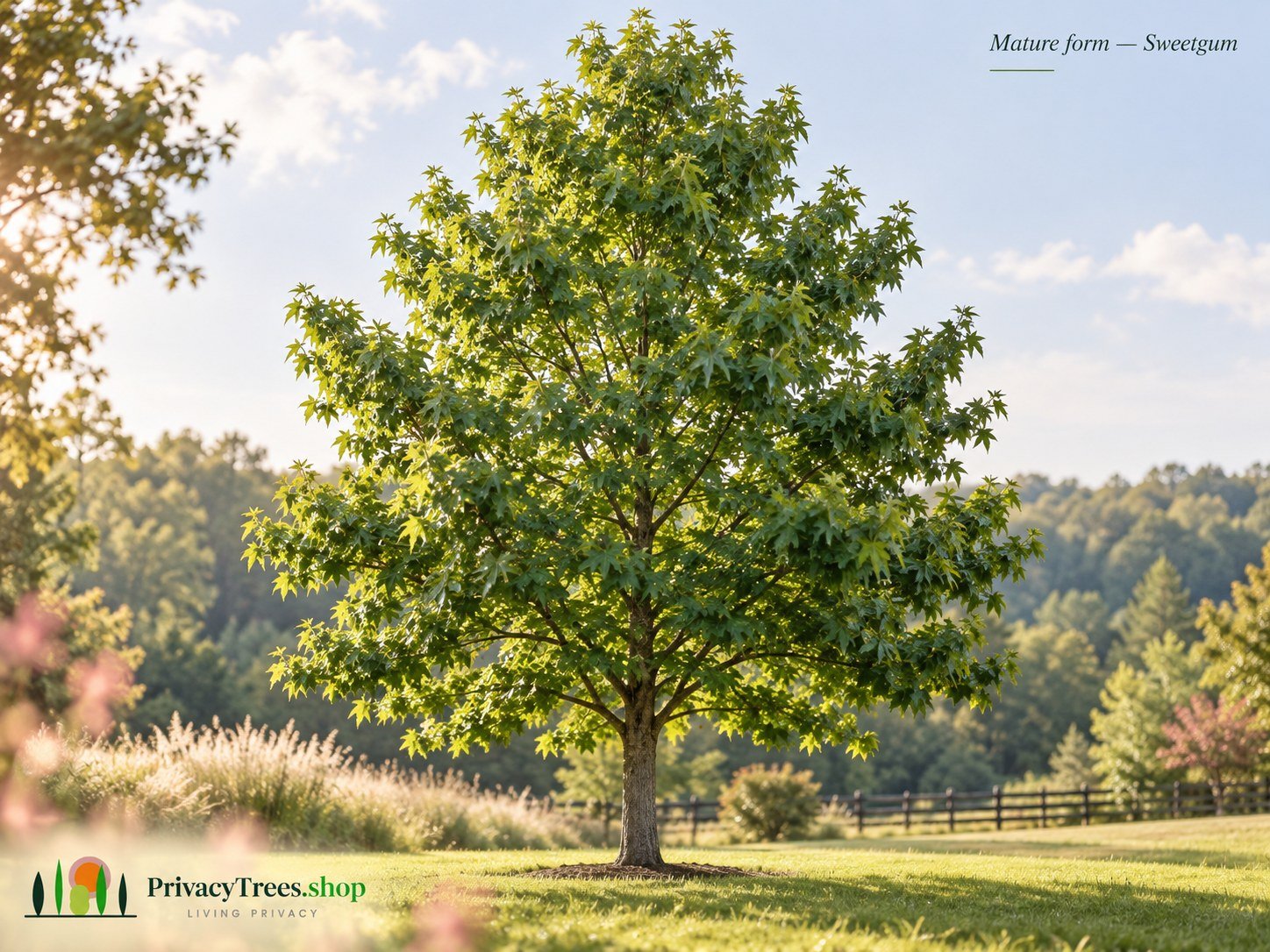 Image 3 of 12
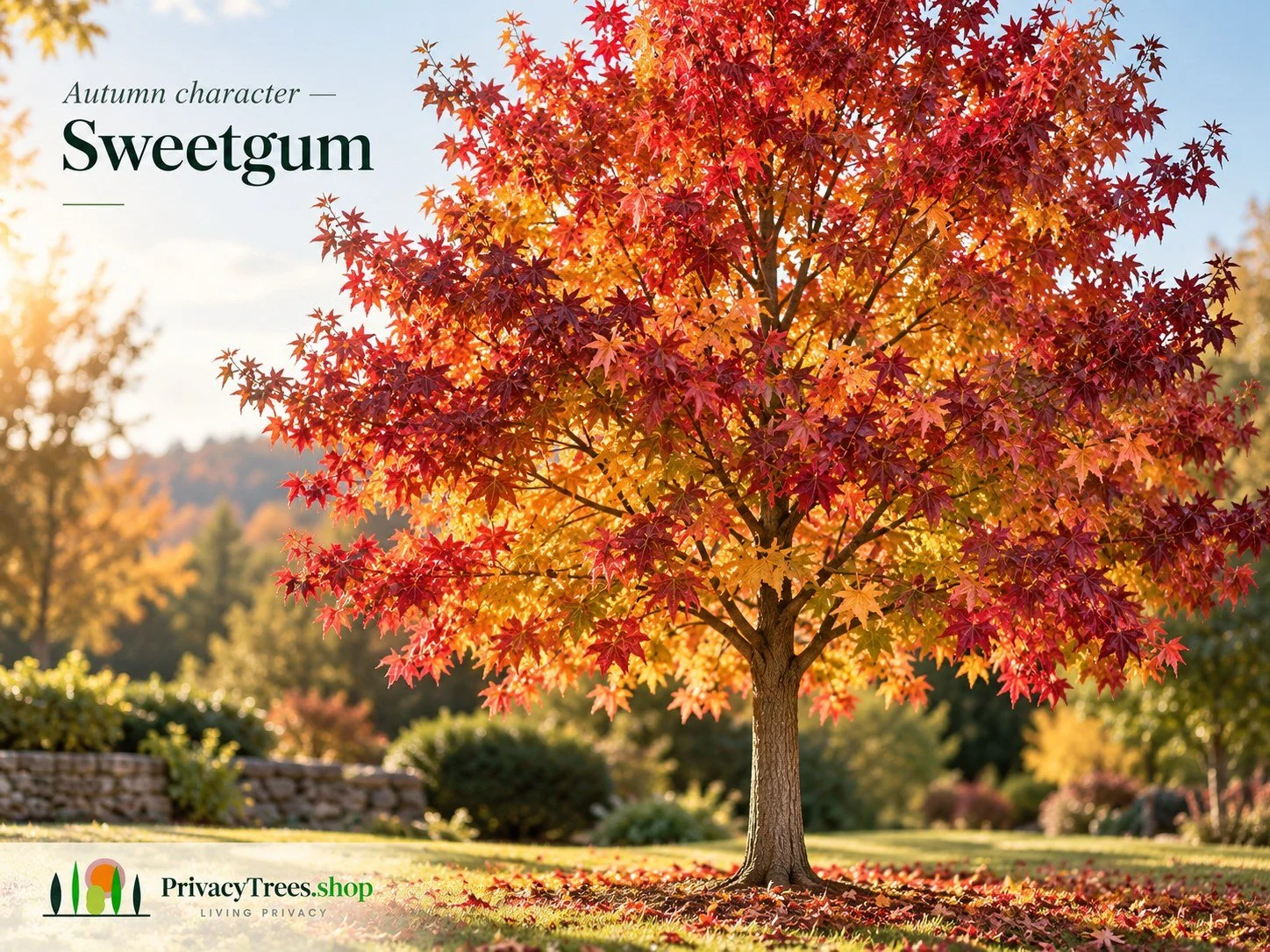 Image 4 of 12
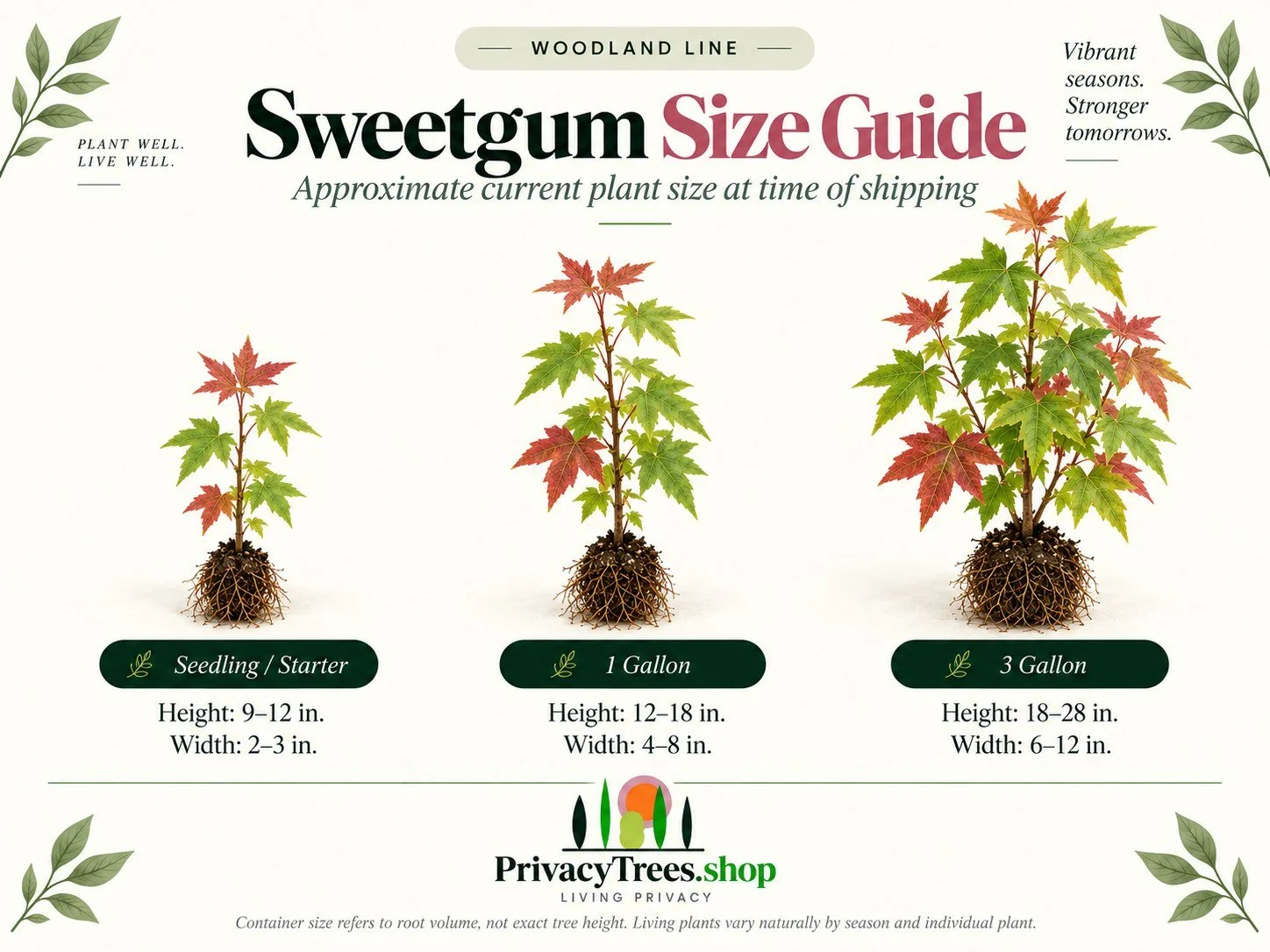 Image 5 of 12
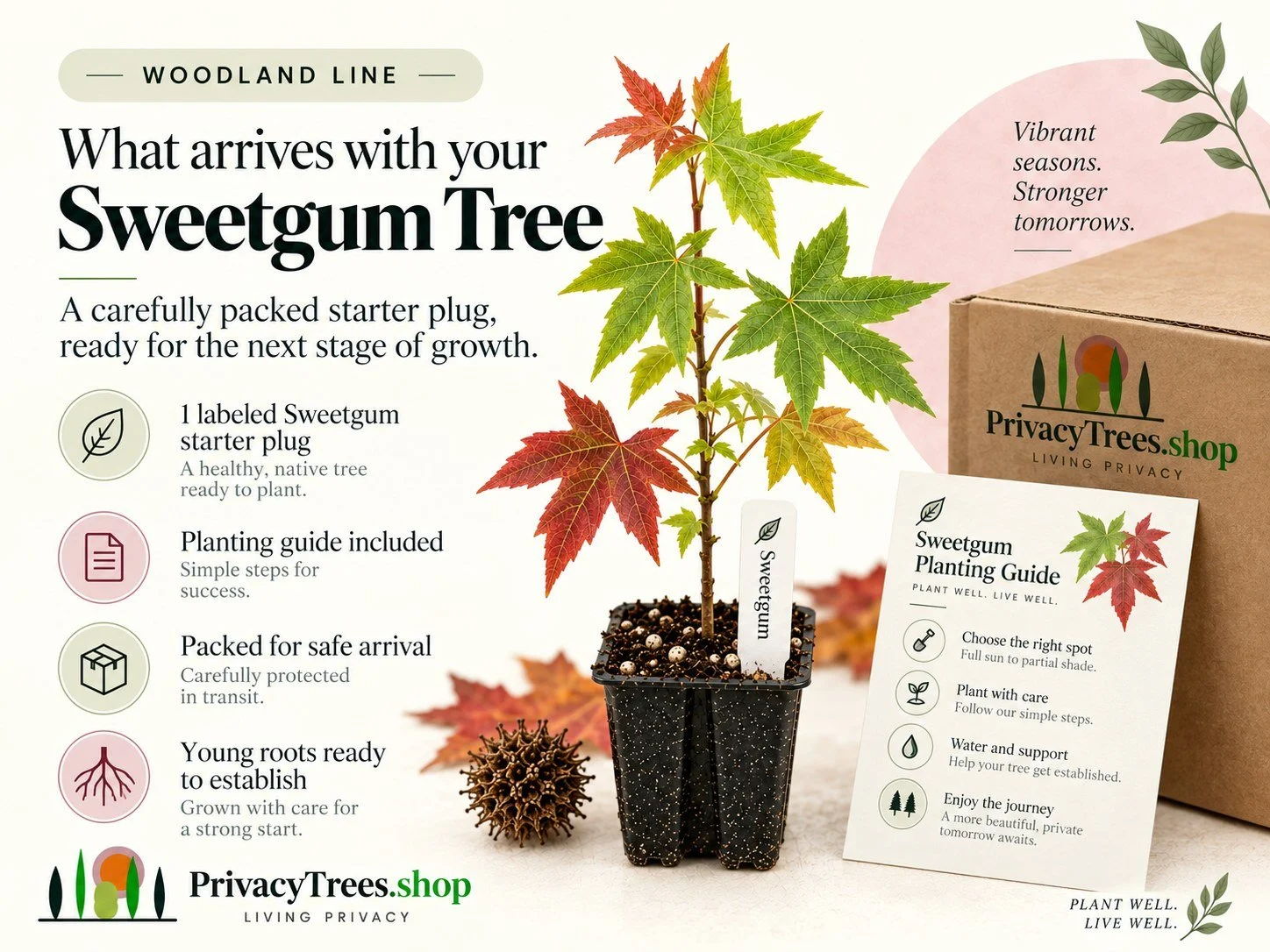 Image 6 of 12
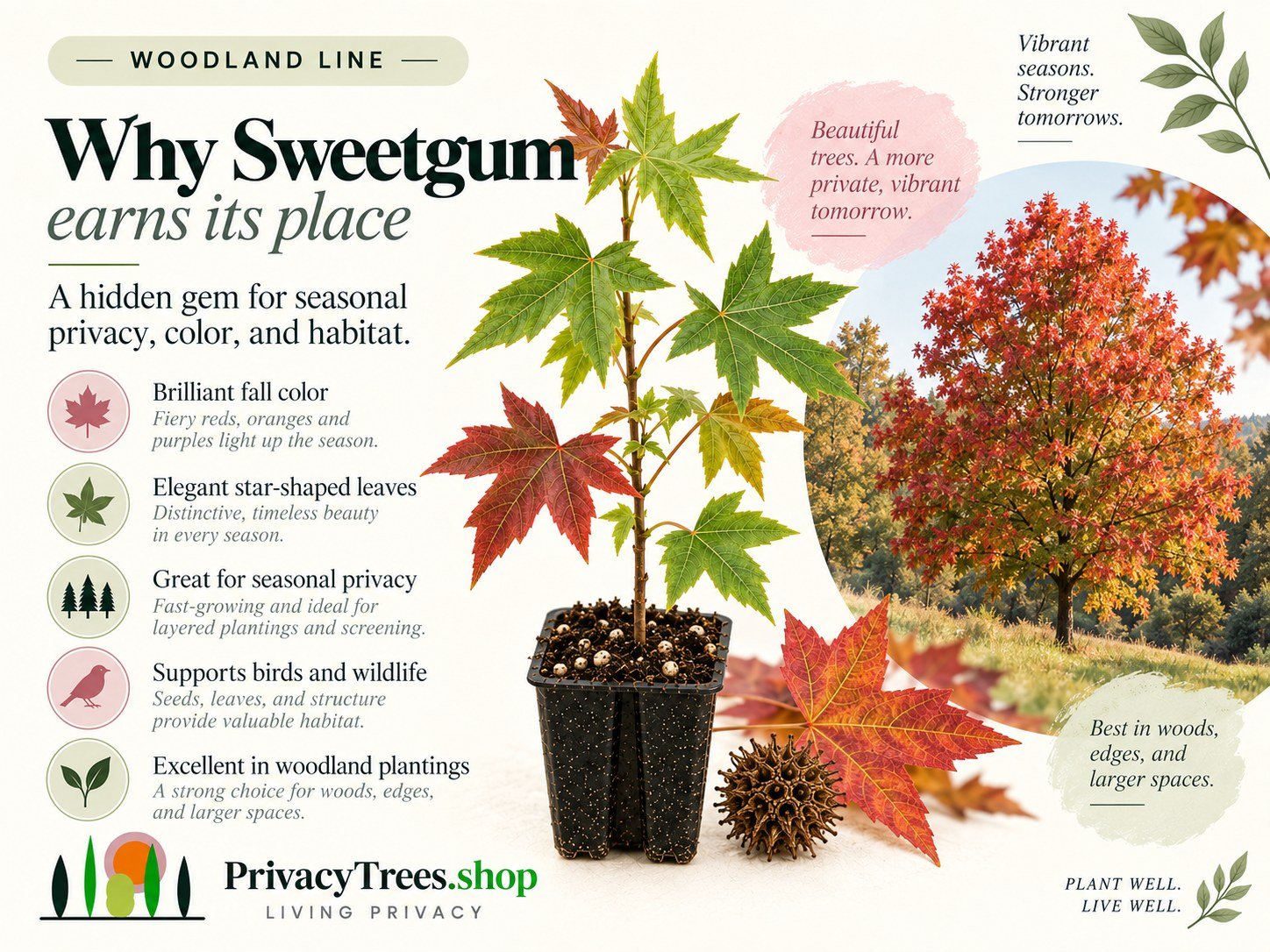 Image 7 of 12
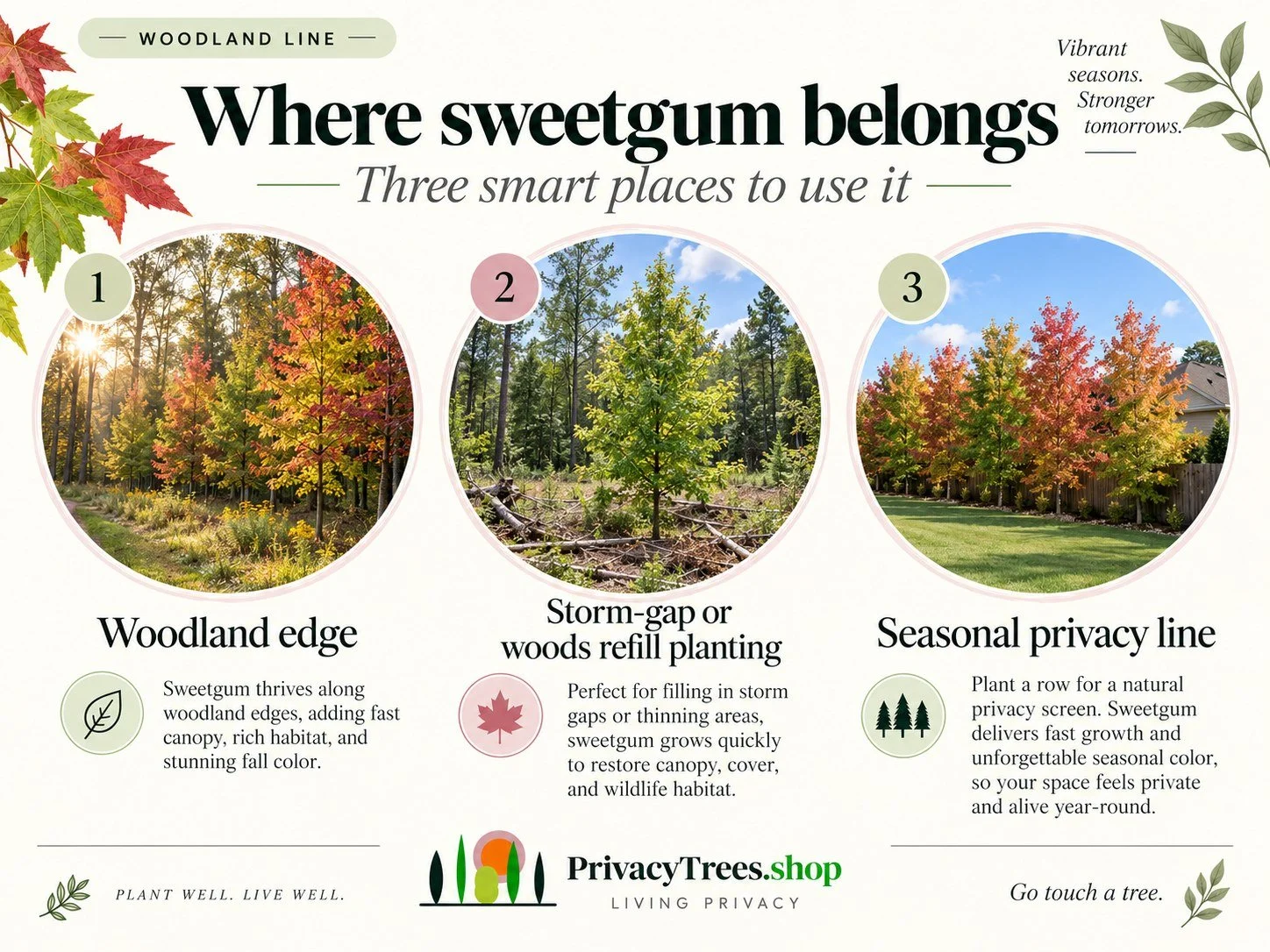 Image 8 of 12
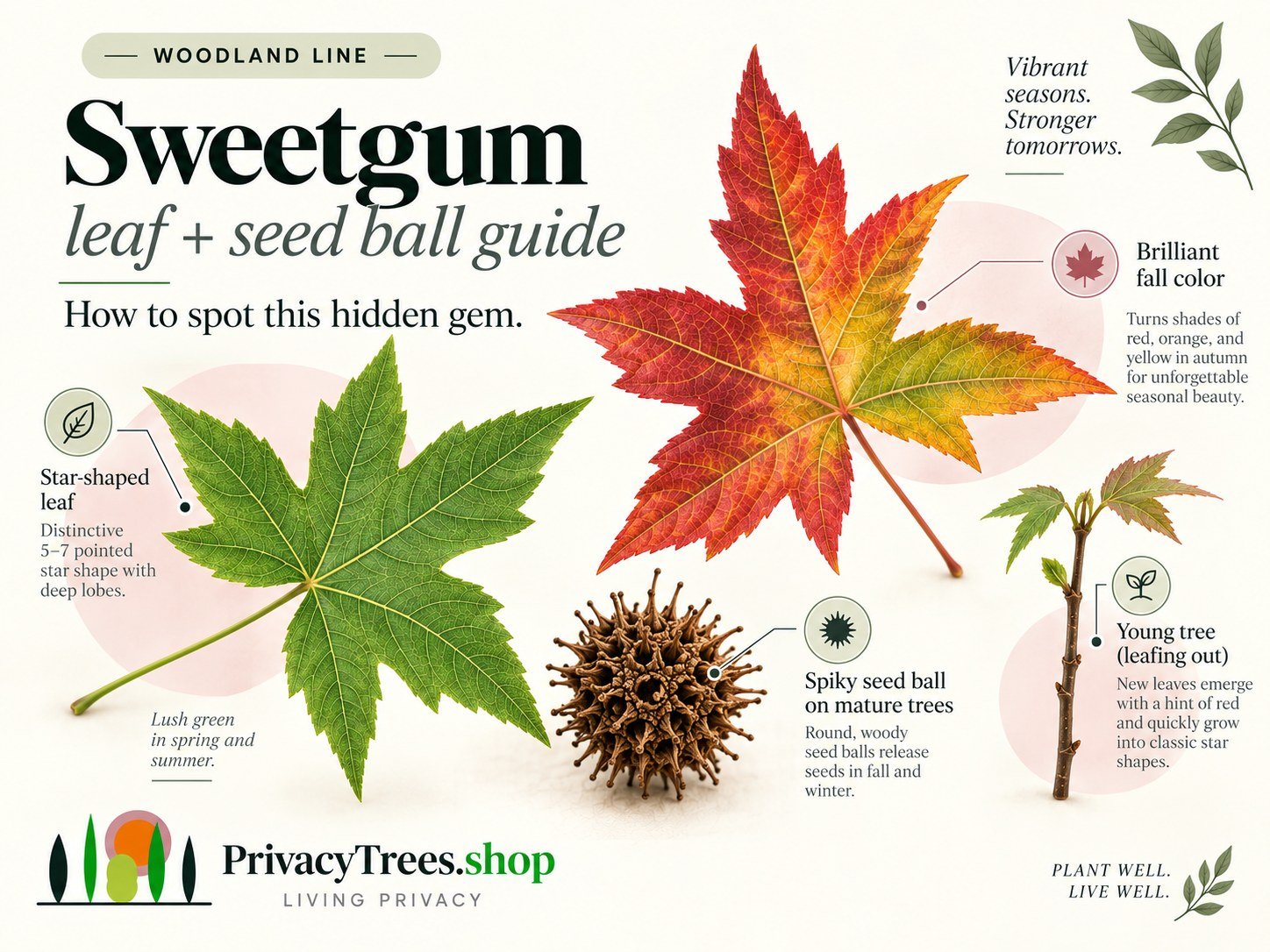 Image 9 of 12
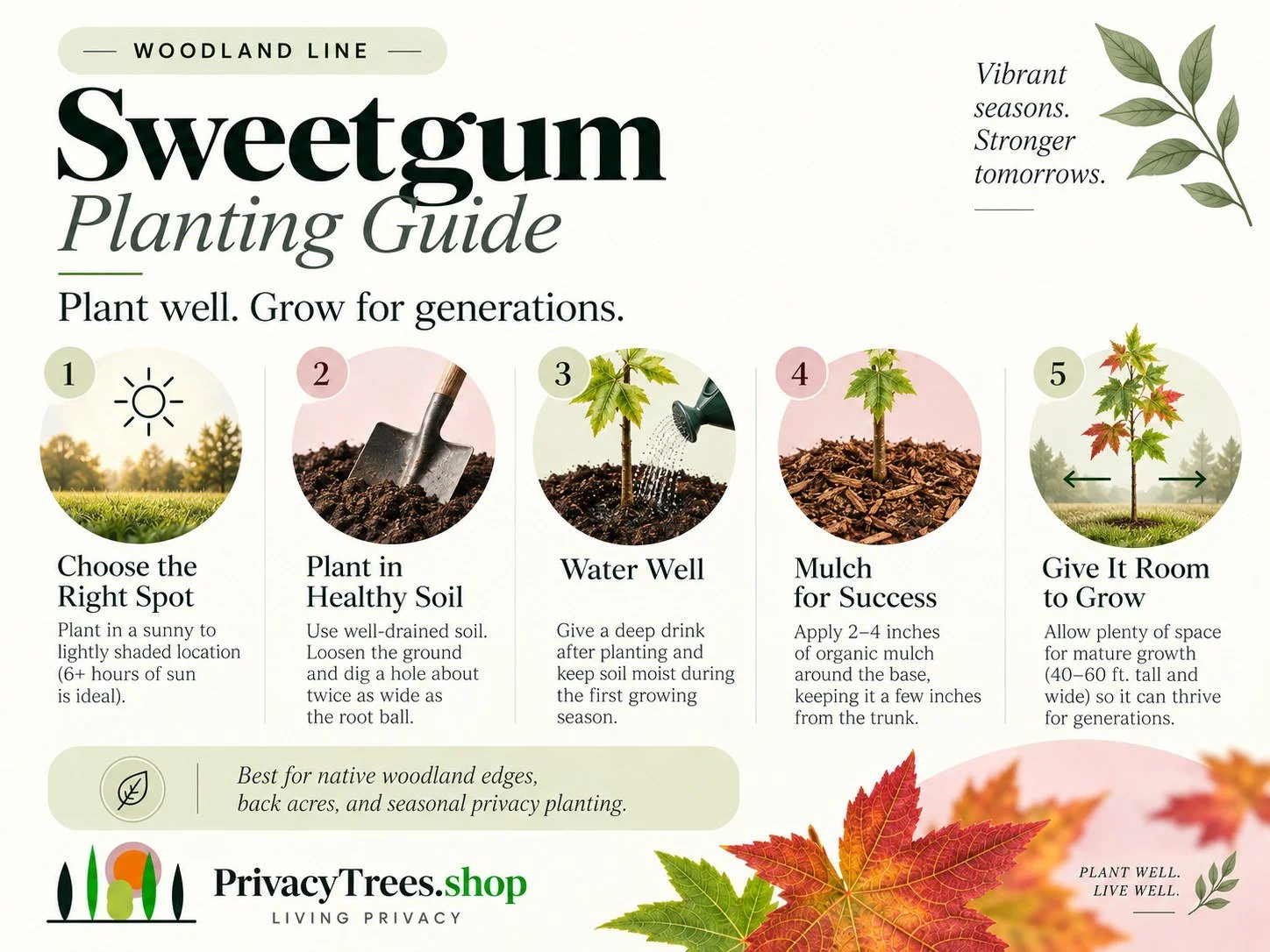 Image 10 of 12
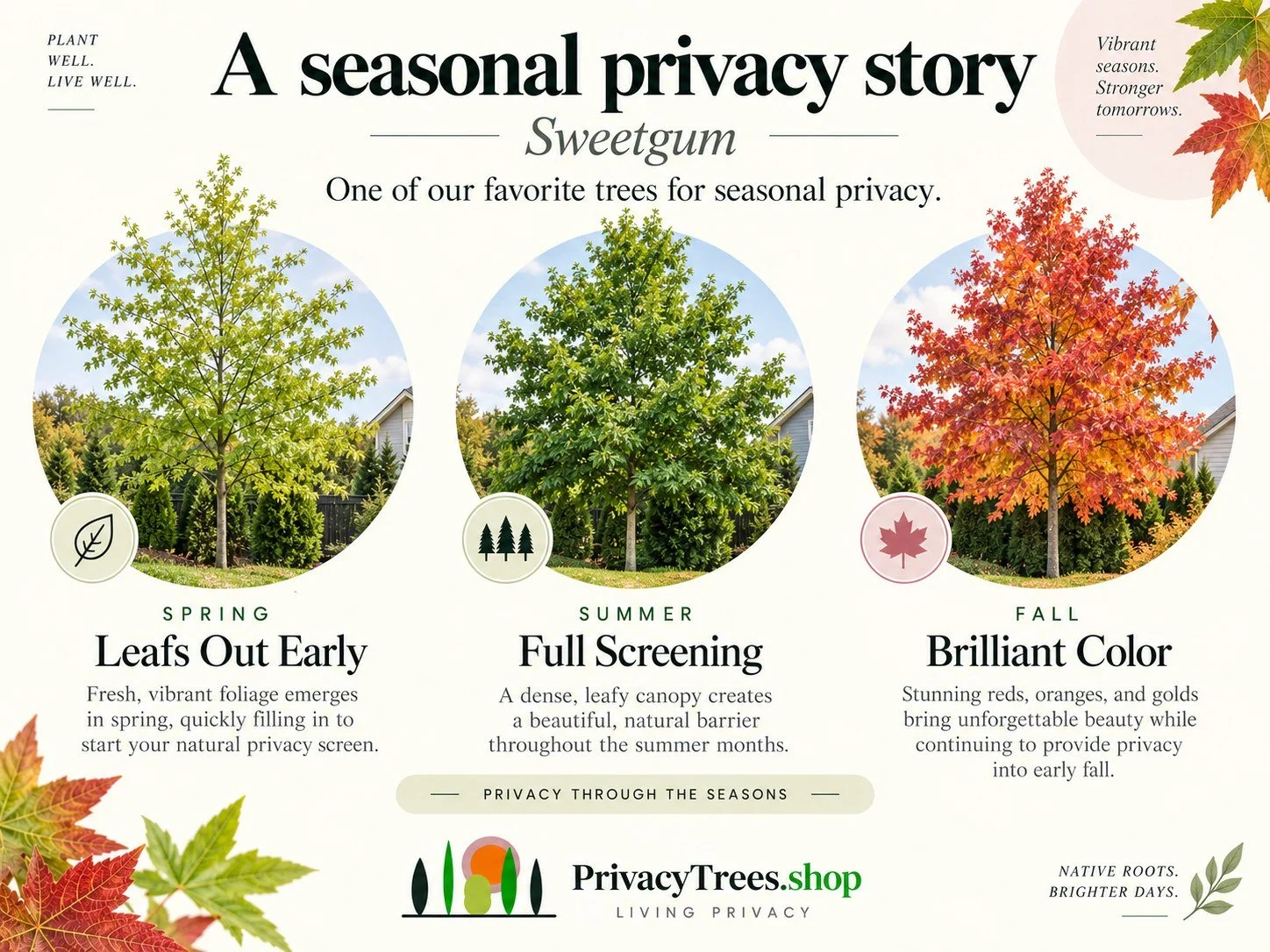 Image 11 of 12
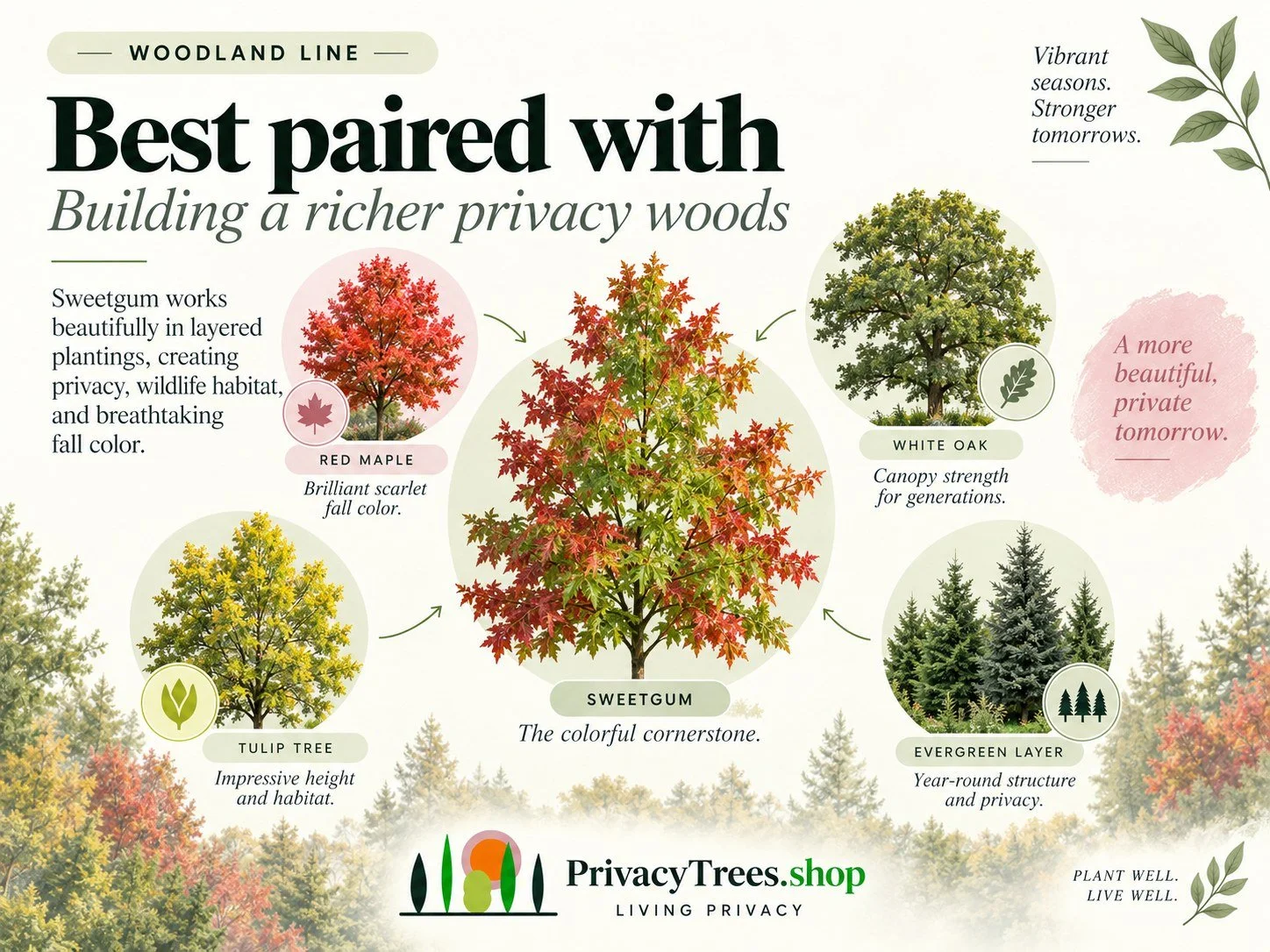 Image 12 of 12