A graceful native shade tree, grown from volunteers in our own woods.
Elms are the classic shade tree: fast-growing, tough, and arching. Our elms came up on their own on our sanctuary property in Georgia, and they are some of the hardiest seedlings in our trays. We lift the volunteers by hand and grow them on in containers. They are local seedlings, not nursery clones.
We only find a handful each season, so quantities are small.
Choose Your Size
Starter plug — about 9–12 in. tall. The best value, and the easiest to establish. Available singly, as a 3-pack or as a 6-pack.
1-gallon — about 12–18 in. tall, with a fuller root system.
3-gallon — about 18–28 in. tall. A head start of a season or two.
Shipping is included in the price. Sizes are approximate at the time of shipping; living plants vary with the season and the individual tree.
What Arrives
One healthy, rooted elm (or three or six, if you chose a pack)
A plant tag, so you always know what you planted
A simple planting guide
Packed to arrive safely
Want to give it an extra start? Add the Mycorrhizal Bio-Shield.
About Our Winged Elms
Species: winged elm, Ulmus alata, named for the corky “wings” along its twigs
Mature size: 40–60 ft tall, 30–40 ft wide
Hardiness: zones 6–9
Growth: moderate to fast
Light: full sun to part shade
Soil: adaptable. Elms tolerate clay, wet spots and dry spells.
Wildlife: early seed for songbirds; host tree for several native butterflies
Type: deciduous native hardwood
Where to Plant It
As a shade tree in the open, well away from the house and driveway.
Woodland edges and restoration plantings, where a tough, fast tree helps a site recover.
Stream banks and low ground, which elms handle well.
For seasonal screening. It gives privacy from spring to fall and is bare in winter. Pair it with an evergreen for year-round cover.
First-Year Care
It will look dead in winter. That’s normal for a deciduous tree. Scratch a twig with a thumbnail. Green underneath means alive.
Plant it dormant if you can: late fall through early spring.
Water deeply through the first growing season.
Mulch a ring a few inches deep, pulled back from the stem.
No fertilizer in year one.
Deer: protect it while it’s small.
Pairs Well With
Go touch a tree.

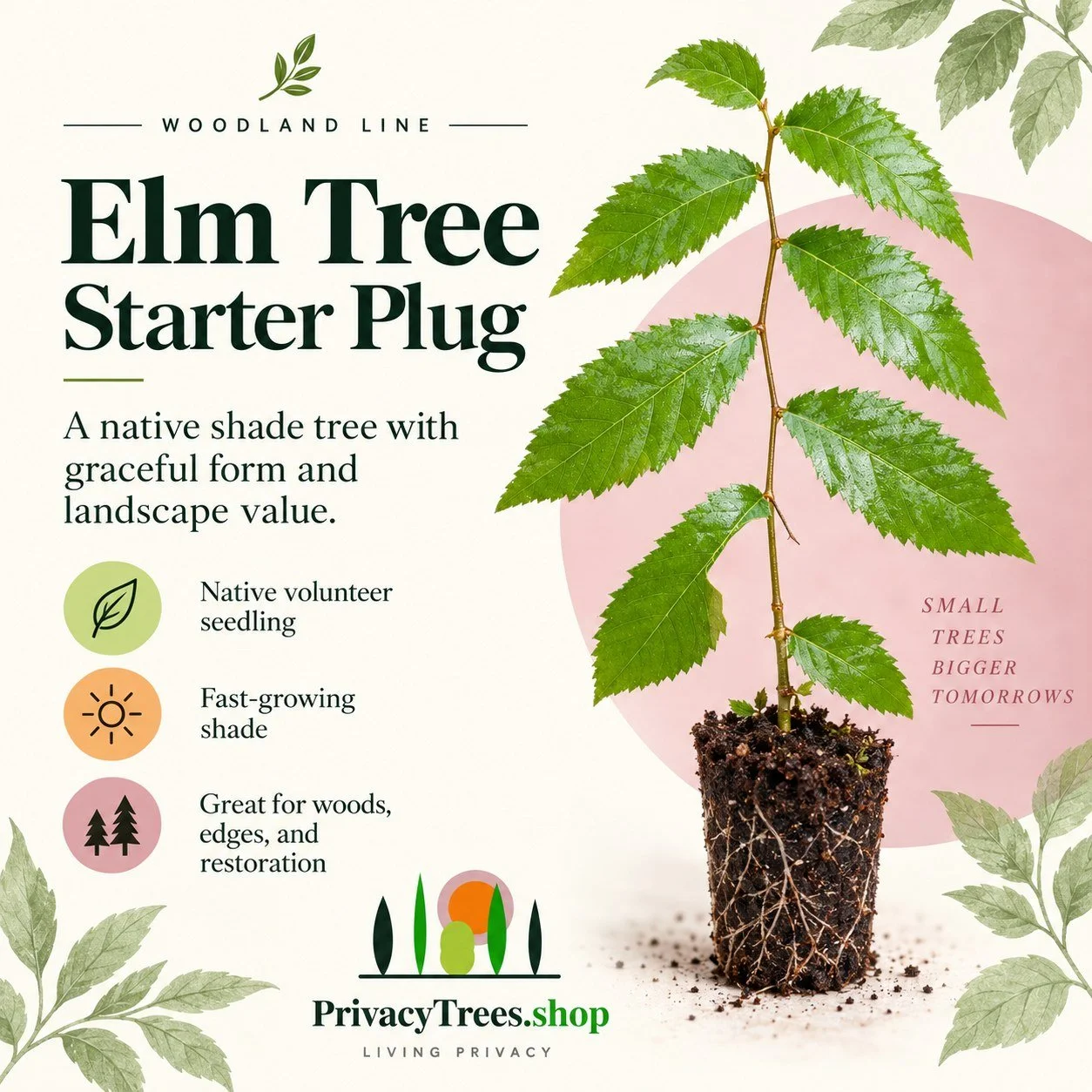 Image 1 of 11
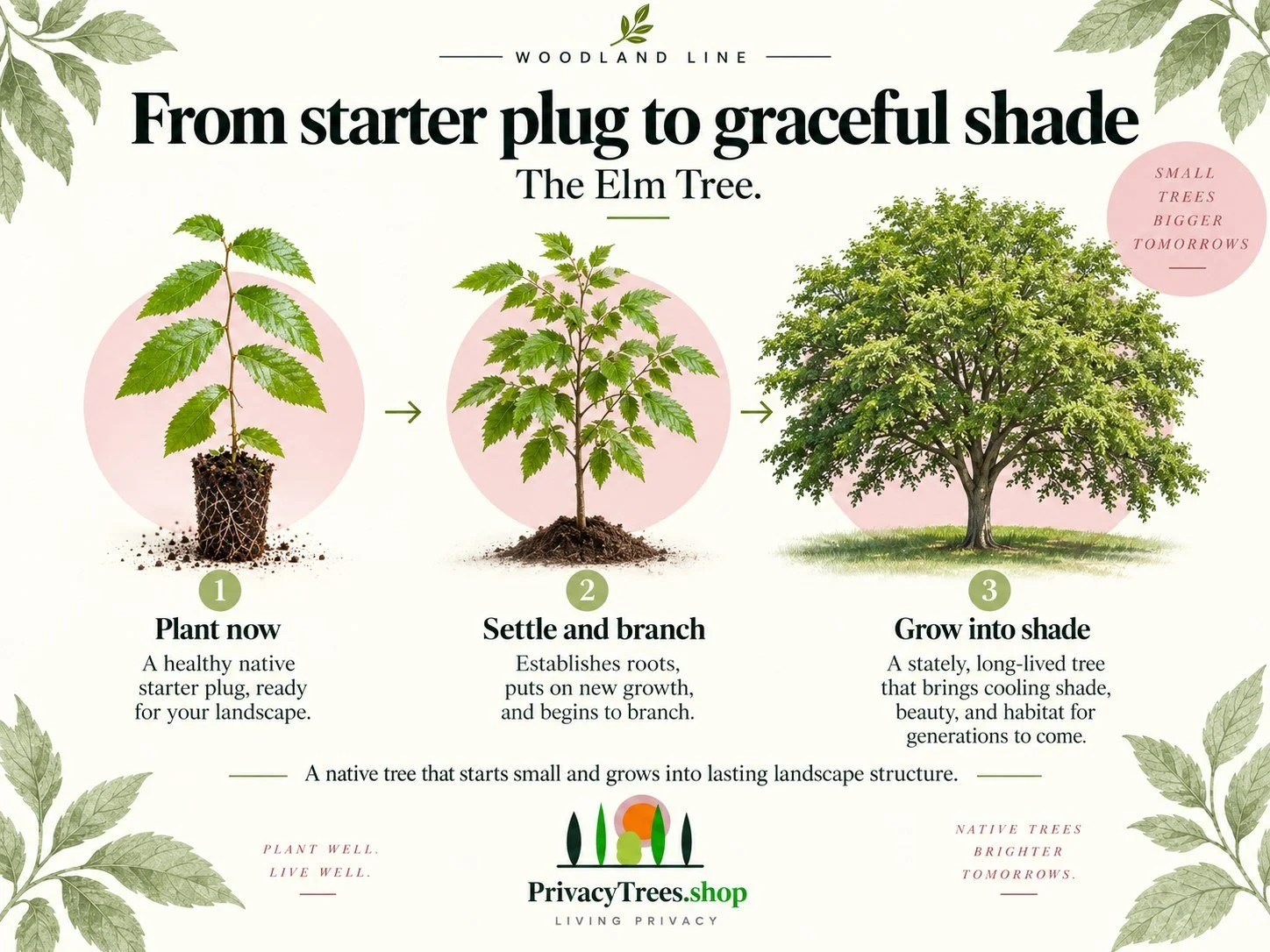 Image 2 of 11
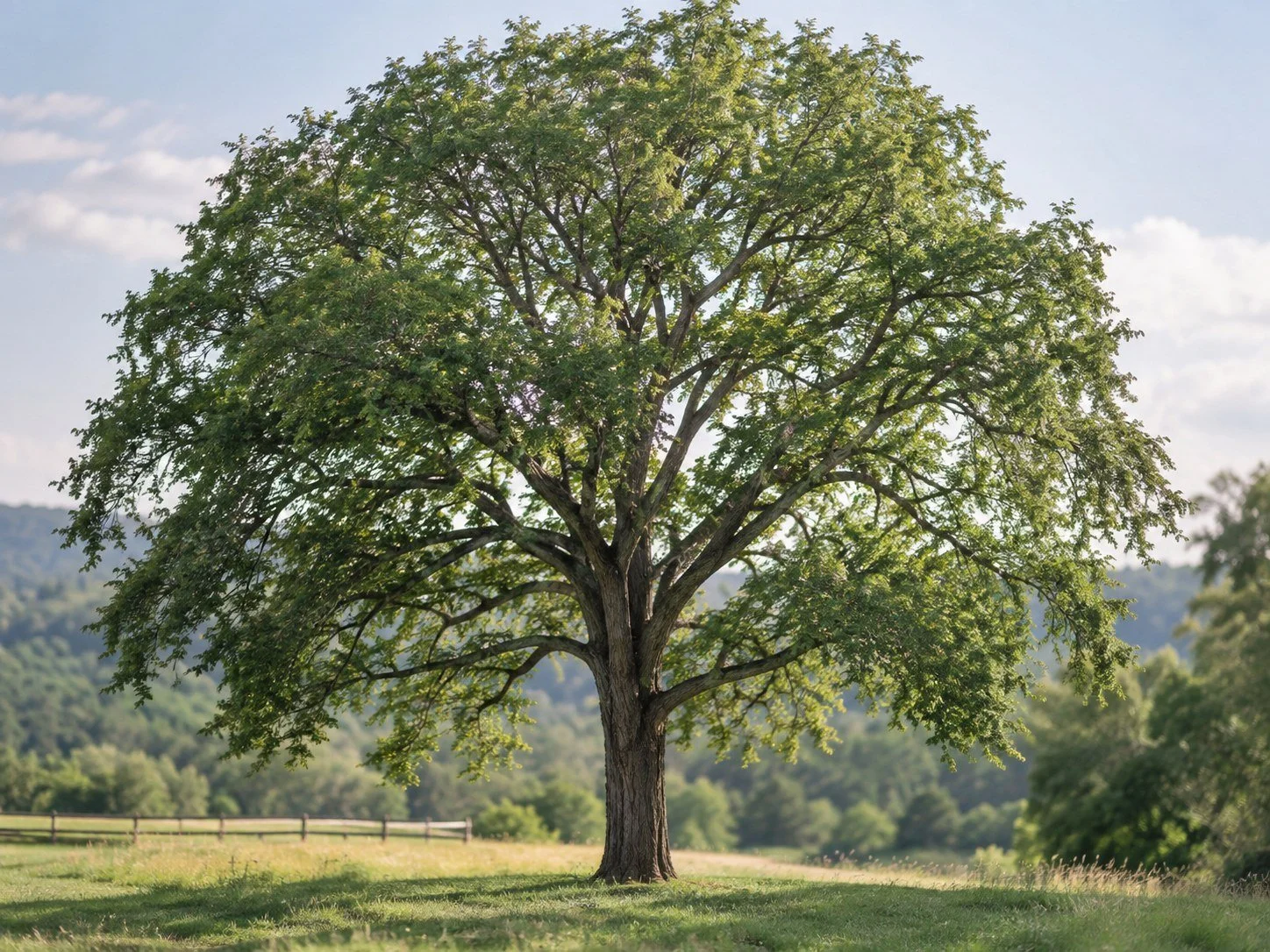 Image 3 of 11
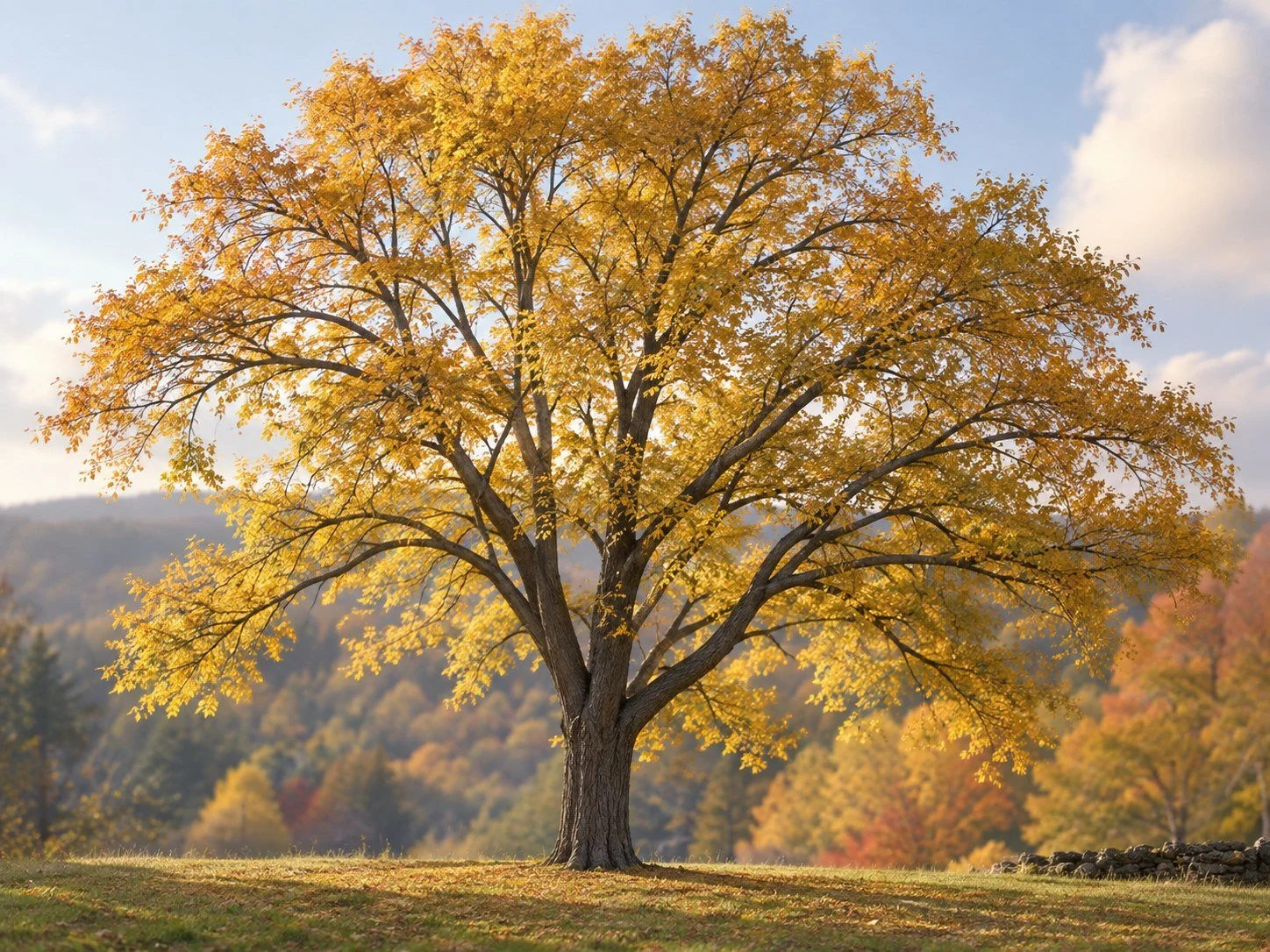 Image 4 of 11
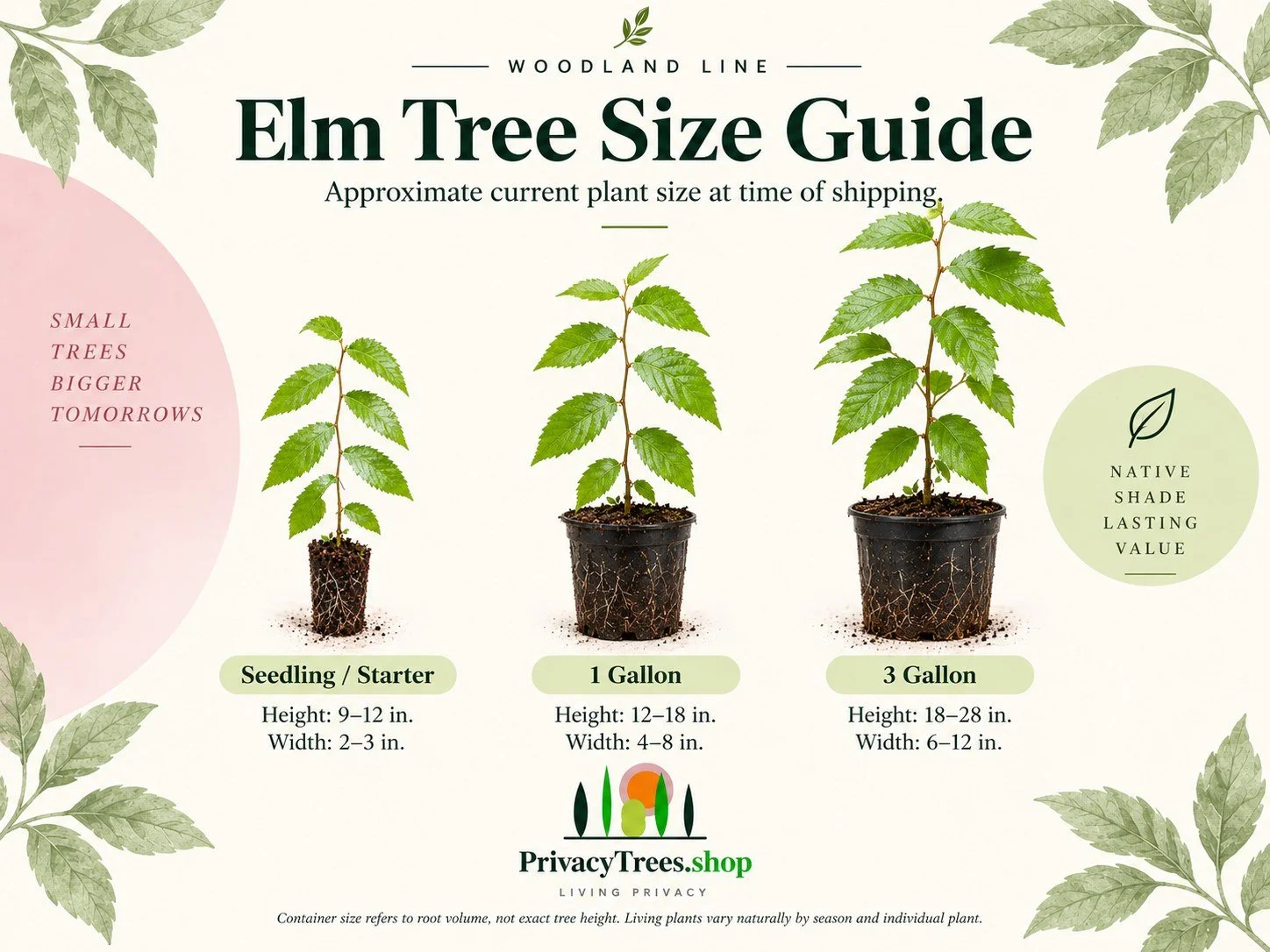 Image 5 of 11
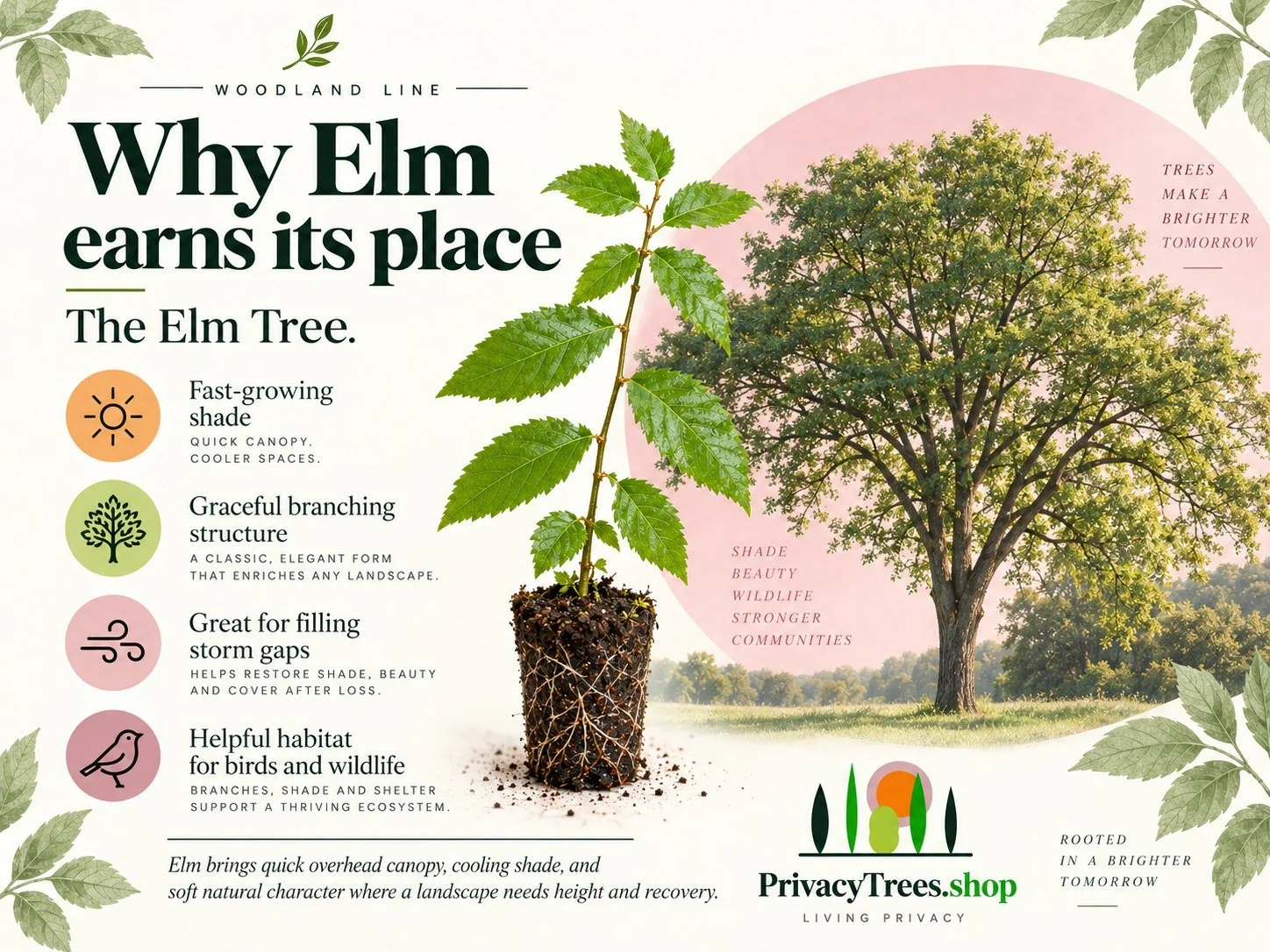 Image 6 of 11
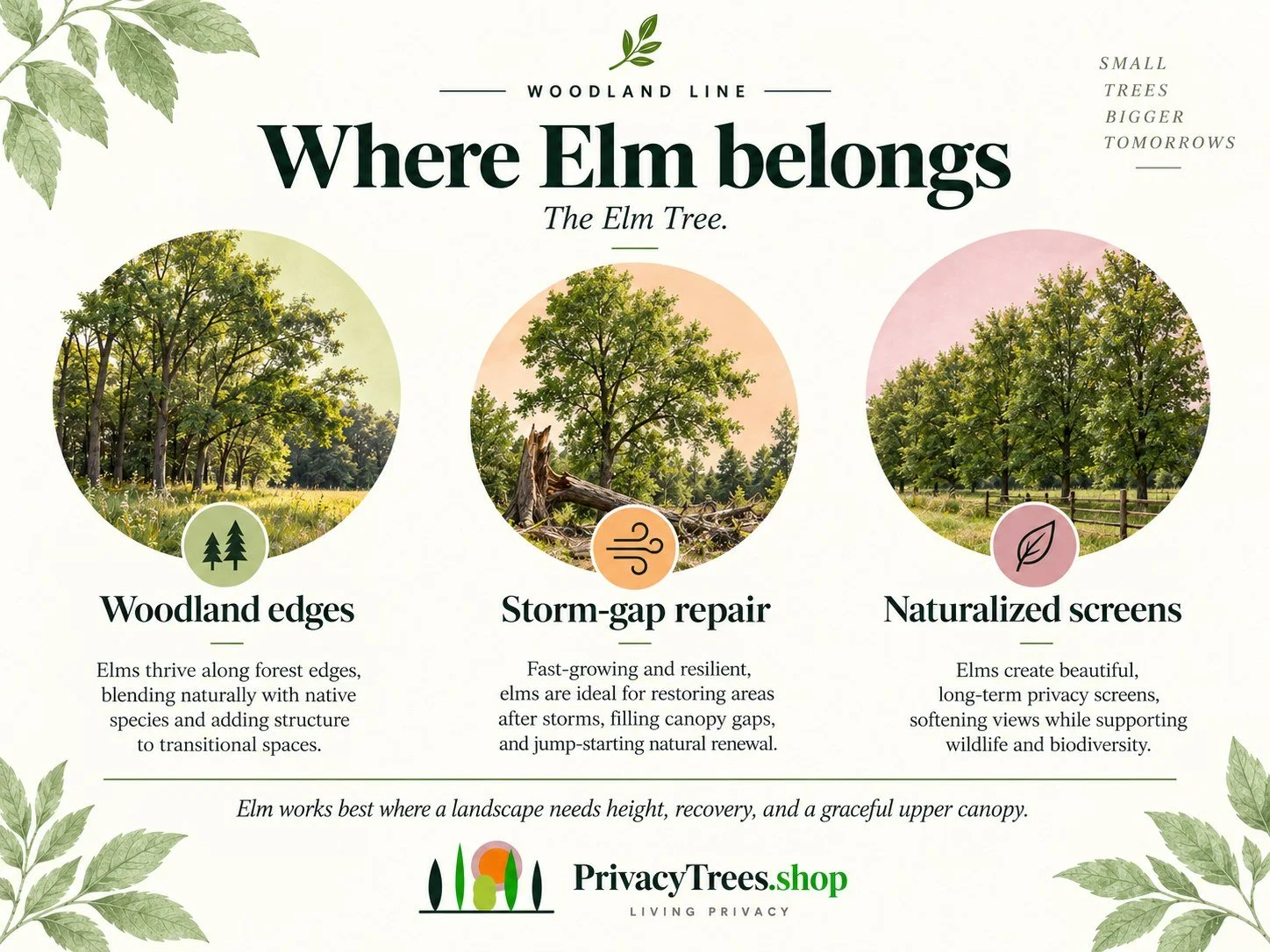 Image 7 of 11
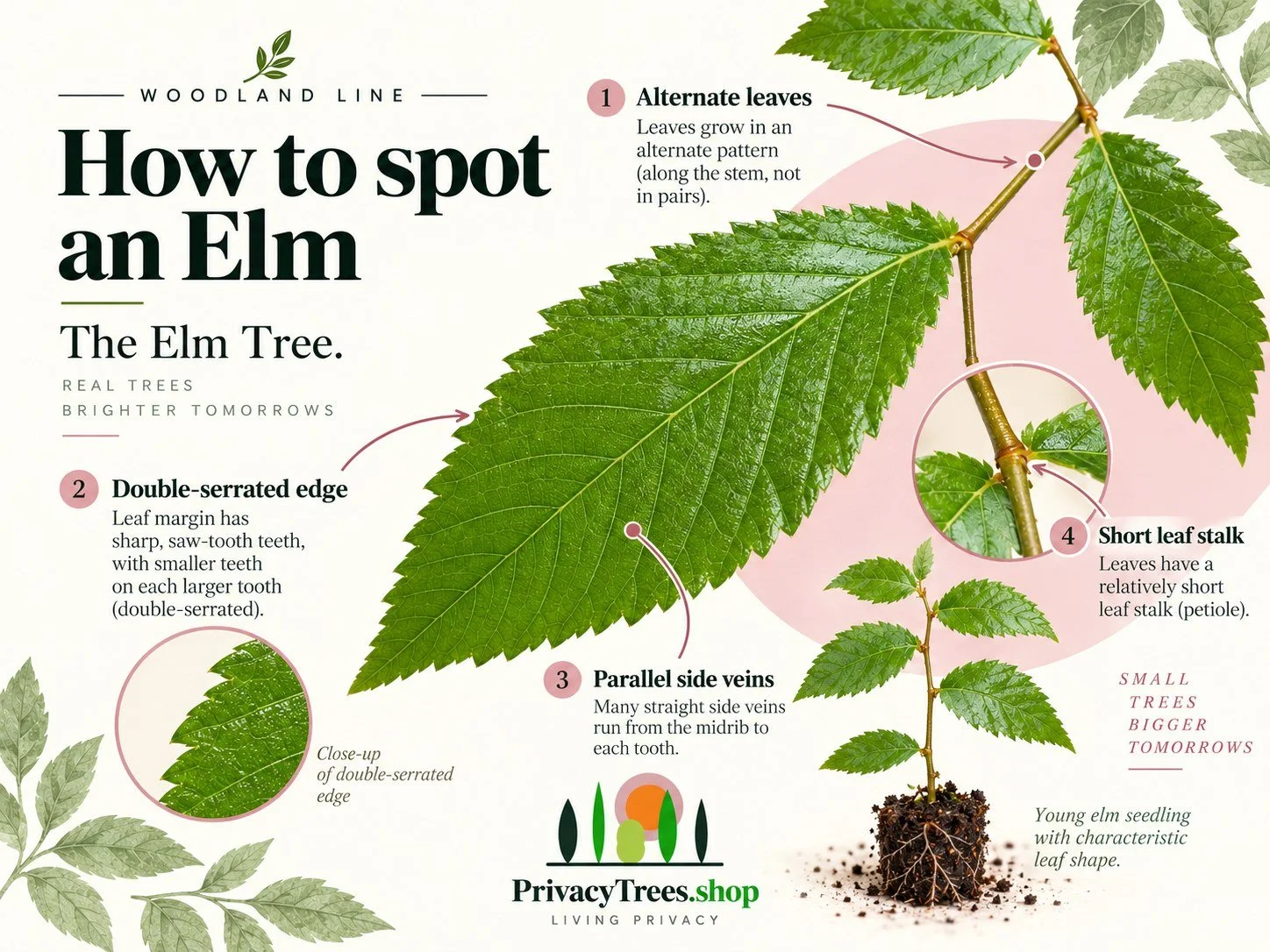 Image 8 of 11
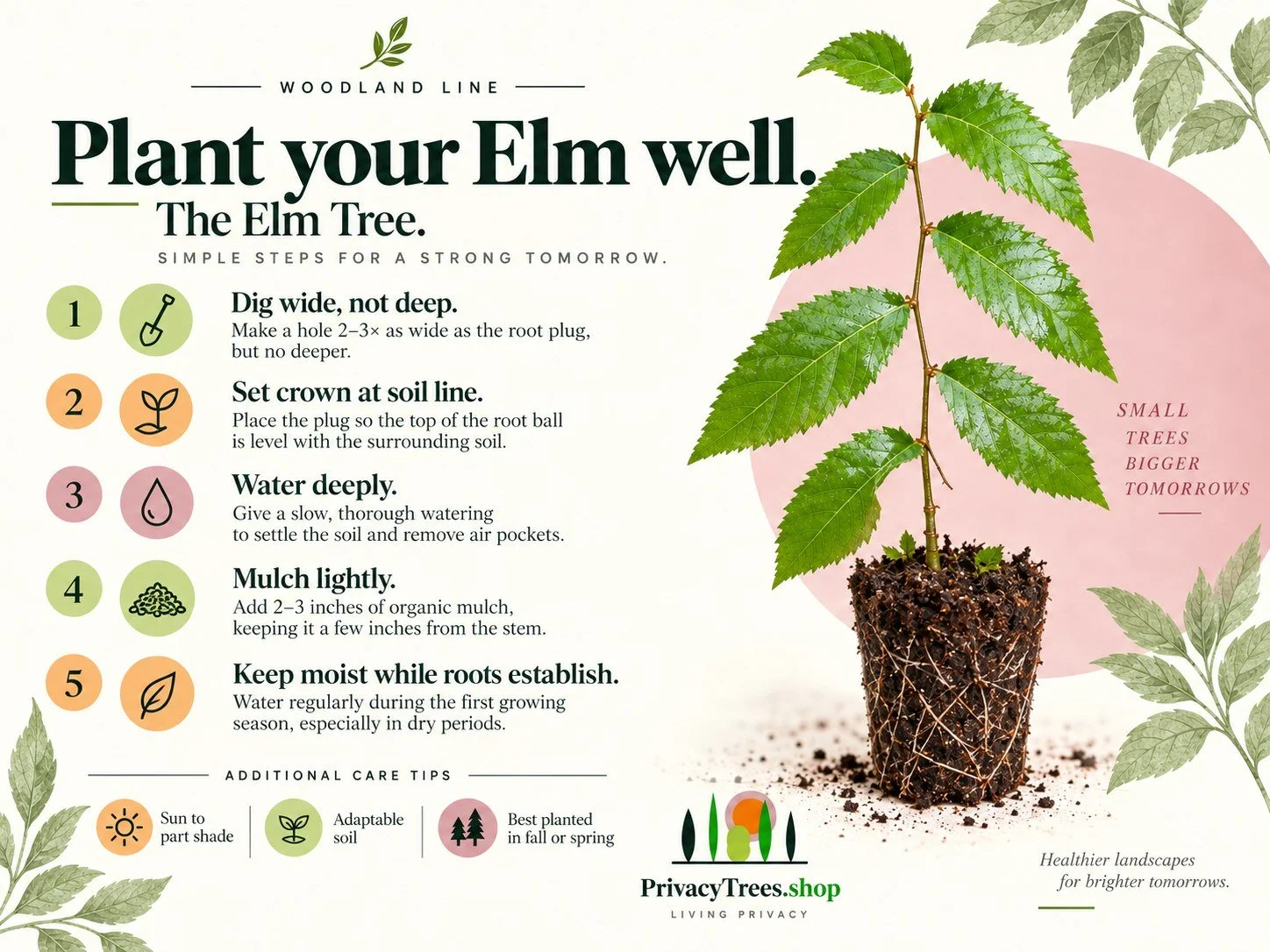 Image 9 of 11
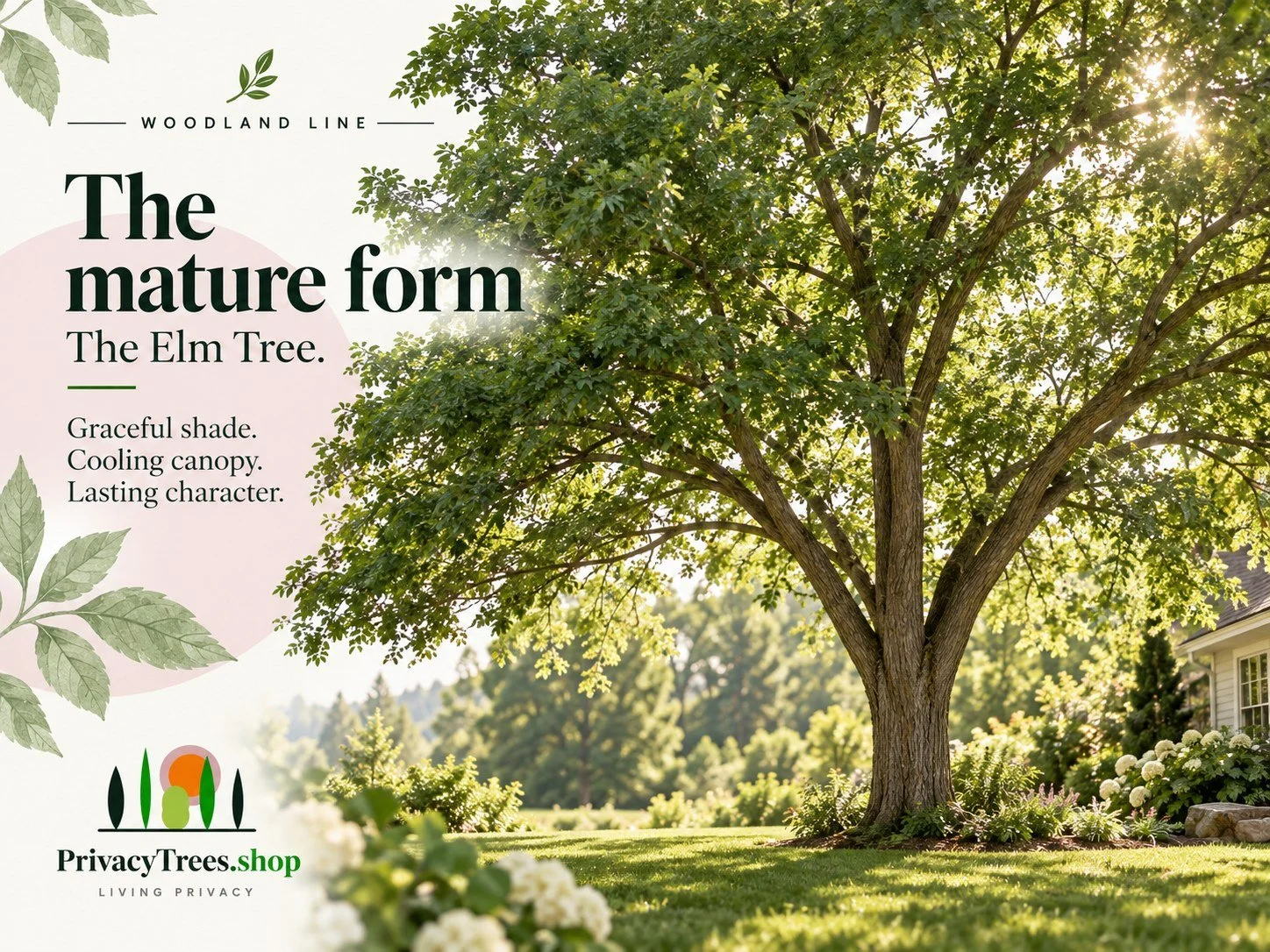 Image 10 of 11
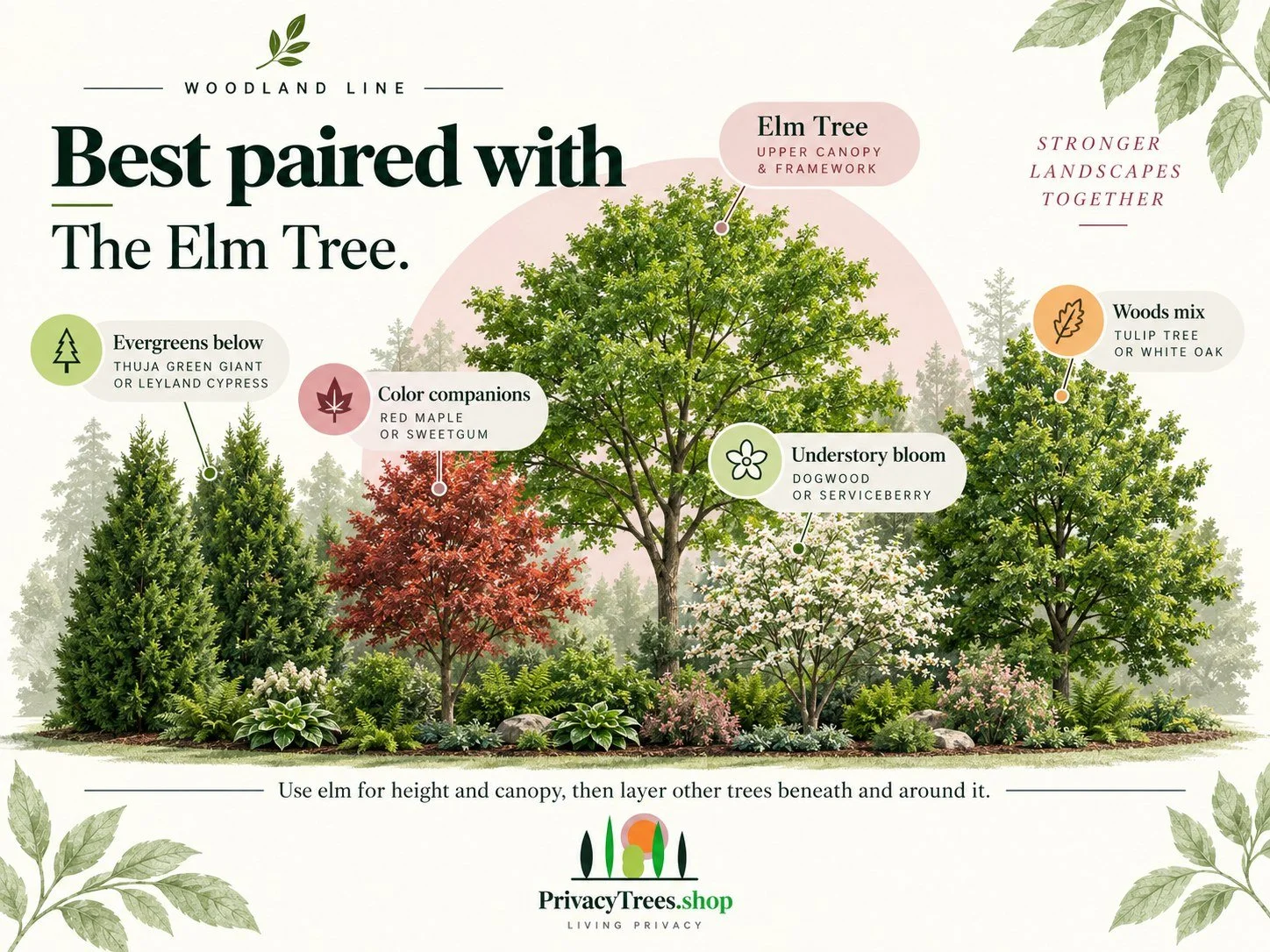 Image 11 of 11