A native evergreen vine with a spring show of trumpet flowers.
Crossvine climbs fences, trellises and even walls on its own, and in the South it holds its leaves all winter. In the cold months the foliage takes on a rich reddish-bronze tone. In spring it covers itself in orange-red trumpet flowers that hummingbirds come straight to.
It’s one of the most useful privacy vines for the Southeast: native, tough, fast once established, and good-looking in every season.
Choose Your Size
Starter plug — a rooted cutting about 4–8 in. tall. Available singly, as a 3-pack or as a 6-pack.
Potted young vine — about 8–14 in., with multiple shoots, ready to start climbing.
Shipping is included in the price. Sizes are approximate at the time of shipping; living plants vary with the season and the individual plant.
What Arrives
One rooted crossvine (or three or six, if you chose a pack)
A plant tag, so you always know what you planted
A growing guide
Packed to arrive safely
About Crossvine
Botanical name: Bignonia capreolata
Type: native vine, evergreen in the South. Farther north it can drop some leaves in a hard winter.
Light: full sun to part shade. It flowers most with some sun but grows well in shade.
Hardiness: zones 6–9
Climbs by: tendrils with small adhesive pads, on fences, trellises, arbors and walls
Height: 30–50 ft at maturity; easy to keep smaller with pruning after bloom
Wildlife: a hummingbird and bee favorite in spring
Where to Plant It
Chain-link and wire fences, which it turns into a solid green screen
Trellises and arbors for a flowering privacy panel
Part-shade fence lines, where it pairs well with a deep-shade vine like creeping fig
First-Year Care
Plant at the base of the support and guide the first shoots onto it.
Water deeply through the first growing season.
Mulch a ring a few inches deep.
Prune right after spring bloom to shape it. It flowers on old wood, so avoid heavy fall pruning.
Spacing: every 6–10 ft along a fence for full coverage.
Pairs Well With
Creeping Fig — the deep-shade evergreen for the darker end of the same fence.
Carolina Jessamine — yellow flowers in late winter, before the crossvine’s orange in spring.
Plant well. Live well.

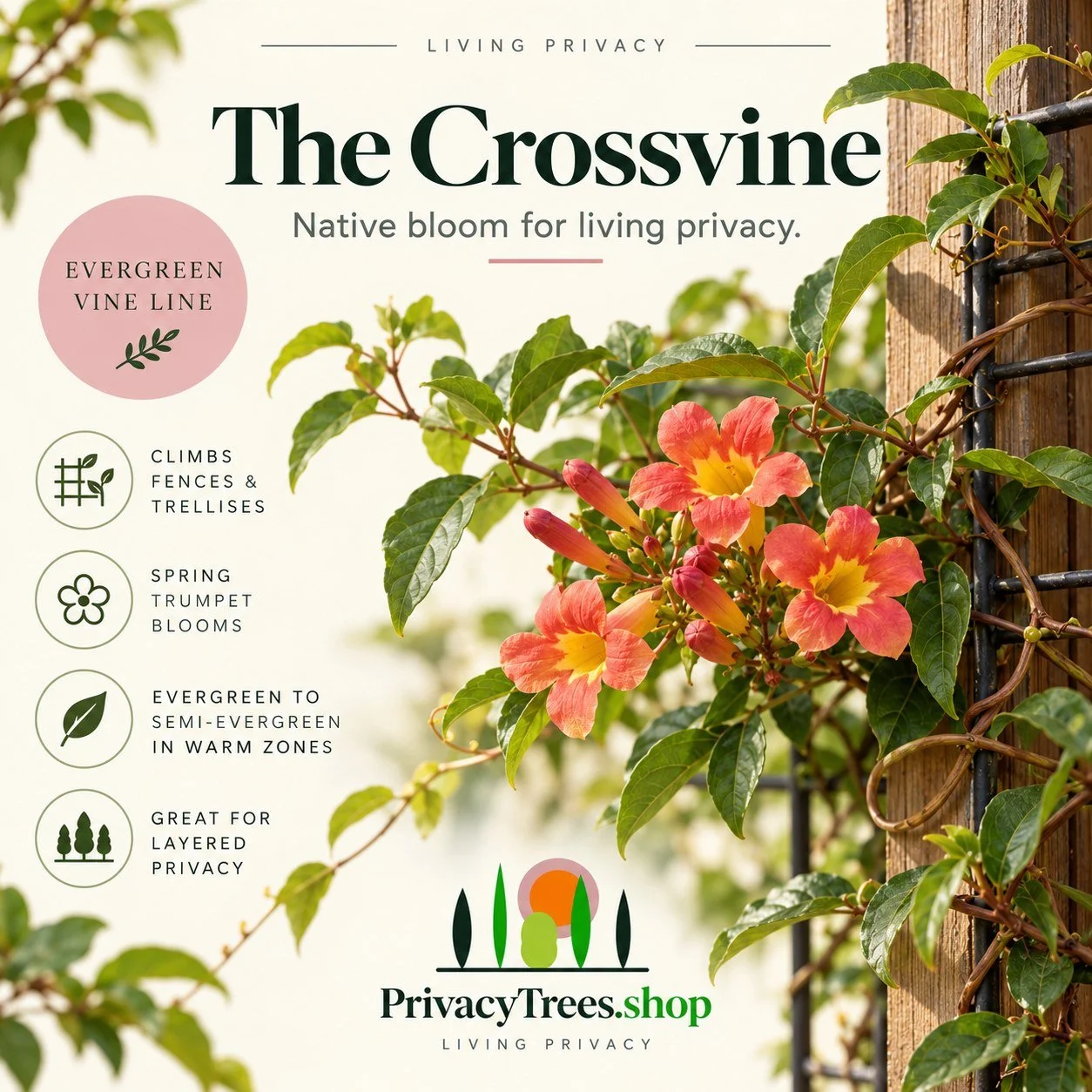 Image 1 of 10
 Image 2 of 10
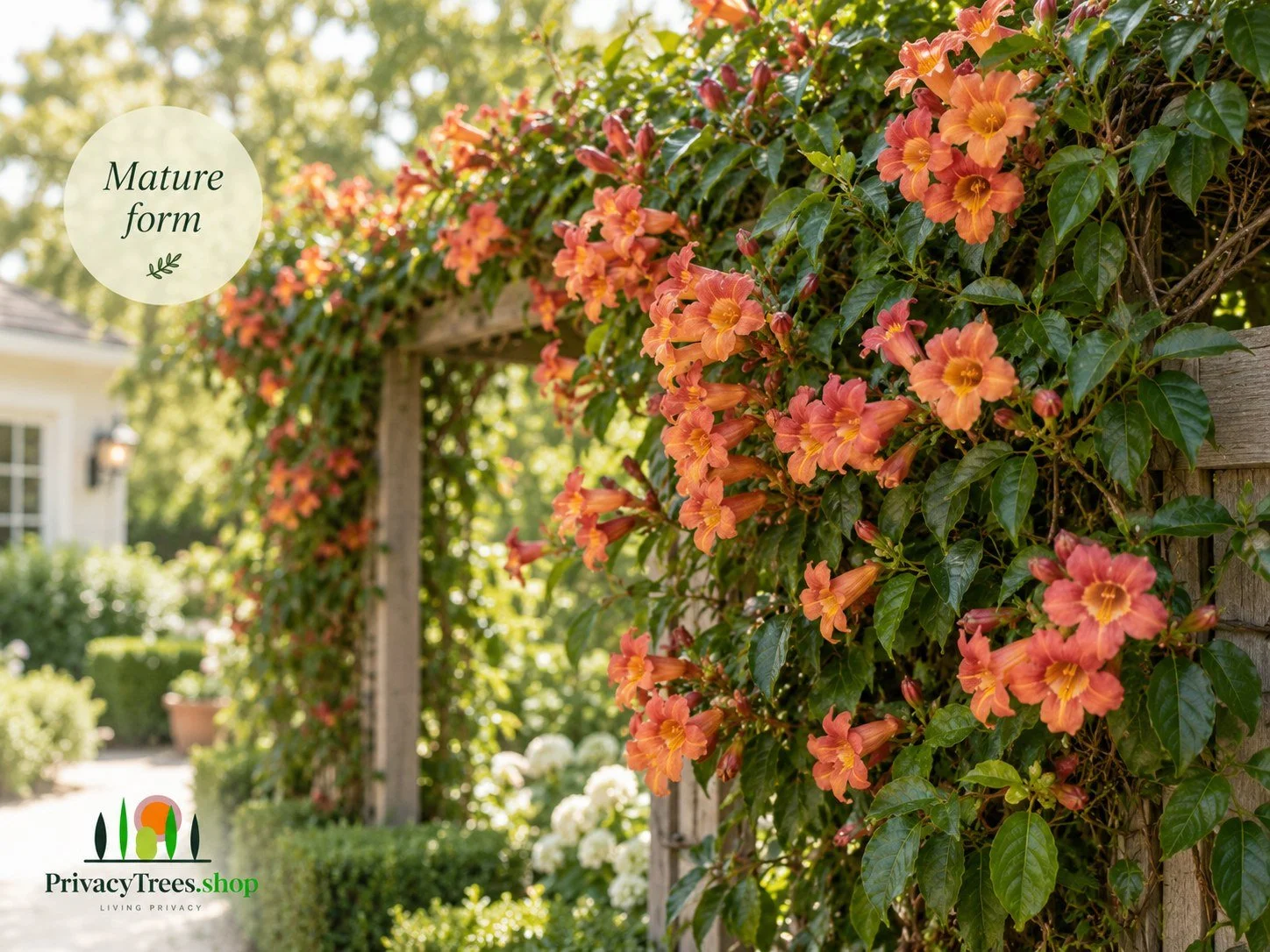 Image 3 of 10
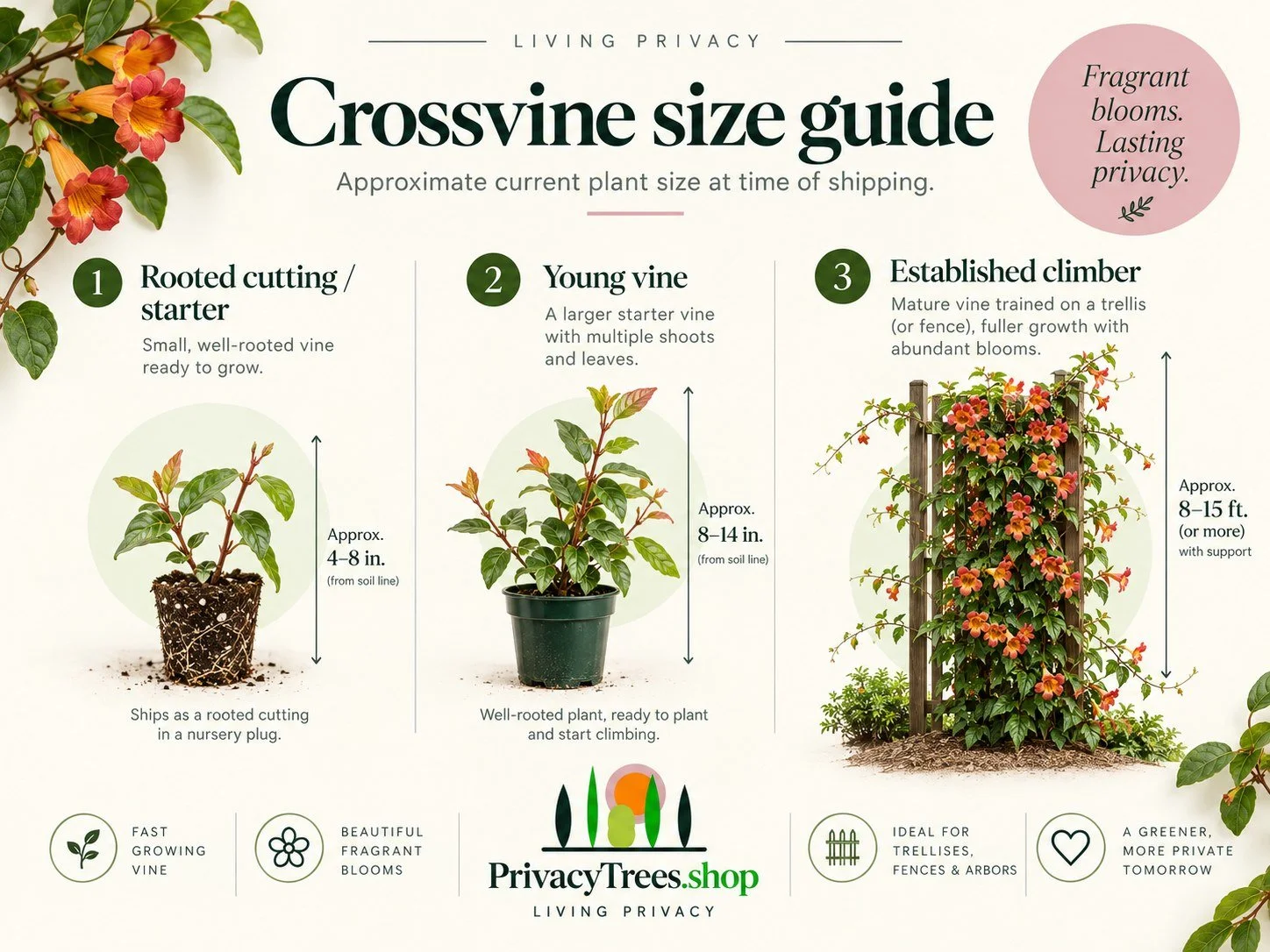 Image 4 of 10
 Image 5 of 10
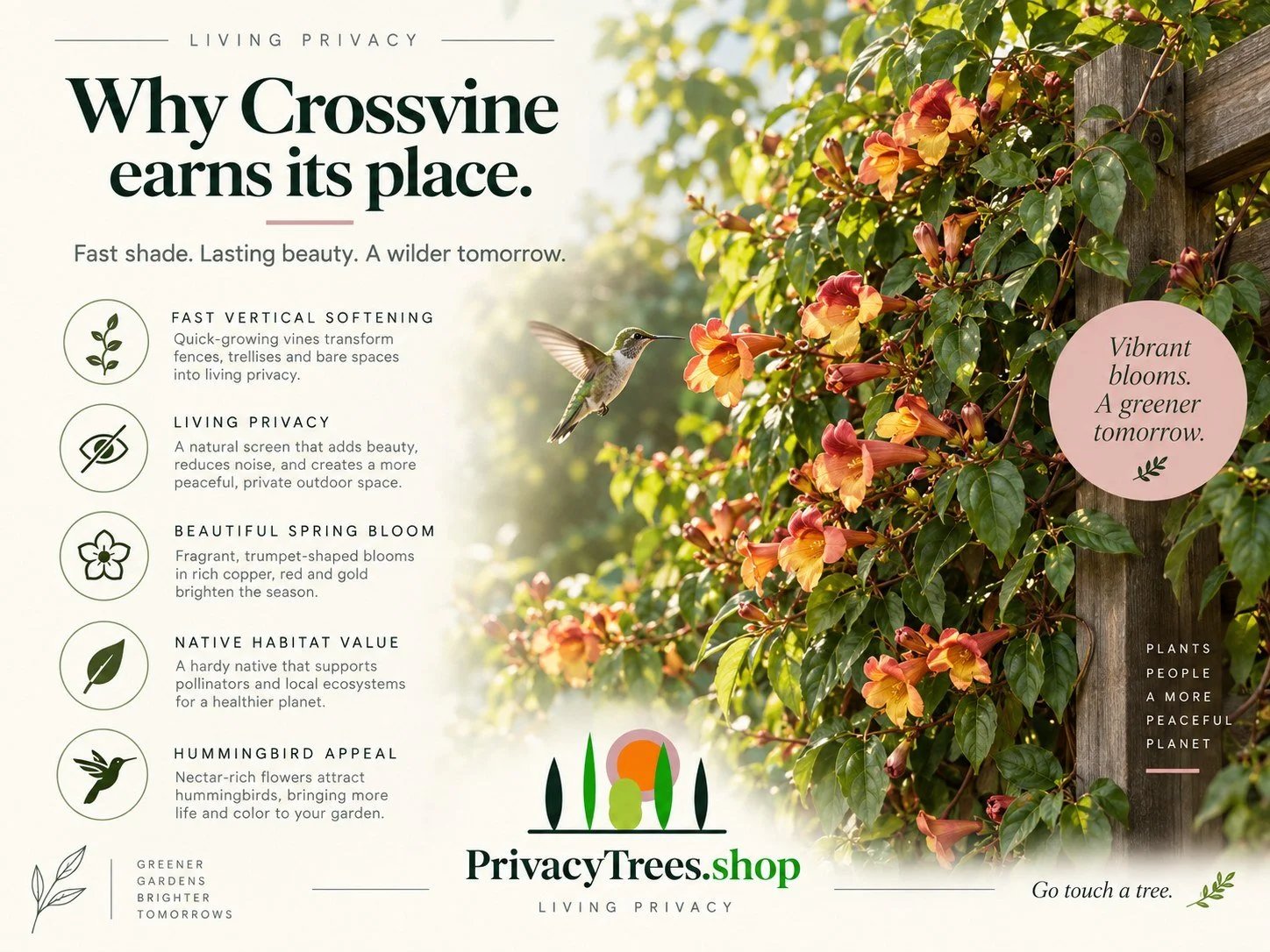 Image 6 of 10
 Image 7 of 10
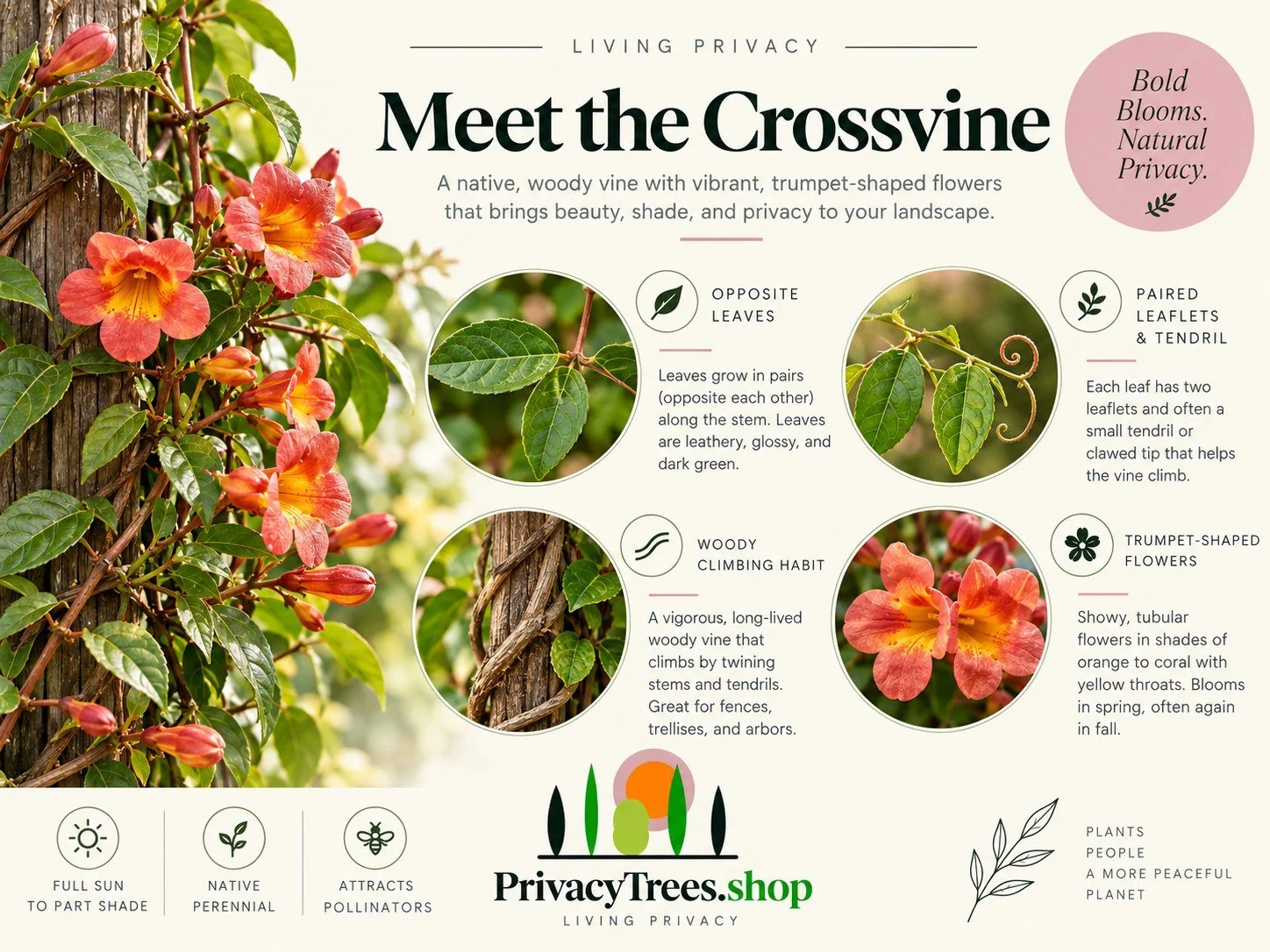 Image 8 of 10
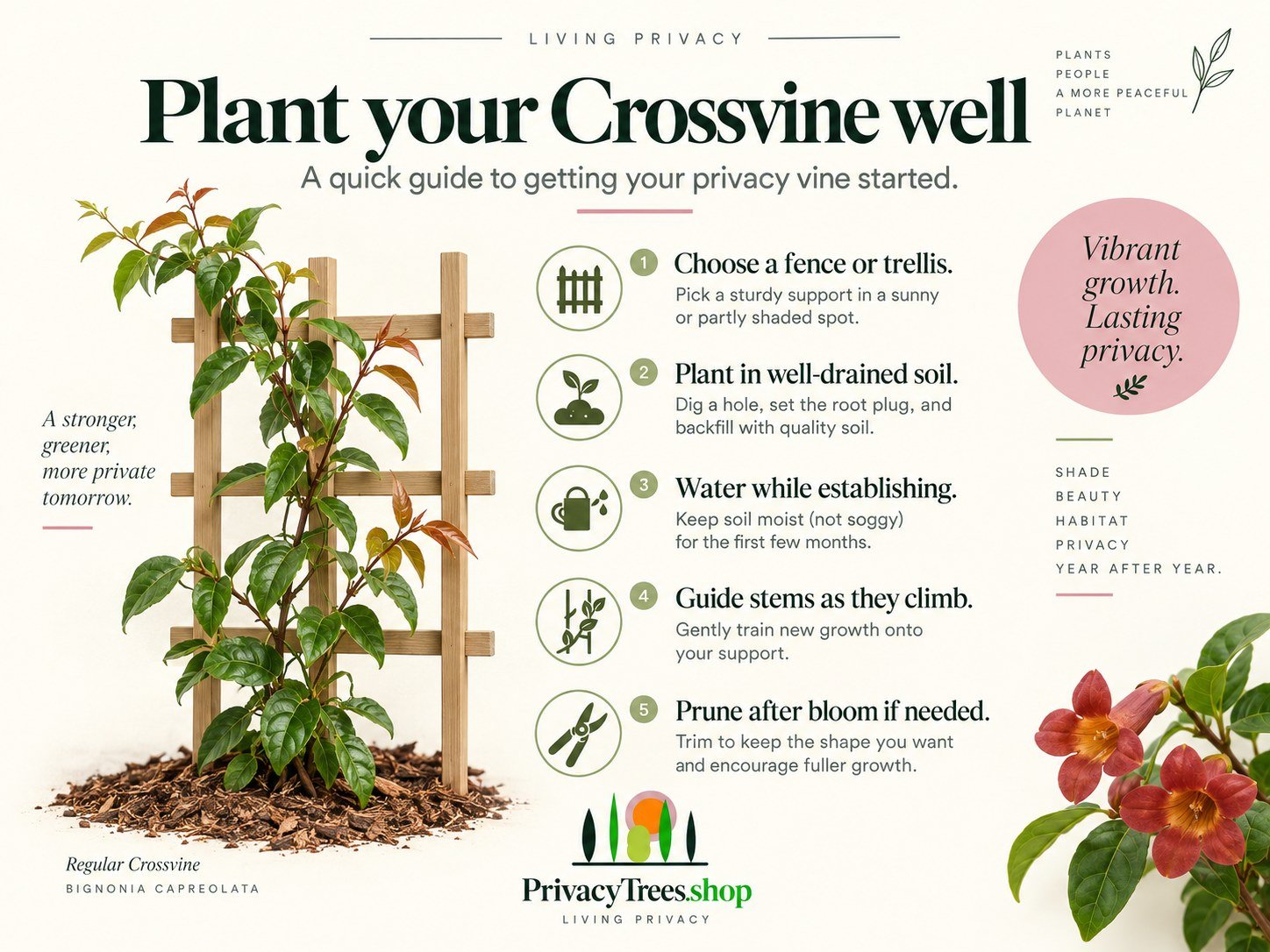 Image 9 of 10
 Image 10 of 10