Evergreen privacy for the places trees won’t grow.
Some parts of a yard are too shady for Thuja or Leyland: a north-facing fence, a courtyard between buildings, the dark side of the house. Creeping fig thrives there. It climbs flat walls and fences on its own, with no trellis needed, and slowly covers them in a dense, green, living surface that stays green all year.
It starts slow and then takes off. The old saying about creeping fig is “first year it sleeps, second year it creeps, third year it leaps.”
Choose Your Size
Starter plug — a rooted plug with vines about 6–10 in. long. Available singly, as a 3-pack or as a 6-pack.
Potted young vine — a larger, well-rooted vine with more runners, for faster coverage.
Shipping is included in the price. Sizes are approximate at the time of shipping; living plants vary with the season and the individual plant.
What Arrives
One rooted creeping fig (or three or six, if you chose a pack)
A plant tag, so you always know what you planted
A simple care guide
Packed to arrive safely
About Creeping Fig
Botanical name: Ficus pumila
Type: evergreen, self-clinging vine
Light: part shade to full shade. One of the best vines for deep shade.
Hardiness: zones 8–11. It won’t survive hard winters farther north.
Climbs by: small aerial rootlets that grip masonry, block, stucco and fences
Height: 15–20 ft or more on a wall, kept to any size with trimming
Origin: East Asia (not native)
Before You Plant: Know What It Clings To
Creeping fig holds on for good. That’s what makes it such a good wall cover, but it also means:
Keep it off painted surfaces and wood siding you want to keep clean. The rootlets leave marks if the vine is ever pulled down.
Best on: masonry walls, block, concrete, stone, and fences you’re happy to have covered.
Trim it once or twice a year to keep it off windows, gutters and roofs.
Wear gloves when pruning. The milky sap can irritate sensitive skin.
Where to Plant It
Shady fences and walls where privacy trees would struggle
Courtyards and narrow side yards with no room for a tree’s width
Under a canopy of existing trees, along a fence line
First-Year Care
Plant 6–12 in. from the base of the wall or fence, angled toward it.
Water regularly until established, then it’s drought tolerant in shade.
Be patient in year one. It puts down roots before it climbs.
Spacing: plant every 3–5 ft along a fence for a full wall in a few seasons.
Pairs Well With
Plant well. Live well.

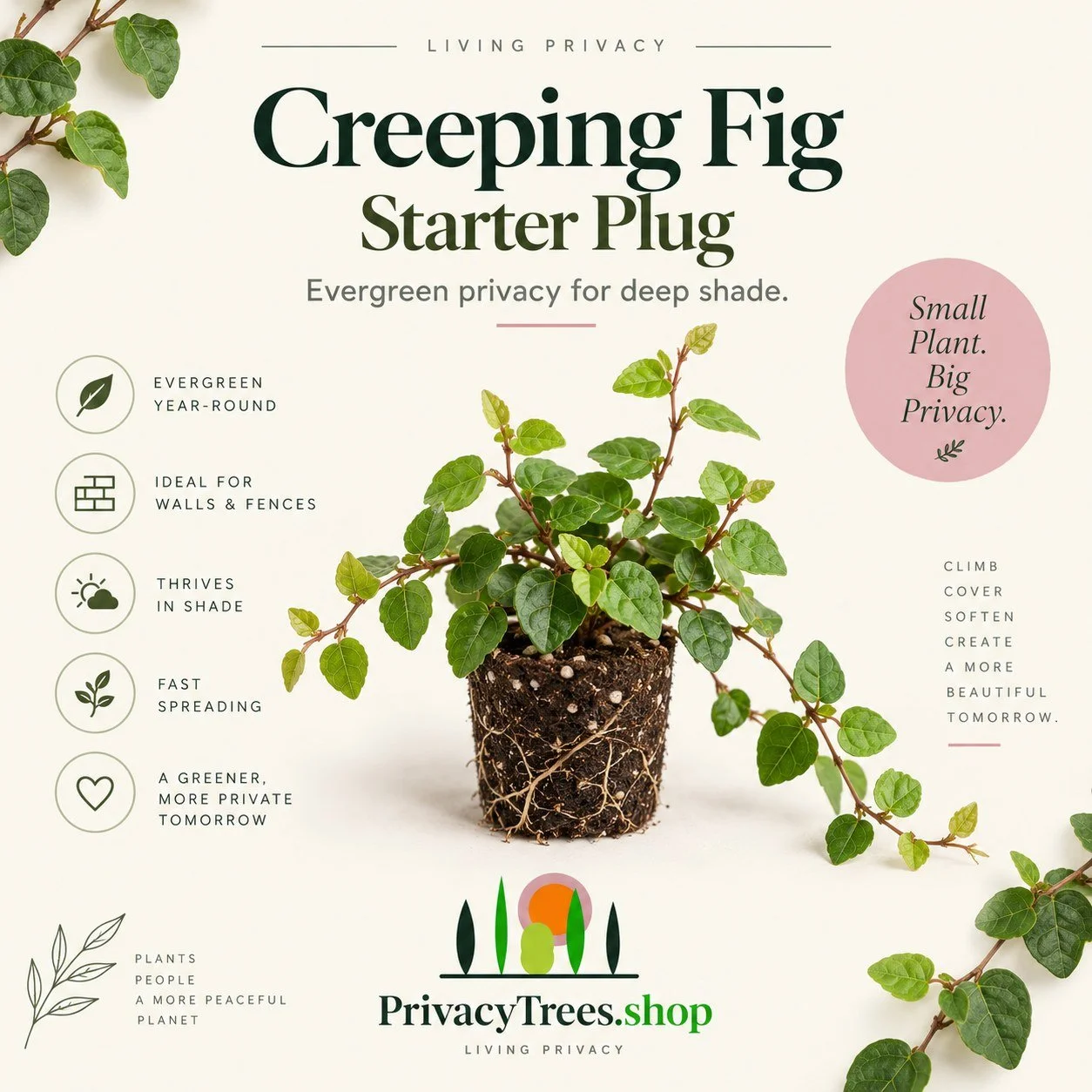 Image 1 of 10
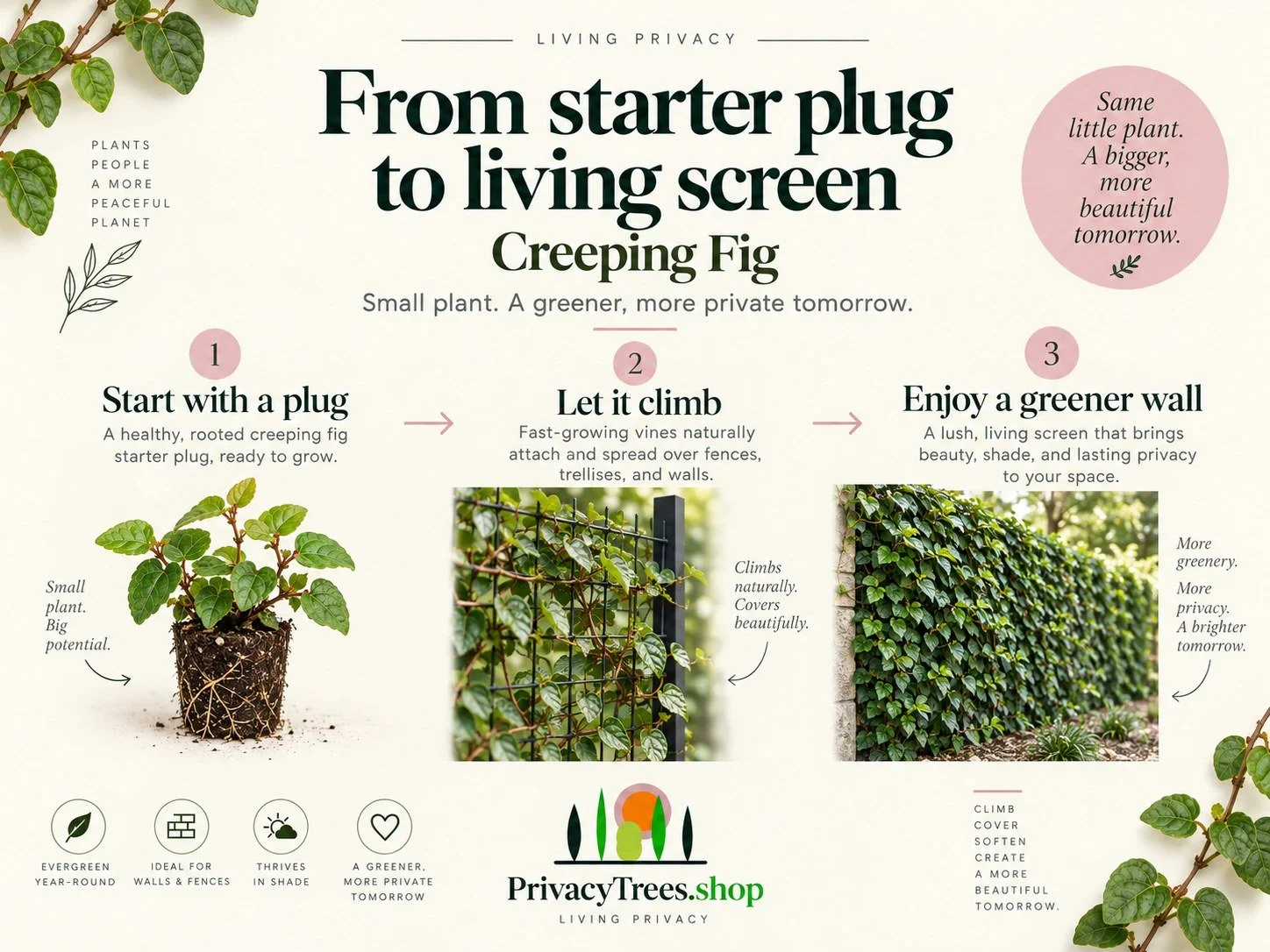 Image 2 of 10
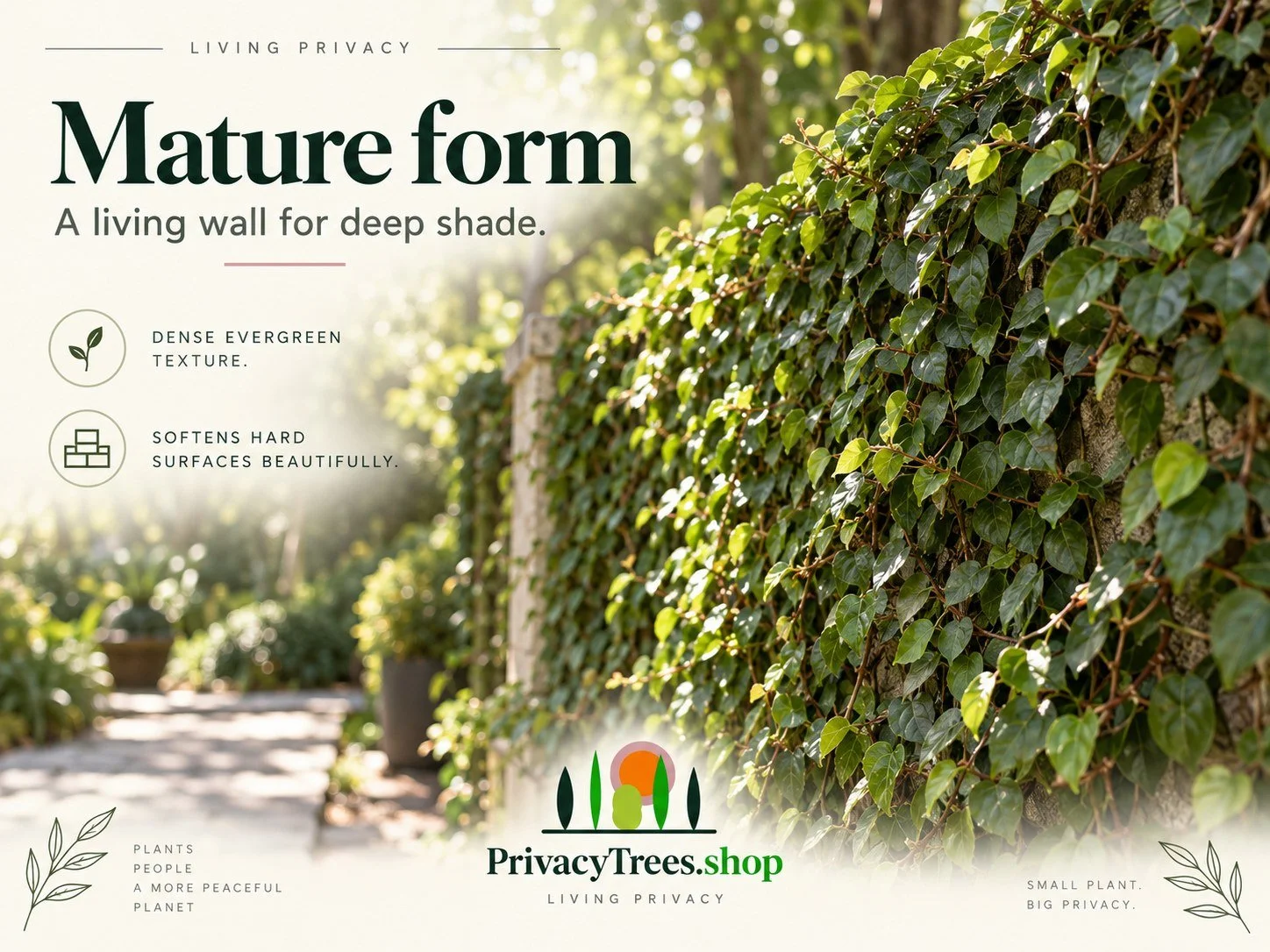 Image 3 of 10
 Image 4 of 10
 Image 5 of 10
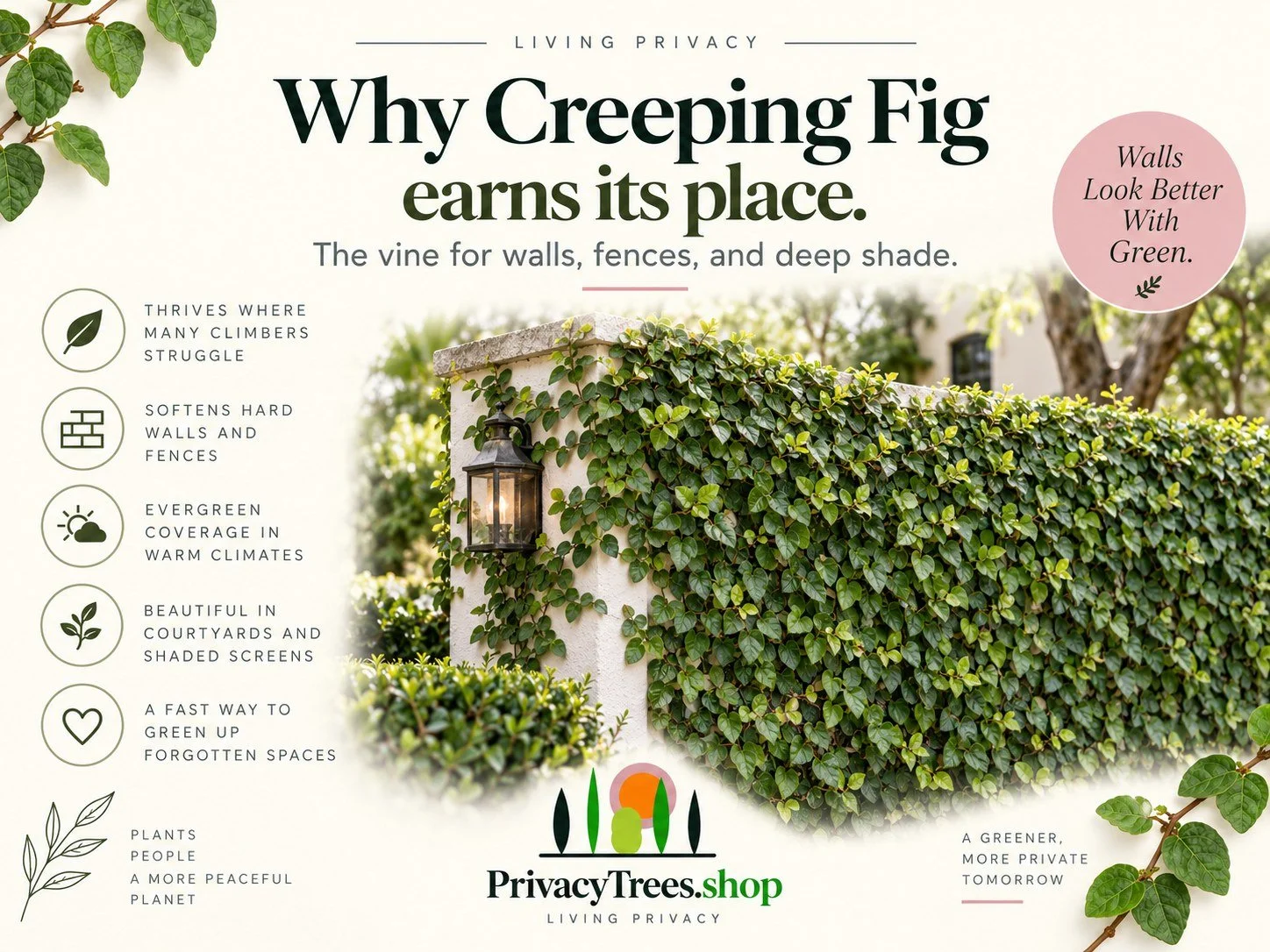 Image 6 of 10
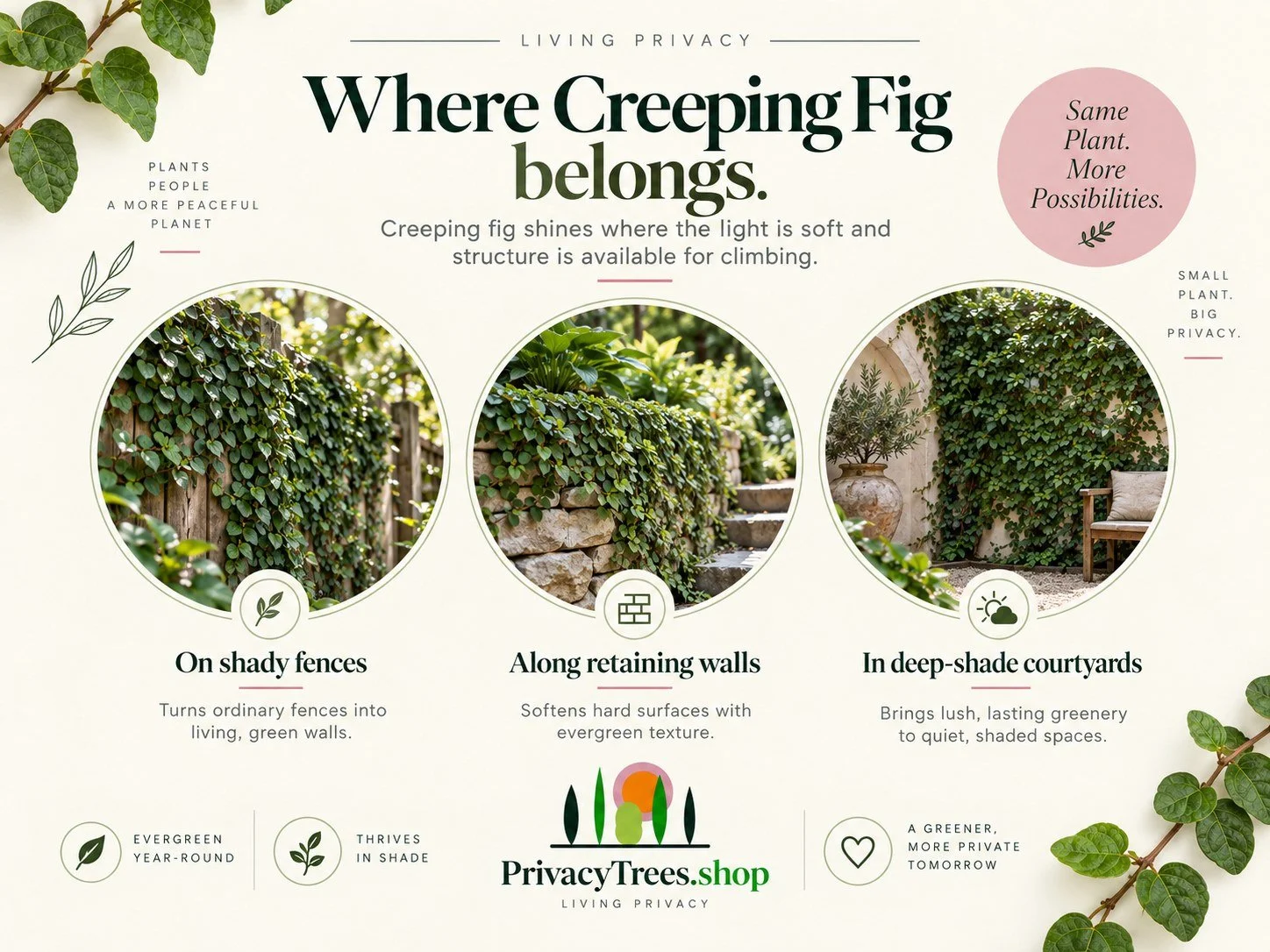 Image 7 of 10
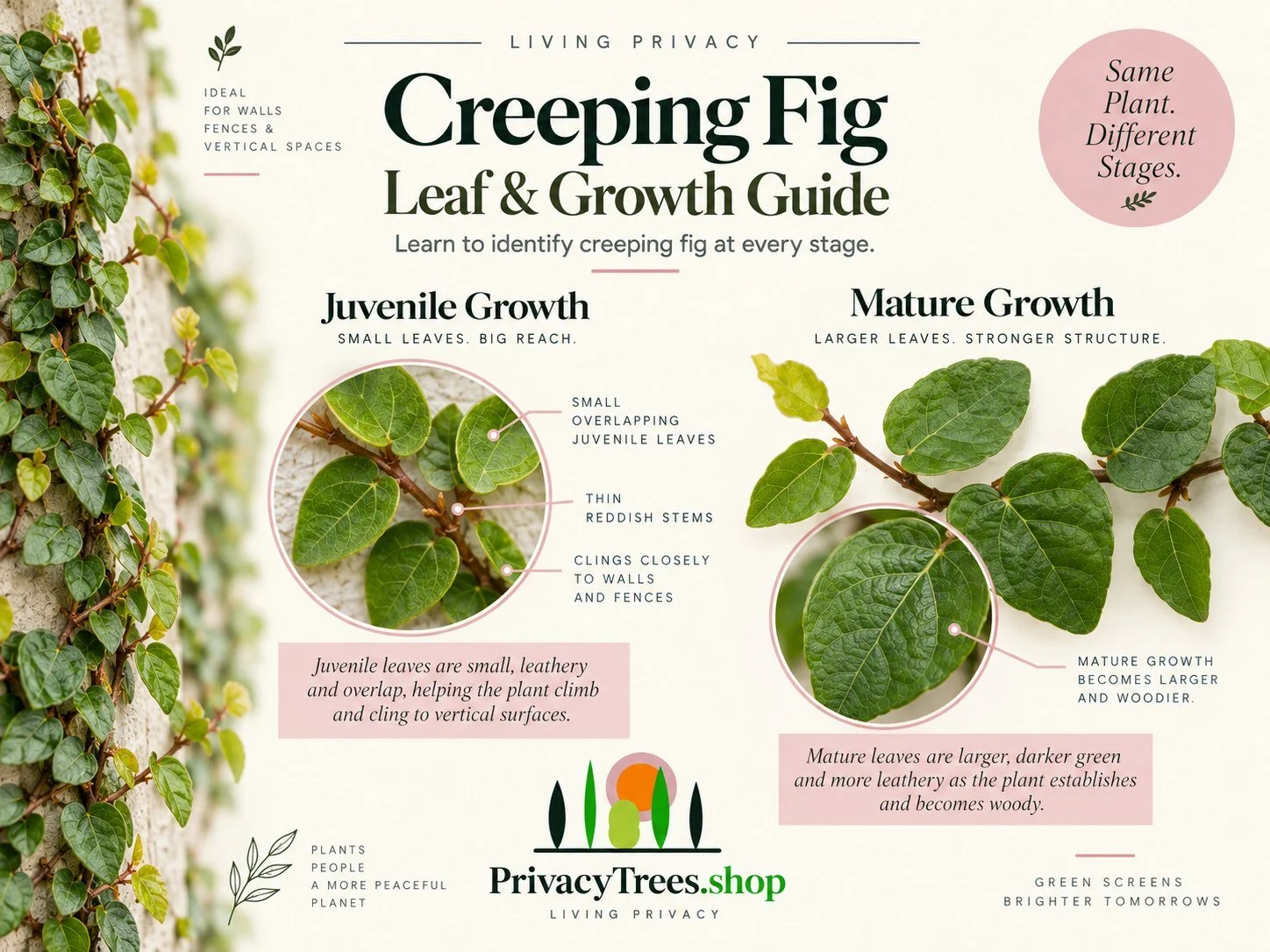 Image 8 of 10
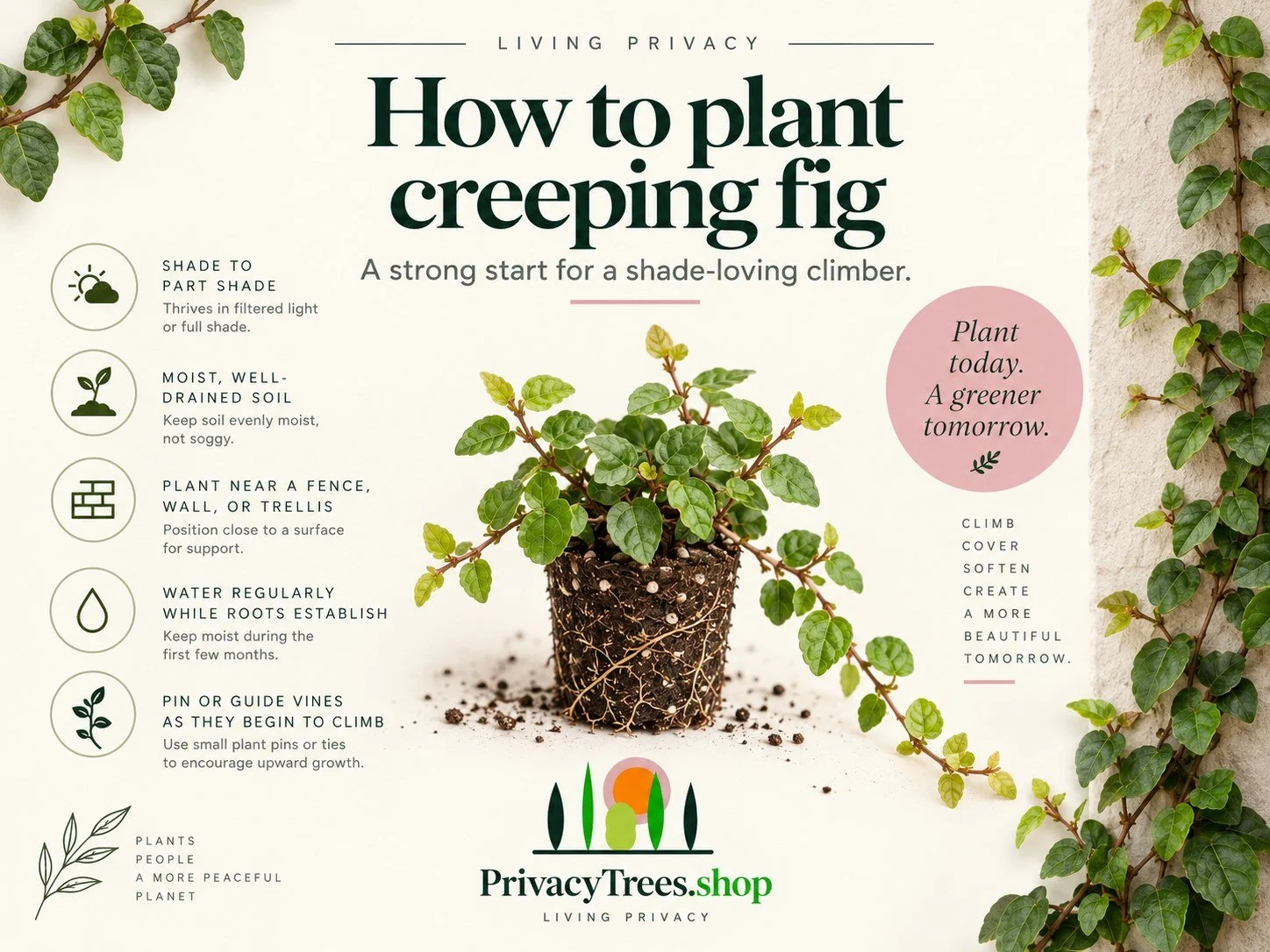 Image 9 of 10
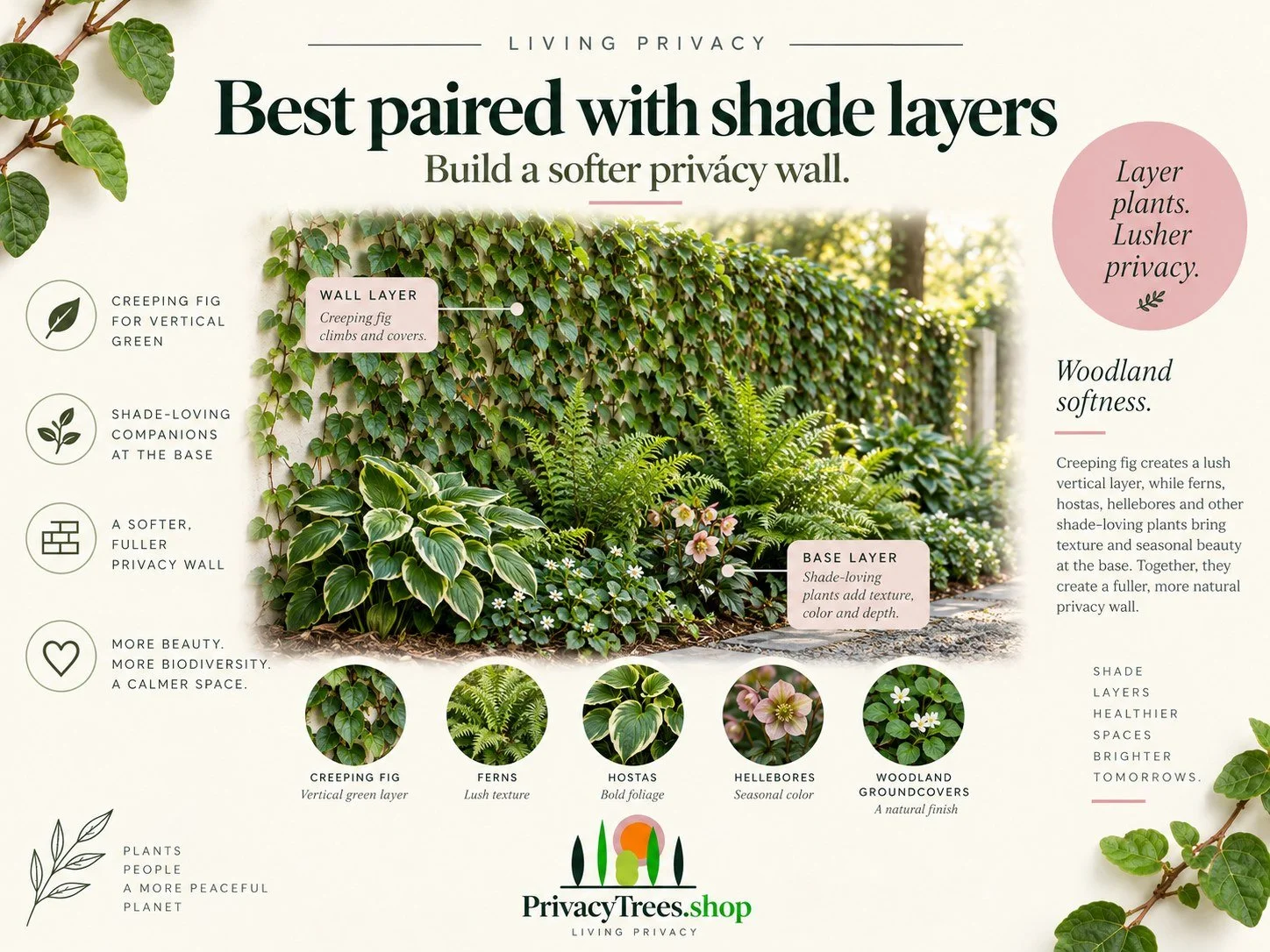 Image 10 of 10